#Product Trends
Photobiomodulation : Is LED Entering a New Era of Personalization?
From standardized light delivery to intelligent treatment: how parameter adaptation is reshaping professional photobiomodulation.
Photobiomodulation (PBM) is attracting renewed interest across a growing range of healthcare and clinical fields. Long associated with “red light” therapy and phototherapy, it is now the subject of an increasing body of research examining its mechanisms of action, potential applications, and, importantly, the parameters that determine how light should be delivered.
This evolution raises a central question: could the next stage of photobiomodulation be less about the light itself and more about how precisely it can be personalized?
- A technology extending beyond aesthetics
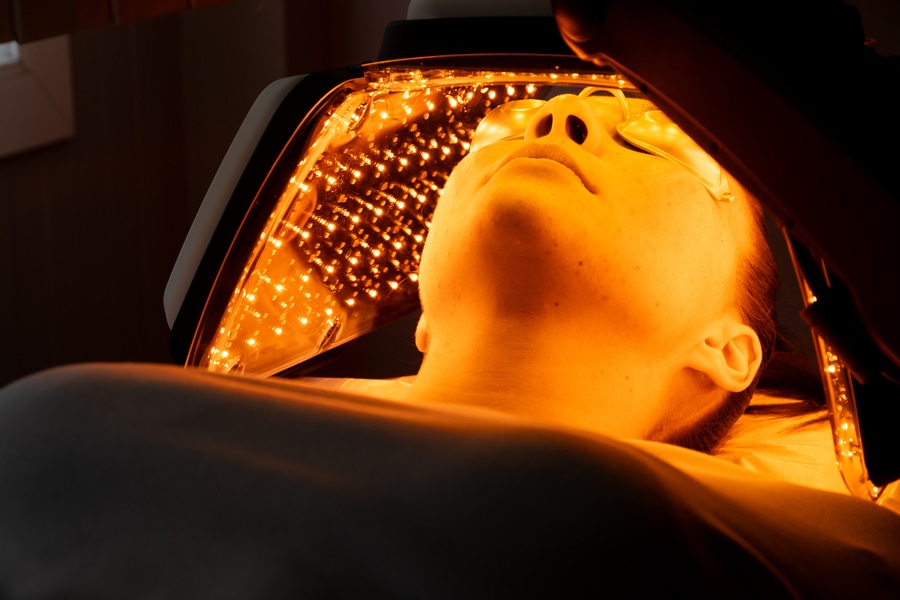
Photobiomodulation, also referred to in some publications as low-level light therapy, involves exposing tissue to specific wavelengths of light, most commonly in the red and near-infrared ranges, although other wavelengths are also being investigated depending on the application.
Its field of research has expanded considerably. Studies are exploring applications in wound healing, certain neuropathies, pain management, dermatology, and exercise recovery.
An international expert consensus published in 2025 in the Journal of the American Academy of Dermatology brought together 21 experts to develop evidence-based recommendations for the clinical use of photobiomodulation. The consensus identified areas where clinical evidence supports specific applications, while also highlighting the need for further research.
More recently, a 2026 meta-analysis published in Science & Sports investigated the effects of photobiomodulation on delayed-onset muscle soreness and strength recovery following exercise. The findings suggest potential effects on certain recovery parameters, while also highlighting the importance of treatment protocols and dosing.
PBM is therefore increasingly being investigated as a cross-disciplinary technology rather than one limited to a single medical or aesthetic field.
- The real challenge : controlling the light dose
Behind every photobiomodulation session lies a combination of parameters.
Wavelength, optical power, irradiance, exposure time, fluence, treated surface area, treatment frequency, and the distance between the light source and the tissue all contribute to defining a protocol.
In other words, “using red light” does not, by itself, define a photobiomodulation treatment.
The importance of dosimetry is not new. Methodological research has previously shown that many published studies do not report key light-delivery parameters with sufficient precision, potentially affecting the reproducibility and comparison of results.
Recent publications continue to emphasize the need for more precise reporting of parameters such as wavelength, fluence, irradiance, total dose, and treatment frequency.
The question therefore becomes less about which LED to use and more about how much energy should be delivered, under which conditions, and for which application.
- From standardization to personalization
This issue opens up a new stage in the development of photobiomodulation devices.
A standardized protocol has an obvious advantage: it facilitates use and reproducibility. However, biological tissues do not all have identical characteristics. Light absorption and scattering can vary according to the treatment area and tissue properties.
Recent systematic reviews have highlighted the influence of parameters such as wavelength, energy density, power, exposure time, treatment frequency, and the distance between the device and the tissue.
This variability helps explain the growing interest in devices capable not only of delivering precisely defined wavelengths, but also of **better controlling the conditions under which light energy is delivered.
- Intelligent systems as a tool for greater control
Personalization is therefore becoming a new area of technological development.
The objective is not necessarily to replace a protocol defined by the professional, but to reduce certain sources of variability associated with treatment delivery: positioning, distance, power, or exposure time.
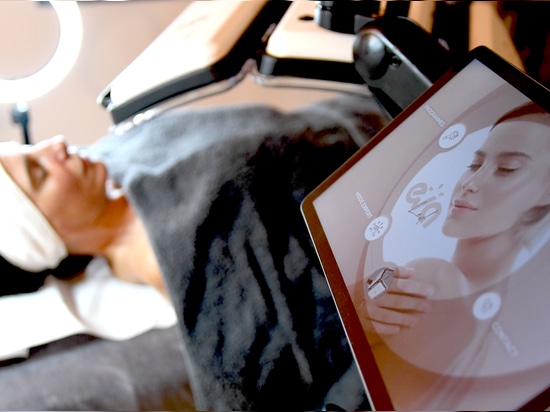
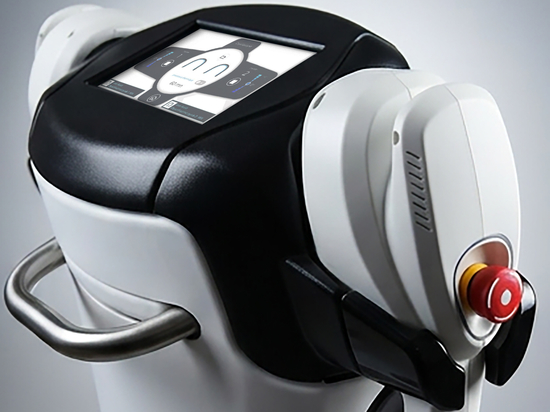
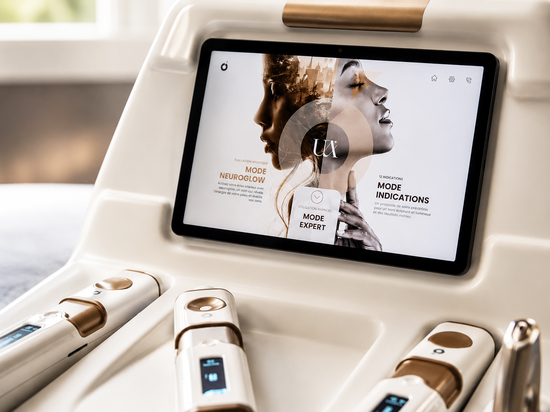
Some newer generations of devices are incorporating assistance systems designed to measure or automatically adjust certain parameters.
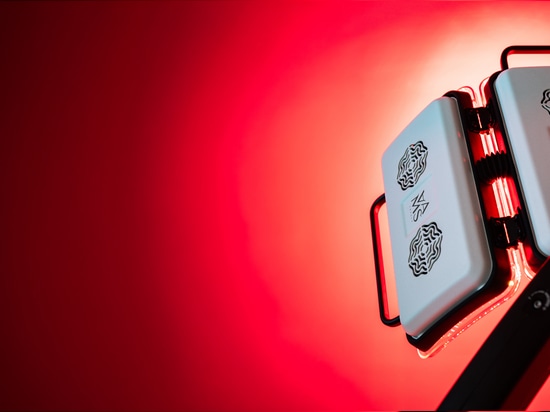
EVA LED®, developed by AAMS, illustrates this technological direction through its USER ASSIST® technology. The device combines several wavelengths — 415, 590, 632 and 850 nm — with an embedded system designed to automatically adapt light delivery according to the characteristics of the treatment area.
The interest of this approach lies less in automation itself than in the possibility of **improving control over the delivery of light energy**.
- Towards greater reproducibility?
Personalization and reproducibility may initially appear contradictory.
The first aims to adapt a treatment to the characteristics of a specific situation. The second aims to reproduce a defined protocol consistently.
In practice, however, the two concepts can complement each other.
A system capable of maintaining a consistent treatment framework while adapting selected parameters may help reduce variability between sessions or between users. This is particularly relevant in a field where differences in treatment parameters can make it difficult to compare research findings or translate them into clinical practice.
The standardization of treatment parameters remains an important methodological challenge in photobiomodulation. Recent publications continue to highlight the heterogeneity of protocols used in both research and practice.
- An evolution spanning multiple fields
The growing interest in photobiomodulation is therefore not limited to a single sector.
In dermatology and skin-related applications, research continues to explore different therapeutic approaches. In medicine and rehabilitation, PBM is being investigated in areas including pain, neuropathies, and wound healing. In sports science, recent research has focused in particular on muscle recovery following exercise.
This diversification does not mean that all applications have the same level of evidence. On the contrary, it makes it increasingly important to distinguish between studied indications, target populations, treatment protocols, and levels of clinical evidence.
One of the next stages in the maturation of the technology may therefore be a shift away from a generic concept of “red light therapy” toward a much more precise understanding of photobiomodulation and its parameters.
- Towards a new generation of photobiomodulation devices?
The growing popularity of red-light therapy has made photobiomodulation increasingly familiar to the general public. At the same time, this growing visibility creates a new challenge for professionals: distinguishing between a light source and a device capable of delivering controlled and reproducible treatment parameters.
The next generation of technologies may therefore be defined less by the multiplication of light sources and more by their ability to control, measure and adapt energy delivery.
The question is no longer simply which wavelength should be used.
It is how that light is delivered, at what dose, under which conditions, and with what level of reproducibility.
This may be where photobiomodulation truly enters a new era of personalization: when intelligent systems do more than generate light and begin to support the precise and consistent delivery of professional treatment protocols.