#Product Trends
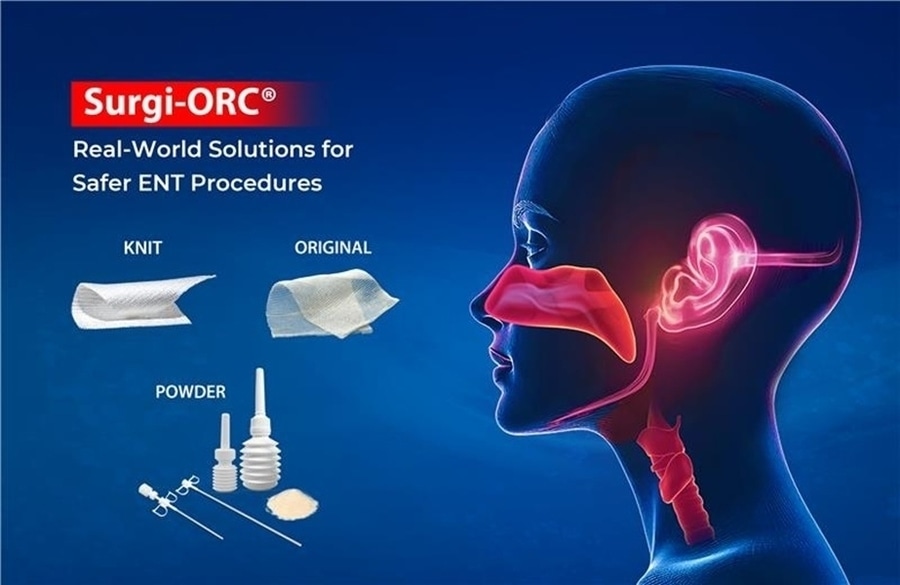
Surgi-ORC®: Real-World Solutions for Safer ENT Procedures
How plant-based oxidized regenerated cellulose improves bleeding control in delicate ear, nose & throat procedures.
The ear, nose and throat (ENT) area is delicate and richly supplied with blood vessels and nerves, making even minor surgeries prone to bleeding and complications. Procedures such as posterior turbinectomy, medial maxillectomy, nasal neurotomy, gland excisions, adenoidectomy, tonsillectomy, and endoscopic sinus surgery carry particularly high bleeding risks.1-4
Traditional hemostatic methods, such as electrocautery, are commonly used in otolaryngology (ENT) but carry several risks2:
Risk of burns from improper placement
Conductive pathways created by blood or sweat, increasing burn risk
Pressure injuries and skin folds from incorrect patient positioning
Inconsistent results in tight or anatomically complex spaces
These limitations highlight the need for safer and more adaptable topical haemostats. To address this, Surgi-ORC®, offers a safe and cost-effective solution for achieving reliable haemostasis during otorhinolaryngological surgeries.
What is Surgi-ORC®?
Surgi-ORC® is a natural, plant-based absorbable haemostat made from oxidized regenerated cellulose (ORC). It is designed to fix the shortcomings of traditional ORC materials and is biocompatible, fast-acting, bactericidal, easily cut, flexible, suturable, and usable dry around bleeding sites.
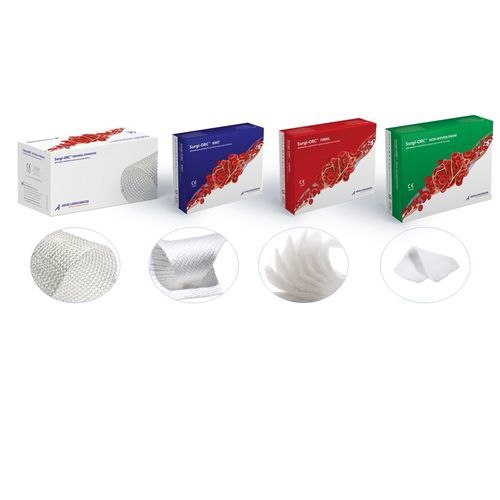
Surgi-ORC® Variants for ENT Procedures:
Surgi-ORC® is available in Knit, Original/Standard, and Powder forms to meet diverse procedural needs.
How Surgi-ORC® Supports ENT Procedures?
- Its uniform consistency and structural integrity enhance clot formation
- Less traumatic compared to conventional methods
- Minimizes postoperative pain and intranasal adhesions, similar to intranasal splints
- Adheres to bleeding site without fixation and absorbs within a few days
- Can be applied to nasal, post-nasal, or throat sites without affecting breathing or causing discomfort
Where To Use Surgi-ORC®?
- Turbinectomy
- Adenoidectomy
- Mastoidectomy
- Glomus tumor excision
- Neck mass excision or dissection
- Juvenile nasopharyngeal angiofibroma excision
- Parotidectomy
- Thyroidectomy
- Submandibular gland excision
Clinical Evidence
The study evaluated Surgi-ORC® Knit in four ENT surgeries: Parotidectomy, Thyroidectomy, Neck mass excision and Submandibular gland excision. All cases experienced moderate intraoperative bleeding with Surgi-ORC® applied directly to the bleeding site for effective control. On follow-up day 60, no of infections, adhesions, granuloma formation, or foreign body reactions were observed.3
CT Scan Findings3:
Day of application: Surgi-ORC® material visible at the operated sinus site
Day 2: Material complete absorbed/degraded
Key Findings:3
Time to Haemostasis: 0.93–2.1 minutes
Absorption: Complete in all cases by Day 28
Adverse events /Complications: None observed
Surgeon feedback: Rated “good” to “excellent” for handling
Conclusion:
Surgi-ORC® provides a practical, effective and safe approach to bleeding control in ENT surgery. Early real-world experience positions it as a valuable tool for surgeons seeking reliable haemostasis and smoother operative results.
References:
Abdelfattah A. Intranasal Oxidized Cellulose (Surgicel®) Sheet Application after Partial Inferior Turbinectomy, Can It Make A Difference?. The Egyptian Journal of Hospital Medicine. 2019 Oct 1;77(1):4866-73.
Bell AF, Shagets FW, Barrs DM. Principles and hazards of electrocautery in otolaryngology. Otolaryngology—Head and Neck Surgery. 1986 Apr;94(4):504-7.
Patel P, Sharma D, Trivedi B, Karatela S, Bhatnagar A. Real-World Case Series on Surgi-ORC® in ENT Surgery. Cureus. 2025 Oct 27;17(10).
Saleem AY, Jassi AA, Ahmed MM, Al-Allaf AW. Simple and Effective Treatment for Otorhinolaryngologic Bleed. Arab Board Medical Journal. 2023 Jan 1;24(1):9-12.