#Product Trends
Why a three-chamber system is often a better choice than a two-chamber system
A more even pressure distribution can support the prevention of pressure ulcers
When it comes to the prevention of pressure ulcers, pressure distribution plays a central role.
Different mattress systems follow different approaches – especially two-chamber and three-chamber systems.
The difference lies in the details, but it can have potentially significant effects on daily care practice and patient comfort.
Simple explanation: how is weight distributed?
Imagine a patient with a body weight of 100 kg.
In a classic two-chamber system, the mattress operates by alternating between two air chambers.
This means that while one chamber is relieved, the other carries most of the weight.
Put simply:
A larger portion of the body weight is concentrated at that moment on a smaller support surface.
In a three-chamber system, the situation is somewhat different:
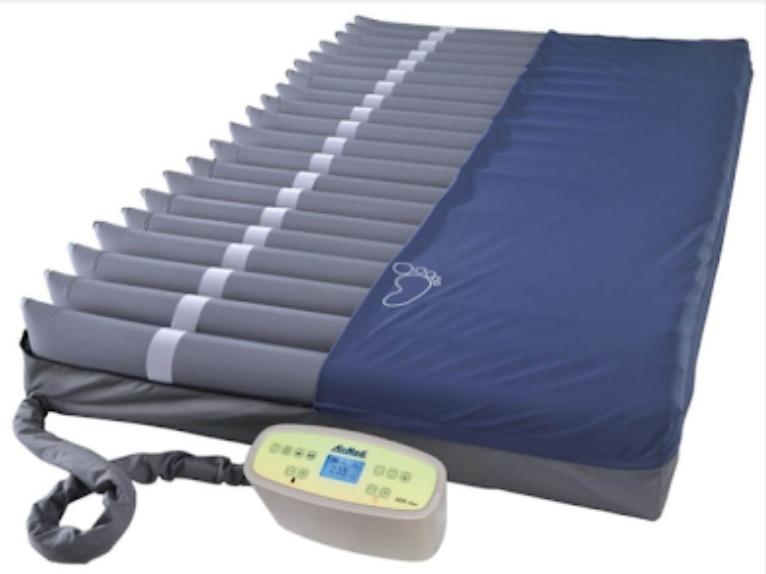
Here, as a rule, two chambers remain inflated at the same time, while one chamber is relieved.
This means that the weight tends to be distributed over a larger surface.
What does this mean in practice?
A larger support surface can help to reduce pressure peaks.
And it is precisely these pressure peaks that are considered a significant risk factor in the development of pressure ulcers.
A three-chamber system allows for a more continuous pressure distribution, as no area of the body is completely loaded on its own
This can increase the likelihood that tissue is relieved and can regenerate more effectively.
Technical comparison – explained in a clear way
Two-chamber systems operate with two air segments alternating.
In certain phases, more weight is placed on one side.
Three-chamber systems use three segments, so that typically two are load-bearing at the same time.
This results in a finer gradation of pressure distribution and a more even load
Relevance for distributors and users
For users in daily care practice, a more even pressure distribution may mean:
potentially greater lying comfort
a more stable positioning without abrupt pressure changes
a supportive effect in pressure ulcer prevention
For distributors, this represents a clear advantage in communication:
an easy-to-explain added value
a differentiating technical feature
strong practical relevance in customer discussions
Conclusion
A three-chamber system does not replace clinical expertise or medical assessment.
However, due to its design, it can contribute to distributing pressure more evenly and thereby improve the conditions for effective pressure ulcer prevention.
Put simply:
The more evenly pressure is distributed, the higher the likelihood of reducing critical pressure peaks.