
#Product Trends
Growing Demand for Pelvic Floor Rehabilitation: A Market and Health Perspective
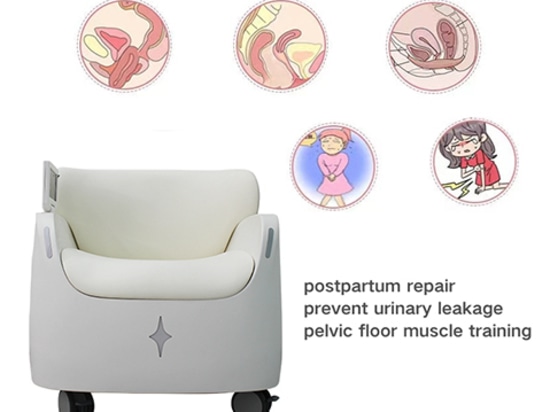
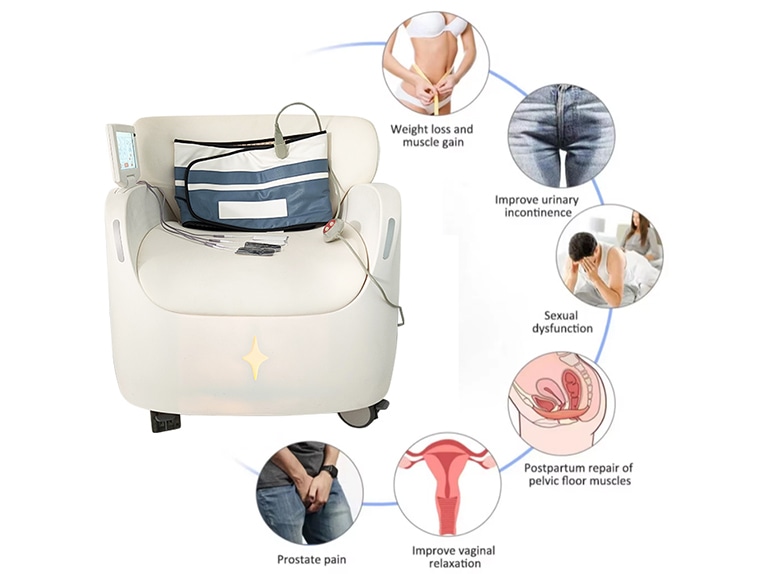
EMS Magnetic Chair: Meeting the Need for Efficient and Convenient Care
Pelvic floor dysfunction affects millions of people worldwide, impacting bladder control, sexual health, and quality of life.
A large Spanish study found that a staggering 46.5% of women report experiencing at least one pelvic floor disorder. Among young women, including millennials and Generation Z, eight in ten report experiencing bladder urgency, urinary leakage, or pelvic pain.
These conditions, which can cause physical discomfort and diminish social confidence, often take years to diagnose—with an average of three visits required to obtain an accurate pelvic floor diagnosis.
Despite this high prevalence, 80% of pelvic floor therapists do not accept insurance, resulting in out-of-pocket costs exceeding $330 per patient per month in the United States. This highlights the need for affordable, accessible treatment options.
Advanced technologies are reshaping pelvic health:
1. High-intensity focused electromagnetic therapy (EMS), such as the EMS magnetic chair, can simulate 12,000 Kegel exercises per session, providing powerful muscle strengthening effects.
2. These methods are increasingly favored over traditional surgery or medication, which often carry risks and a long downtime.
3. Non-invasive, at-home, app-enabled devices are driving a surge in demand.
4. EMS Magnetic Chair: Meeting the Need for Effective, User-Friendly Care
Clinically Proven: Achieve deep pelvic muscle contractions equivalent to 12,000 Kegel exercises in just 30 minutes.
Fast Results: Many users report improvement after a single session; 95% experience a significant improvement in quality of life.
Comfortable and Convenient: Non-invasive, clothed treatment with zero downtime. Get back to your daily life immediately.
Smart and Safe: Equipped with an ergonomic slide-out design, a smart on/off system, and scientifically calibrated pulses.
5. Why It Matters
1. A Large and Underserved Patient Population
Nearly half of women over 40 experience bladder problems; younger women are increasingly affected. The Magnetic Chair provides a needed, non-invasive solution for many.
2. Cost-effective and Scalable
With the rise of chronic conditions like urinary incontinence, insurance-free tools like the magnetic chair offer a cost-effective alternative with minimal training.
3. Tech-Driven Health Trends
Western markets are increasingly favoring digital, at-home health solutions. The magnetic chair's intelligent design addresses this need and supports remote collaboration with healthcare partners.
With the increasing prevalence of pelvic floor disorders across all age groups (from postpartum women to the elderly), there is a pressing need for effective, convenient, and non-invasive solutions. Market data indicates that the pelvic floor disorder market is growing rapidly (valued at $1-2 billion, with a double-digit compound annual growth rate), but a treatment gap leads to financial pressure and treatment delays.
The magnetic chair addresses this gap: it is a powerful, user-friendly device that replicates thousands of Kegel exercises, quickly building muscle strength and integrating into busy modern lives—without surgery, pain, or high costs. It perfectly meets the needs of the Western health market.