#Trade Shows & Events
How to Choose the Right Surgical Instruments for your Hospital or Clinic
Right Surgical Instruments for Your Hospital or Clinic
How to Choose the Right Surgical Instruments for Your Hospital or Clinic
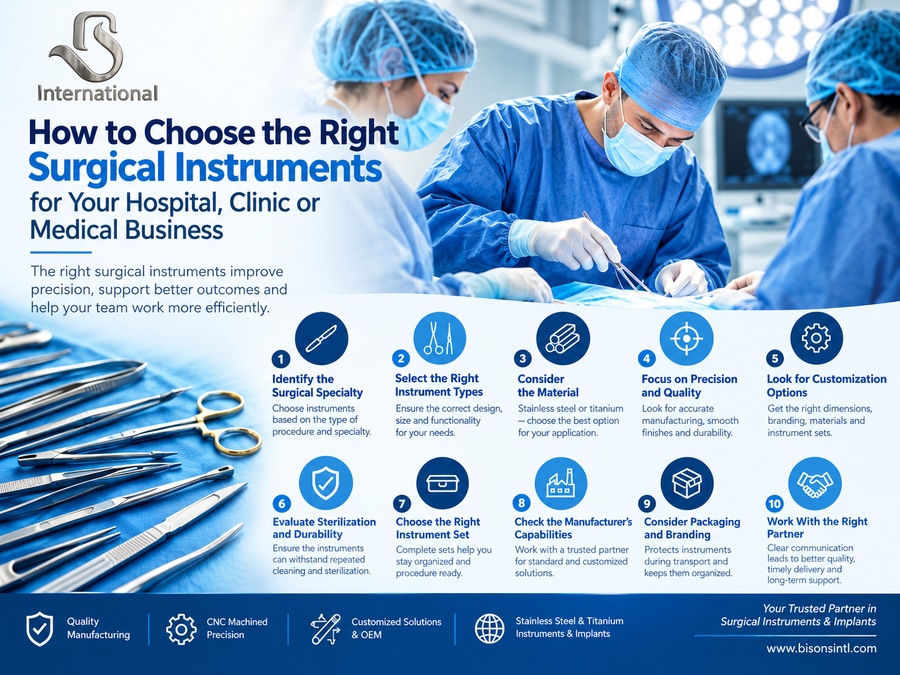
Choosing the right surgical instruments is an important decision for hospitals, clinics, surgical centers, and medical distributors. The appropriate instruments can support surgeons during procedures, improve handling and precision, and help healthcare facilities maintain efficient operating-room workflows.
With a wide range of surgical instruments available in different designs, sizes, materials, and configurations, selecting the right products requires careful consideration. This guide explains the key factors to consider when choosing surgical instruments for your hospital, clinic, or medical business.
1. Identify the Surgical Specialty
The first step is to determine the type of procedures for which the instruments will be used. Different surgical specialties require different instrument designs and configurations.
Depending on your requirements, you may need instruments for:
General surgery
Orthopedic surgery
Neurosurgery
Spine surgery
Trauma surgery
Laparoscopic surgery
Ophthalmic surgery
Dental surgery
Gynecological surgery
Veterinary surgery
Electrosurgery
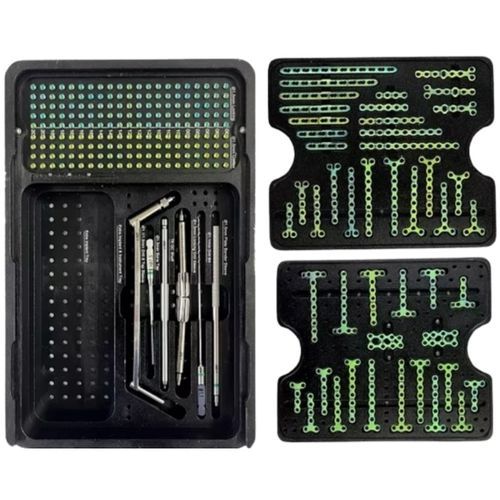
For example, orthopedic procedures may require specialized retractors, bone-holding forceps, osteotomes, drill guides, plate benders, depth gauges, and other fixation instruments. Neurosurgical and spine procedures require instruments designed for precise access and controlled manipulation in delicate surgical areas.
Identifying the specialty and procedures first makes it easier to determine exactly which instruments and instrument sets are required.
2. Select the Correct Instrument Types
Once the surgical specialty has been identified, the next step is to determine the specific instruments needed.
Common surgical instrument categories include:
Scalpels and surgical knives
Surgical scissors
Forceps
Needle holders
Retractors
Clamps and hemostatic forceps
Bone instruments
Elevators and osteotomes
Rongeurs
Curettes
Surgical suction instruments
Drill guides and sleeves
Measuring instruments
Surgical instrument sets and trays
The correct design and dimensions are particularly important. Instruments should be appropriate for the procedure and provide the surgeon with the required access, visibility, grip, and control.
3. Consider the Instrument Material
Material selection is another important consideration when purchasing surgical instruments.
Stainless steel is widely used for surgical instruments because it provides a combination of strength, corrosion resistance, durability, and suitability for repeated sterilization.
Different stainless-steel grades can be selected depending on the application and required properties.
Titanium is another option for certain specialized applications. Titanium instruments are lightweight and offer excellent corrosion resistance, making them useful where reduced instrument weight and specific material characteristics are required.
The appropriate material should be selected according to the intended application, instrument design, sterilization requirements, and customer specifications.
4. Pay Attention to Precision and Manufacturing Quality
Surgical instruments require accurate manufacturing because even small differences in dimensions, alignment, surface finish, or jaw configuration can affect their handling and functionality.
When evaluating a manufacturer, consider:
Dimensional accuracy
Proper alignment of working ends
Smooth movement of hinged instruments
Consistent surface finishing
Proper cutting or gripping performance
Corrosion resistance
Repeatability between production batches
Manufacturing capabilities such as CNC machining and controlled production processes can be particularly important for instruments requiring precise dimensions and customized designs.
5. Consider Customization Requirements
Not every hospital, surgeon, distributor, or medical company requires standard instruments.
Some customers may need:
Customized dimensions
Specific jaw configurations
Special working lengths
Modified handles
Customized instrument sets
Special materials
Laser marking or branding
Customized packaging
Instrument trays or sterilization cases
For medical distributors and OEM customers, customization can also allow products to be manufactured according to their specifications or existing product references.
Before placing an order, it is useful to provide the manufacturer with drawings, photographs, dimensions, product references, or samples whenever available.
6. Evaluate Sterilization and Durability
Surgical instruments are commonly subjected to repeated cleaning, disinfection, and sterilization. Therefore, the instruments should be designed and manufactured with the intended reprocessing procedures in mind.
When selecting instruments, consider:
Compatibility with the facility's sterilization process
Resistance to corrosion
Surface finish
Ease of cleaning
Mechanical durability
Proper maintenance requirements
For instrument sets, the arrangement of instruments inside the case or tray should also allow appropriate handling, cleaning, and sterilization according to the healthcare facility's procedures.
7. Choose the Right Instrument Set
Purchasing individual instruments is not always the most practical solution. For specific procedures, a complete surgical set can provide the required instruments in one organized package.
A customized surgical set may include instruments selected according to:
A specific surgical procedure
Surgeon preference
Hospital requirements
Implant system
Instrument quantity
Instrument dimensions
Tray or case configuration
Customized sets can also help distributors and healthcare facilities maintain a consistent product configuration.
8. Check the Manufacturer's Custom Manufacturing Capability
For hospitals, distributors, OEM customers, and medical companies, it can be beneficial to work with a manufacturer capable of producing both standard and customized instruments.
A capable manufacturer should be able to discuss technical requirements, review drawings or samples, recommend suitable materials, manufacture prototypes when required, and produce the final instruments according to agreed specifications.
For larger projects, customers may also want to evaluate the manufacturer's production capabilities, quality-control processes, documentation, packaging options, and communication throughout the order.
9. Consider Packaging and Branding
Packaging is another important part of a surgical instrument supply program, particularly for distributors and OEM customers.
Depending on the requirements, instruments may be supplied in:
Stainless-steel trays
Sterilization cases
Instrument boxes
Customized cases
Protective packaging
Branded packaging
Laser marking, logos, product codes, and other identification requirements can also be considered where appropriate.
Good packaging should protect the instruments during transportation and storage while keeping the products organized and identifiable.
10. Work With a Manufacturer That Understands Your Requirements
Choosing a surgical instrument manufacturer is not only about comparing prices. Technical communication, customization capability, manufacturing experience, quality requirements, delivery expectations, and after-sales support can all be important when establishing a long-term supply relationship.
Before placing an order, clearly communicate:
Required instruments
Quantities
Dimensions
Material preferences
Drawings or reference samples
Required modifications
Packaging requirements
Branding requirements
Quality and documentation requirements
Clear specifications at the beginning of a project can help reduce misunderstandings and ensure that the finished instruments match the intended application.
Customized Surgical Instruments From Bisons International
Bisons International is a customized manufacturer and exporter of surgical instruments and implants, serving customers with requirements across multiple surgical specialties.
Our product range includes orthopedic, neurosurgical, spine, general surgical, laparoscopic, trauma, ophthalmic, dental, gynecological, veterinary, and other specialized surgical instruments and implants.
We provide customized manufacturing according to customer requirements, including instrument dimensions, designs, materials, configurations, branding, instrument sets, and packaging. Our manufacturing capabilities include CNC-machined components and customized surgical products in stainless steel and titanium.
Whether you require individual surgical instruments, complete procedure-specific sets, OEM products, or customized instruments based on drawings, photographs, samples, or existing product references, our team can discuss the technical requirements and manufacturing possibilities.
Conclusion
Selecting the right surgical instruments requires more than choosing a product from a catalog. The surgical specialty, instrument design, material, precision, durability, sterilization requirements, customization, packaging, and manufacturing capabilities should all be considered.
By clearly defining your requirements and working with an experienced surgical instrument manufacturer, hospitals, clinics, surgeons, and medical distributors can develop instrument solutions suited to their specific applications.
Bisons International supports customized surgical instrument and implant requirements for customers looking for reliable OEM and customized manufacturing solutions.