#Product Trends
From "End-of-Life" to a New Beginning: A Miracle of Precision Neurosurgery
"We were prepared for the worst. We had already begun making funeral arrangements..."
These heart-wrenching words came from the family of a 56-year-old patient.
A sudden fall in the bathroom led to a severe intracerebral hemorrhage (ICH). Upon admission, he was in a deep coma with total paralysis on his right side. It was even once thought that even if he were saved, he might remain in a vegetative state for life. In a moment of absolute despair, his family had already signed a DNR (Do Not Resuscitate).
"We just wanted to fight for him, one last time."
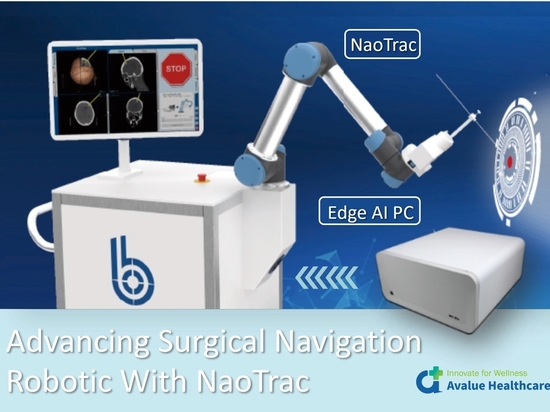
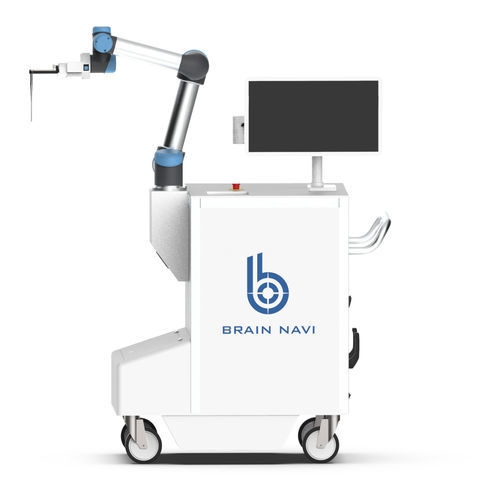
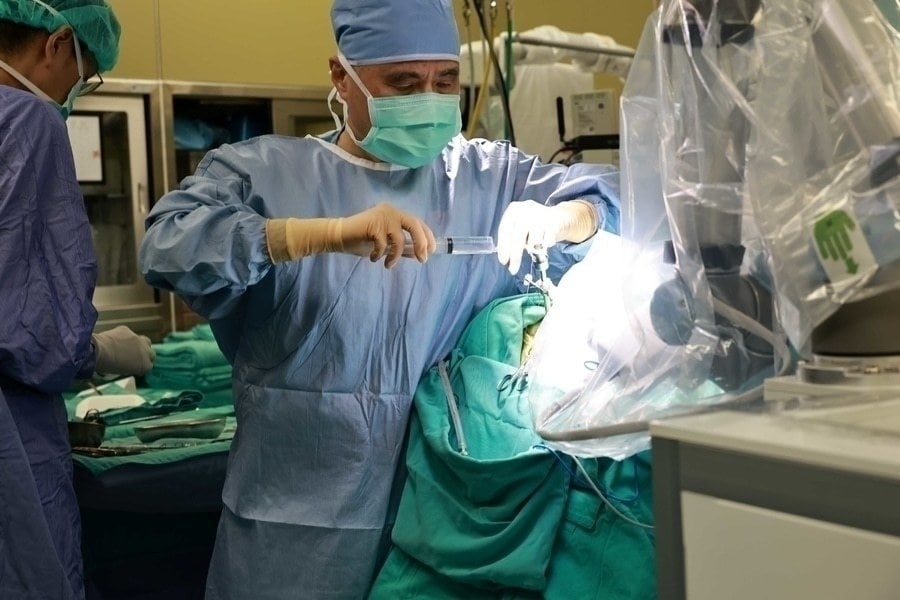
Driven by love and a refusal to give up, his family transferred him to Mennonite Christian Hospital from Hulian, Taiwan. To reach the deep-seated blood clot pressing against vital nerves, the medical team deployed the latest in medical robotics: the NaoTrac Neurosurgical Navigation Robot.
Precision Where Every Millimeter Counts
Dr. Chiou Chung-Lang, Vice President of Mennonite Christian Hospital , explains that the human brain is as complex as a maze. Traditional surgery often faces "blind spots," but robotic assistance acts as a high-precision "navigation system," guiding surgeons with sub-millimeter accuracy through brain tissue while skillfully bypassing critical areas that govern life signs. Unlike traditional large-scale craniotomies, this approach requires only a micro-incision the size of a fingernail to target and remove blood clots precisely. By relieving brain pressure without damaging nerves, this technology became the key to Ah-Qiang’s rapid awakening and his journey to sitting up again.
The Turning Point
The recovery that followed moved his partner and family to tears. The clinical data tells a story of a life reclaimed:
Restored Consciousness:
His Glasgow Coma Scale (GCS) improved from responding only to pain to being fully conscious, able to hold conversations and follow commands.
Regained Muscle Power: His right-side paralysis (initially Grade 0 muscle strength) has shown signs of life, with muscle contractions returning (Grade 1).
Quality of Life: Once completely bed-bound, he can now sit up with assistance, use a wheelchair, and clearly communicate his needs.
Bridging the Gap in Medical Care
Geographic location should never dictate the quality of care. This milestone—the first successful robot-assisted brain surgery at Mennonite Christian Hospital—is a testament to the synergy between Brain Navi Biotecnology's innovative technology and the courage of the human spirit.
Precision medicine exists for one reason: to protect every glimmer of hope that refuses to fade.
Make surgery precise, make life bright.