#Product Trends
FROM SUBJECTIVE OBSERVATION TO OBJECTIVE DATA: A NEW APPROACH TO REHABILITATION
When clinical experience meets measurable information
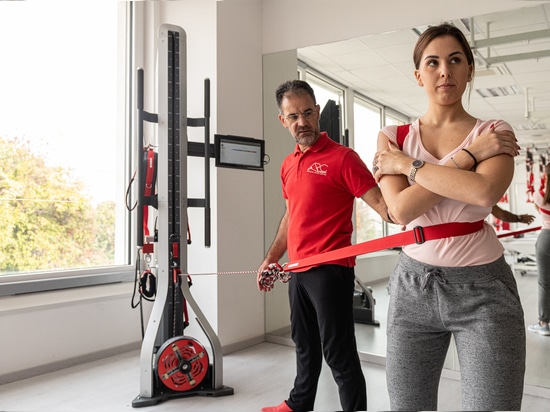
Clinical observation, professional experience and direct interaction with the patient remain essential elements of rehabilitation.
However, technology can add another important layer to this process: objective data.
How much force is the patient producing?
Is there a difference between the left and right side?
Is performance improving over time?
Has the patient recovered strength but still shows an asymmetry?
How does the patient respond to a specific exercise or load?
Being able to measure these parameters can provide professionals with additional information to support their assessments and make rehabilitation and training progression more measurable.
Why objective data matters
Two patients may complete the same exercise successfully while producing very different results.
Visual observation alone may not always reveal differences in force production, power, range of motion, balance or asymmetry.
Objective assessment allows professionals to quantify these parameters and compare them over time.
This creates a simple but powerful process:
ASSESS → TRAIN → MONITOR → REASSESS
Instead of relying exclusively on perception, professionals can combine their expertise with measurable information to better understand how a patient or athlete is progressing.
From a single measurement to a complete picture
The real value of data is not simply collecting numbers.
A measurement becomes useful when it can be interpreted, compared and connected to the training or rehabilitation process.
Depending on the assessment and equipment used, parameters such as:
Force
Power
Left/right asymmetry
Range of motion
Balance and load distribution
Exercise performance
can provide additional insight into the individual's condition and progression.
Repeated assessments can then help professionals identify changes over time and determine whether the selected training strategy is producing the expected results.
Turning assessment into action
This is where technology can become particularly useful.
Testing and training should not necessarily be considered two separate processes.
When assessment tools, training equipment and software work together, the information collected during testing can support the professional in defining and adapting the subsequent training program.
For example, identifying a significant difference between the two limbs may help the professional focus on that imbalance and subsequently reassess the patient to monitor how the situation evolves.
The goal is not to replace professional judgement.
The goal is to give professionals more information to support it.
The Desmotec approach
At Desmotec, we develop technologies that integrate assessment, training and data analysis within the same ecosystem.
Our solutions combine isoinertial training equipment, assessment devices and dedicated software to help professionals evaluate performance and monitor progression throughout the training or rehabilitation process.
With D.Soft Pro, professionals can manage different types of assessments and analyze parameters such as force, power, asymmetries and range of motion, depending on the connected Desmotec equipment and the test performed.
The collected information can be stored and compared, allowing professionals to follow the evolution of the individual over time.
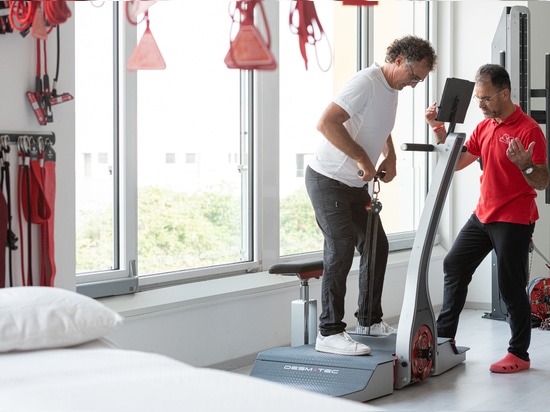
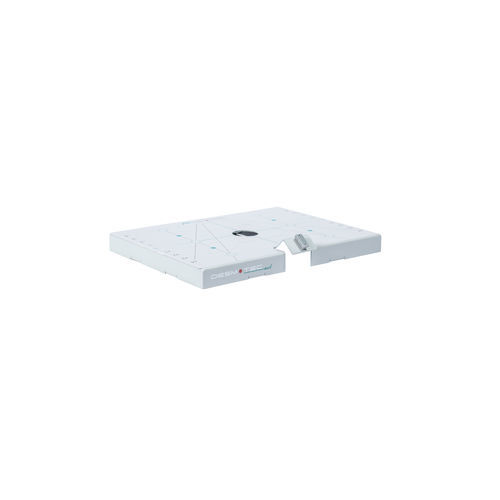
Desmotec balance assessment solutions, including E.Board and E.Mini MED, further extend this approach by providing objective information related to balance and load distribution.
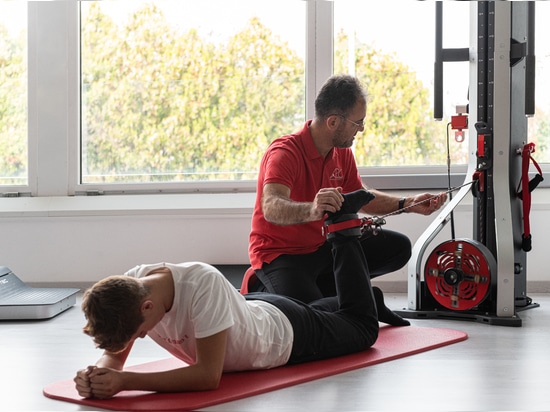
At the same time, our isoinertial solutions allow professionals to move from assessment to active training within the Desmotec ecosystem.
Technology supporting professionals, not replacing them
Digitalization in rehabilitation should not mean removing the professional from the process.
Clinical knowledge, experience and human interaction remain fundamental.
Technology should instead make relevant information easier to collect, understand and use.
For Desmotec, the future of rehabilitation lies in combining:
PROFESSIONAL EXPERTISE + OBJECTIVE DATA + PERSONALIZED TRAINING
The result is a workflow in which professionals can assess, train, monitor and reassess using measurable information throughout the process.
Because progress should not only be observed.
It should also be measurable.