#Product Trends
Locking Cold Inside Cargo Bodies: Lightweight VIPs Extend Operating Range for Autonomous Refrigerated Vehicles
Solve EV cold‑chain range bottlenecks: rethink cargo‑body insulation instead of only adding bigger batteries for last‑mile autonomous delivery fleets
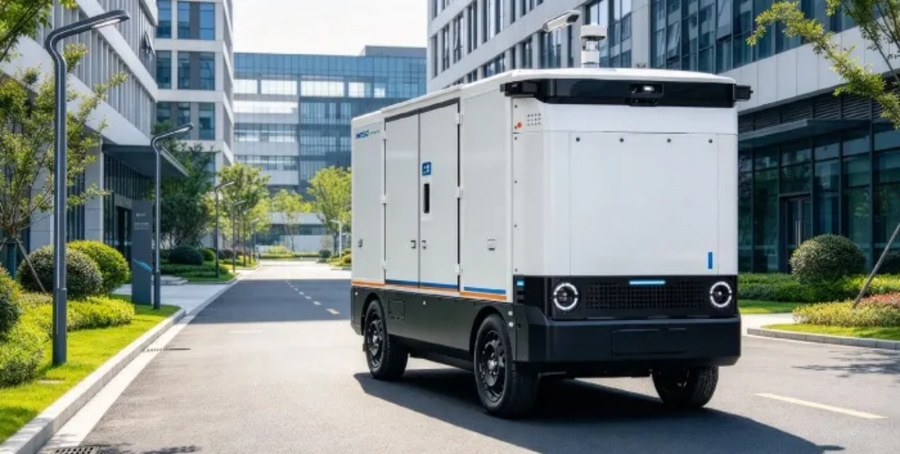
As autonomous refrigerated vehicles move from prototype to mass‑production for warehouse‑to‑store and community last‑mile deliveries, operators face a critical bottleneck: the battery must power both vehicle propulsion and continuous refrigeration. Traditional thick PU‑foam insulation adds weight, shrinks cargo volume, and forces frequent refrigeration‑unit cycling that drains battery capacity. This article introduces SuperCooler lightweight VIP (Zhuoqing series) as a system‑level fix, not merely a material swap. With thermal conductivity ≤0.0045 W/(m·K), low‑density core material, low cold‑temperature brittleness, and limited dimensional shift upon puncture, lightweight VIP‑PU composite cargo‑body walls can be 30‑50 % thinner than pure PU builds. Within identical outer dimensions, internal cargo volume rises 10‑20 %, overall vehicle weight drops, refrigeration runtime shortens, and temperature fluctuations reduce after frequent door openings. Real‑world operational gains include extra daily delivery trips, fewer charging cycles, lower spoilage risk for pharmaceuticals and premium perishables. SuperCooler delivers more than panels: thermal simulation, thermal‑bridge optimisation, multi‑temperature‑zone custom structures, refrigeration‑unit matching, type‑approval support and full life‑cycle cost analysis for OEM partners.