#Product Trends
PEMF for Horses: Benefits and Risks
PEMF for Horses
PEMF Therapy for Horses: Summary
Pulsed Electromagnetic Field (PEMF) therapy is a non-invasive treatment for horses that uses low-frequency electromagnetic waves to stimulate cellular repair and physiological responses. Originally developed for racehorses with fractures, it works by generating gentle electrical currents within cells, enhancing energy (ATP) production, improving oxygen/nutrient uptake, and promoting better blood circulation.
Key Benefits:
Pain & Inflammation Relief: Effectively reduces pain from arthritis, tendon/ligament injuries, and post-surgical recovery. Studies and clinical experience show improved mobility, reduced swelling, and decreased reliance on pain medication.
Accelerated Healing: Promotes faster healing of bones (even complex fractures), wounds, surgical sites, and soft tissues like tendons and ligaments. Notable cases, like racehorse Lava Man recovering from a severe abscess in days, demonstrate its potential.
Improved Performance & Recovery: Enhances muscle function, reduces post-exercise soreness, and speeds up recovery, leading to better performance in sport and racehorses. It was widely used at events like the Kentucky Derby.
Stress Reduction & Calming: Lowers anxiety levels, helping horses stay calmer during travel, competitions, and stressful situations, improving focus and willingness to work.
Enhanced Circulation & Muscle Function: Improves blood flow, delivering more oxygen and nutrients to tissues, aiding muscle relaxation and function, particularly beneficial for older horses.
Mechanism & Application:
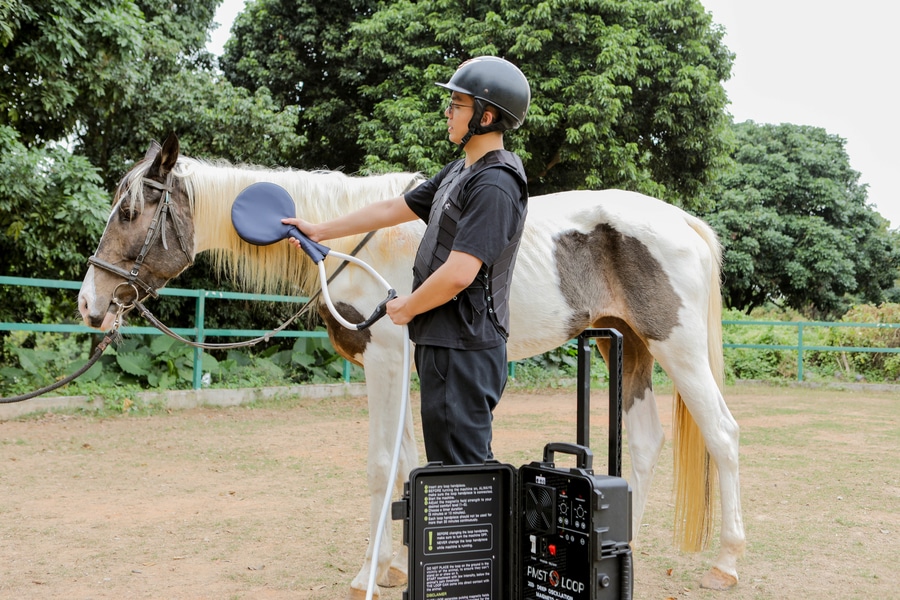
PEMF devices (pads, loops) are placed on or near the horse's body without needles or surgery. Sessions typically last 30+ minutes, targeting specific areas (joints, muscles, spine, wounds). The frequency, waveform, and intensity settings are crucial and should be tailored to the horse's condition by a trained professional, often starting low and adjusting as needed. NASA research supports its role in tissue growth and repair.
Safety, Risks & Contraindications:
PEMF is generally considered very safe with minimal, transient side effects (e.g., mild sweating, runny nose, temporary hair shedding). However, it is contraindicated in specific situations:
Active Bleeding: Can worsen bleeding.
Pregnancy: Safety not established.
Battery-Operated Implants: Can interfere with devices like pacemakers.
Organ Transplants: Potential impact on immunosuppressive drugs.
Certain Medications: May interact with drugs (e.g., for cancer, thyroid, blood clots).
External Metal Fixations: Requires caution and professional guidance.
Evidence & Practical Use:
While anecdotal reports and some studies (e.g., showing reduced swelling and pain medication use in arthritic horses) are positive, the article acknowledges the need for more large-scale, rigorous clinical validation. PEMF is not a replacement for traditional veterinary care but is best used as a complementary therapy within a comprehensive veterinary treatment plan. Outcomes can vary between horses; some show improvement after one session, while others require multiple treatments. Effects may not always be long-lasting.
Conclusion:
When applied correctly by trained professionals using appropriate devices (like those offered by T&B Beauty) and under veterinary guidance, PEMF therapy offers significant benefits for horses, including pain relief, faster healing, reduced inflammation, improved performance, and stress reduction. Its non-invasive nature and safety profile make it a valuable tool in equine management, though careful attention to contraindications and integration with conventional veterinary care is essential.