
#Industry News
What Can Be Mistaken for Distemper?
Canine distemper virus (CDV) is one of the most deceptive diseases in veterinary medicine.
Conditions That Mimic Distemper: Why Diagnosis Is So Tricky
CDV is sometimes called a “clinical chameleon” in veterinary literature, and for good reason. According to research published in Veterinary Microbiology (Martella et al., 2020), CDV can produce clinical signs that overlap with at least five other major canine diseases. The virus moves through the body in stages, and each stage mirrors a different illness:
Stage 1 (Respiratory): Nasal discharge, coughing, and fever — easily confused with canine parainfluenza or kennel cough.
Stage 2 (Gastrointestinal): Vomiting and bloody diarrhea — nearly identical to canine parvovirus (CPV).
Stage 3 (Neurological): Seizures, tremors, and muscle tics — resembling rabies, toxin exposure, or canine adenovirus (CAV-1) encephalitis.
Without confirmatory testing, a veterinarian may start treating the wrong condition entirely. A canine distemper test kit eliminates this guesswork by detecting CDV antigen directly from an eye, nasal, or saliva swab in minutes.
Canine Influenza vs. CDV — Could It Just Be a Cold?
Could your dog’s cough be something as simple as canine influenza, or is it the early stage of distemper? This is one of the most common dilemmas in small-animal practice. Canine influenza virus (CIV) causes fever, nasal discharge, and a persistent cough — symptoms that overlap almost perfectly with CDV’s respiratory phase.
The key distinction is progression. Canine influenza typically remains respiratory and resolves within two to three weeks with supportive care. CDV, however, does not stay confined to the respiratory tract. As documented in a study by Panzera et al. (2020) in Viruses, CDV systematically spreads to the GI tract and then to the central nervous system, often within two to four weeks of initial exposure.
A canine distemper test kit administered during the respiratory phase can rule CDV in or out before neurological signs appear — giving veterinarians a critical head start on isolation and treatment protocols.
Rabies or Distemper? The High-Stakes Differential
Perhaps no diagnostic overlap carries higher stakes than CDV versus rabies. Both diseases can cause neurological signs — seizures, disorientation, aggression, and excessive salivation. But the implications are radically different: rabies is zoonotic, nearly 100% fatal, and triggers mandatory quarantine protocols. CDV, while serious, is treatable and non-zoonotic.
The critical advantage? A canine distemper test can deliver a result in 5–10 minutes from a safely collected swab, while rabies can only be confirmed post-mortem via brain tissue analysis. This means that a rapid CDV test is often the first diagnostic step in neurological cases — if positive, it immediately narrows the differential and reduces panic. If negative, rabies protocols can be activated sooner.
For veterinary practices in rabies-endemic regions across Asia, Africa, and Latin America, stocking a reliable CDV rapid test is not optional — it is a frontline safety tool for both staff and animal patients.
Why a Rapid Canine Distemper Test Changes Everything
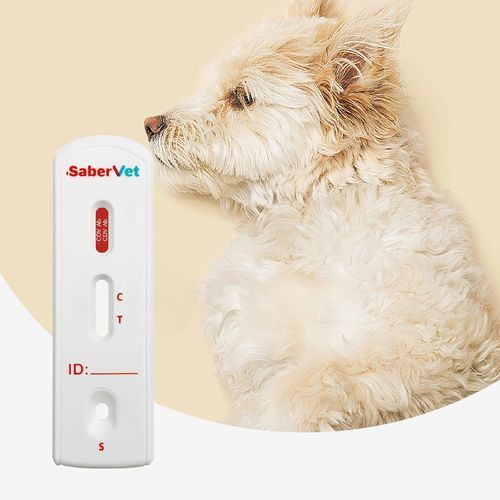
The Sabervet CDV Ag Rapid Test is designed for exactly these ambiguous clinical presentations. With 96.67% sensitivity compared to PCR, it detects CDV antigen from eye, nasal, or saliva swabs with results in 5–10 minutes. No laboratory infrastructure, no cold chain, no waiting.
A study published in BMC Veterinary Research (Silva et al., 2019) evaluated point-of-care CDV antigen tests in shelter environments and found that rapid lateral flow assays significantly reduced diagnostic turnaround time compared to PCR — from days to minutes — without a clinically meaningful loss in accuracy.
This speed matters because CDV treatment outcomes improve dramatically with early intervention. Antiviral therapy, supportive care, and isolation protocols are most effective when started during the respiratory phase — before the virus reaches the nervous system.
Frequently Asked Questions
What diseases are most commonly confused with canine distemper?
Parvovirus (gastrointestinal phase), canine influenza and kennel cough (respiratory phase), canine adenovirus (systemic illness), rabies (neurological phase), and certain toxin exposures are the most common differentials.
How accurate is a rapid canine distemper test?
The Sabervet CDV Ag Rapid Test achieves 96.67% sensitivity versus PCR reference testing. Specificity is 97.33%, meaning false positives are rare. A positive result justifies immediate isolation and treatment.
Can a dog have distemper and another disease at the same time?
Yes. CDV suppresses the immune system, making co-infections with CPV, respiratory bacteria, or secondary parasites common. Testing for multiple pathogens simultaneously is recommended in high-risk environments.
At what stage of distemper does a rapid test work best?
Antigen tests perform best during the acute respiratory phase (days 3–14 post-exposure), when viral shedding is highest. Testing later in the disease course may yield false negatives.
Conclusion
CDV’s ability to mimic other diseases makes it one of veterinary medicine’s greatest diagnostic challenges. The solution is not more experience or better clinical judgment alone — it is confirmatory testing at the point of care. A rapid canine distemper test kit transforms an uncertain clinical presentation into a clear action plan within minutes, protecting both individual patients and entire kennel populations from unnecessary exposure.
For shelters, veterinary clinics, and breeders managing high-risk canine populations, the cost of a canine distemper test is negligible compared to the operational burden of a full-scale CDV outbreak. Don’t wait for neurological signs to appear — test early, isolate confidently, and treat decisively.