#Product Trends
How access engineering improves safety and airtightness in hospital environments
Smart automatic solutions that ensure hygiene, operational efficiency, and protection in modern hospitals.
In the design and management of healthcare infrastructures, hospital engineering plays a decisive role in ensuring that every space fulfills its clinical function under the strictest safety standards. The facilities of a modern hospital are not merely structural elements, but complex systems that must guarantee asepsis, radiological protection, and operational flow. Within this ecosystem, Manusa automatic doors have become the perfect technical solution to meet the needs of healthcare environments.
Automatic doors in critical areas: challenges and solutions in hospitals
Hospital engineering must respond to highly specific technical needs through the implementation of intelligent structures. Integrating access systems into centralized Building Management Systems (BMS) allows automatic doors to stop being passive elements and become active safety components.
In this context, automatic doors help address various challenges in critical areas:
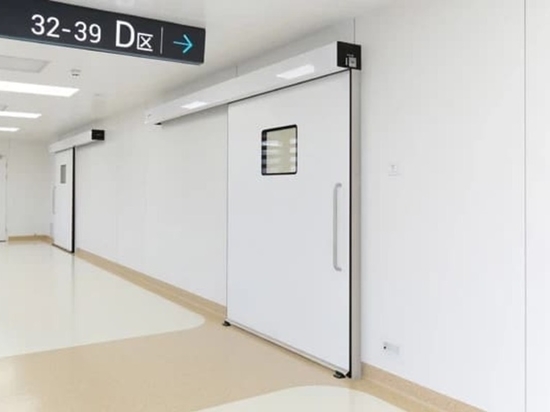
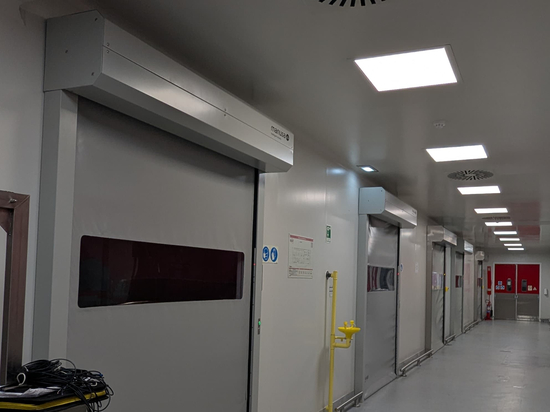
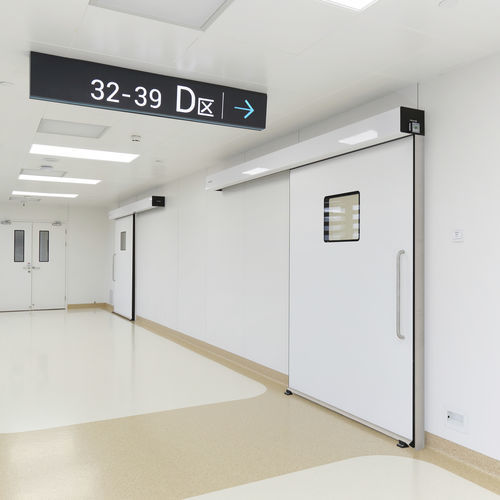
Guaranteed airtightness: In areas such as operating rooms or intensive care units, it is essential to ensure hermetic sealing that maintains pressure differentials and prevents cross-contamination. For this purpose, there are solutions specifically designed to provide high levels of airtightness and hygiene.
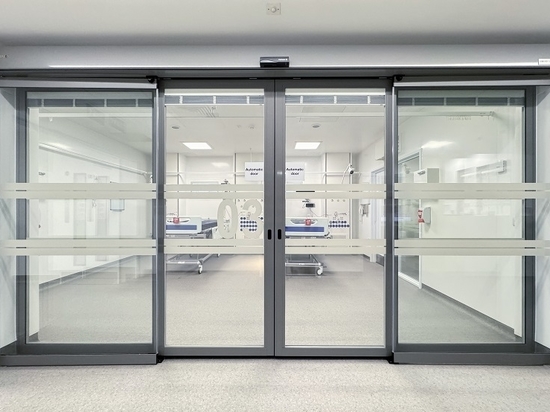
Efficiency and thermal flows: Intelligent opening solutions minimize exposure times, reducing thermal losses and contributing to environmental stability in sensitive areas. A good example is the airtight glazed sliding automatic door for ICUs. It guarantees airtightness, provides broad interior visibility, and also allows the installation of electropolished glass without compromising privacy.
Protection and operational safety: Coordination between access systems and emergency protocols enables efficient evacuation management, ensuring that only authorized personnel can access restricted or sensitive areas. In this regard, there are solutions designed to delimit critical areas in case of fire, such as the EI fire-resistant sliding automatic door.
Accessibility: They facilitate access for people with reduced mobility, patients on stretchers or wheelchairs, as well as healthcare staff in high-use situations.
Bellvitge Hospital: a benchmark in surgical engineering
One of the projects where Manusa has implemented cutting-edge technical solutions is the Semi-Critical Patients Unit of the Cardiology Department at Bellvitge University Hospital in Barcelona. In this new unit, 19 automatic doors with IoT technology were installed, allowing connectivity monitoring and remote door control.
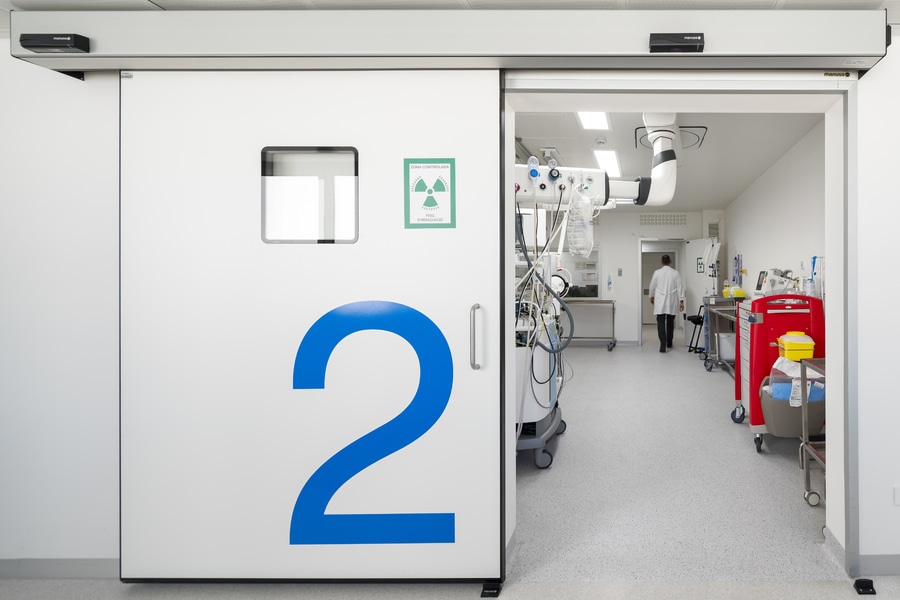
This hospital also has hybrid operating rooms equipped with lead-lined sliding automatic doors for X-rays. A model specially designed for radiology that ensures room insulation thanks to lead thicknesses between 2 and 3 mm. Among its benefits are:
Ensuring hygiene and safety
Radiation protection
Combining surgery and radiological testing in the same space
Ultimately, modern hospital engineering requires strategic partners capable of designing and installing solutions that integrate technology and functionality. Manusa is positioned as a benchmark in this sector, providing the technical rigor needed to build the hospitals of the future: impeccable, efficient, and technically safer spaces.
Contact Manusa’s team of experts for advice on our automatic doors and access control systems for healthcare centers.