#Product Trends
Meiwo 3D Animal Anatomy Software for Veterinary Education
3D Animal Anatomy Software
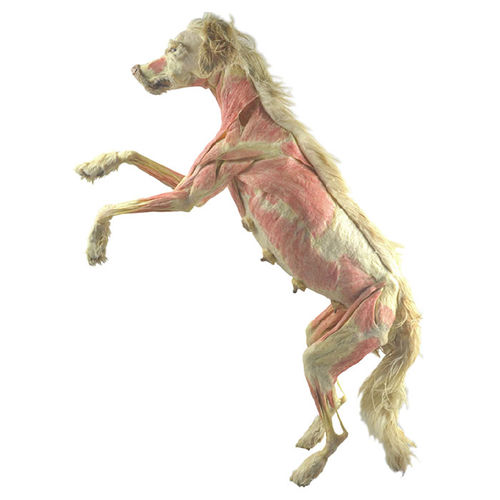
Meiwo 3D Animal Dissection Software is a virtual simulation teaching system developed by Meiwo Science, focusing on the field of veterinary medical education. The system uses 3D modeling technology to provide a highly realistic animal dissection learning experience and supports digital dissection operations on a variety of experimental animal models.
Meiwo 3d animal anatomy software includes the anatomy of 12 kinds of animals, pigs, cattle, sheep, chickens, horses, rabbits, dogs, cats, fish, pigeons, mice, frogs.
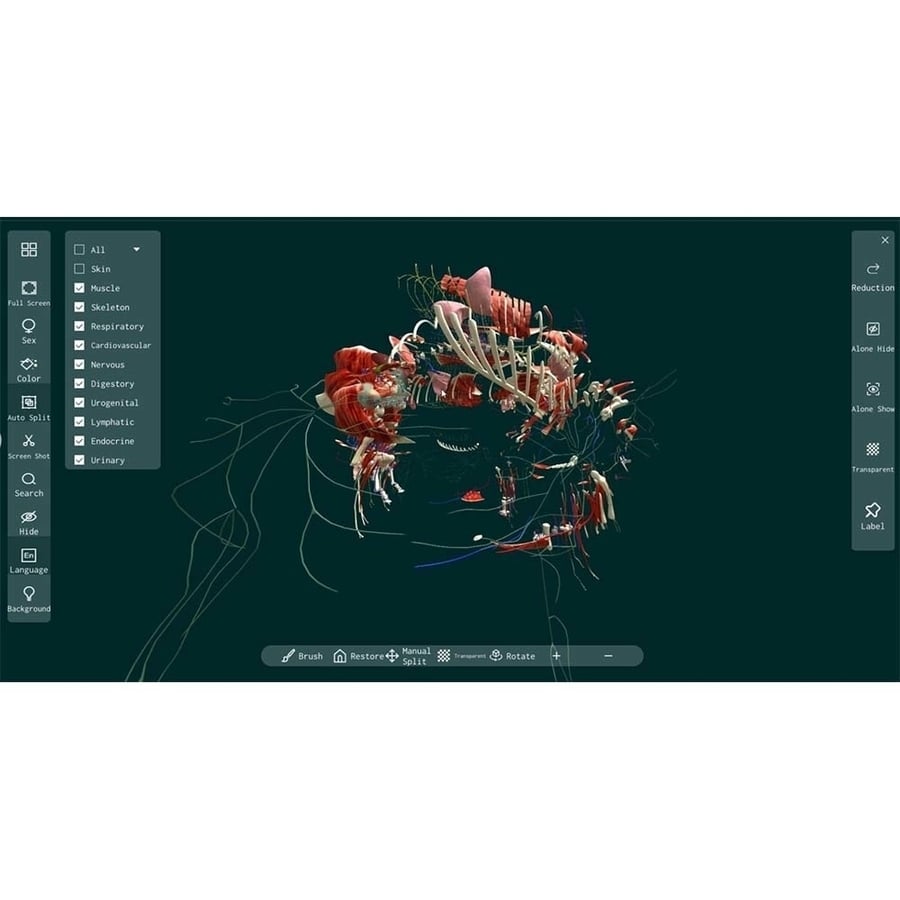
The 3d animal anatomy system is divided into ten system modules: muscle, bone, respiratory, cardiovascular, nervous, digestive, reproductive, lymphatic, endocrine, and urinary. The system includes all the structural tissues of the body, and each module can be freely combined for practical training
For the ten system modules, different transparency can be set for each module at the same time, so that the internal structure of different systems can be viewed at the same time during teaching and training, avoiding visual obstruction of a single module system; the transparency of each layer can also be set separately to view the structure of the inner layer
The system provides gender selection, and the organizational structure changes with different genders, providing a complete set of teaching and training content
The digital animal anatomical structure can rotate 360 degrees, so that the same structure can be viewed from different angles, and the display can be enlarged or reduced. Layer-by-layer dissection, addition of anatomical structures or organs and system components can be achieved by clicking or dragging the mouse;
The 3d anatomy system provides a coloring function, which can color different structures with different colors, which is convenient for better observation and recognition of the structural area in teaching and training, making the system structure combination clearer.
The ten major system modules can automatically split each tissue structure with one-click explosion, which greatly enhances the operator's interest in learning anatomy.
The operator can disassemble the system structure arbitrarily with the mouse, and supports one-click restoration and reset function.
Multiple screenshots can be taken continuously. After the first screenshot, subsequent screenshots will be automatically saved in the location of the first storage.
It has a screen brush function, providing at least five brush colors to choose from, real-time annotation of anatomical structures and teaching key points, and supports screenshot saving, and provides a one-click erase function.
High-definition image display, supporting 1920x1080 full HD display interface quality.
Annotation function: The mark can move with the model, such as rotation, scaling, etc. The annotation information can be hidden with one click, and the annotation function of multiple identification points on a single tissue structure is provided.
The system module supports Chinese and English bilingual teaching interface. Each anatomical structure has Chinese and English annotation instructions, which is suitable for Chinese and English bilingual teaching, and has pronunciation function.
The search function supports both Chinese and English search methods, and the search results will be displayed in a separate display.
The 3d anatomy system supports two user types, students and teachers, to log in and access. The teacher can add and modify the label information.
The 3d anatomy software supports the function of displaying and hiding individual structures separately.
Meiwo 3d animal anatomy software is used for anatomy teaching in veterinary medicine, animal science, and other fields, and has been adopted by numerous agricultural colleges and veterinary training institutions both domestically and internationally, supporting cross-regional collaborative learning and resource sharing.