#Product Trends
The Needle Free Era: When Injections Take the Needle Away, How Do We Redefine Next Generation Drug Delivery?
For over a century, the hypodermic needle has been the universal symbol of medical injection. It is trusted, familiar, and ubiquitous. But it is also painful, anxiety‑inducing, and—when safety protocols fail—dangerous.
What if the future of injection did not involve a needle at all?
What Is Needle‑Free Injection Technology?
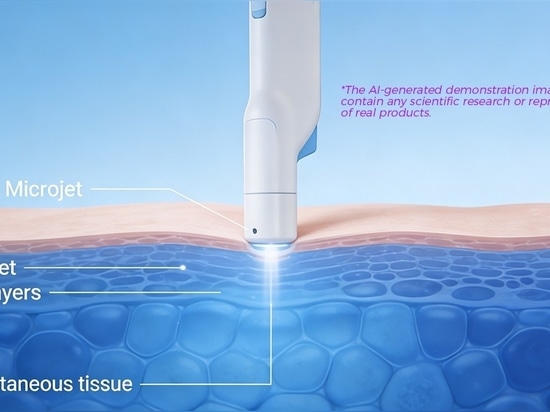
Needle‑free injection technology (NFIT) delivers medication through a high‑speed jet stream that penetrates the skin without a needle. By generating sufficient pressure—typically from springs, compressed gas, or electromechanical actuators—the device forces a narrow stream of liquid (thinner than a human hair) at velocities commonly exceeding 100 metres per second, creating a micro‑orifice in the skin through which the drug disperses into the subcutaneous tissue. The process occurs in less than one‑tenth of a second, making it efficient and clinically safe.
Contemporary needle‑free technologies have evolved along three main trajectories:
Jet injectors (spring‑, gas‑, or electromechanically powered): The most mature category, widely used for insulin delivery and large‑scale vaccination programmes. Jet‑based systems currently hold the largest segment of the market.
Needle‑free IV connectivity systems: Designed to eliminate needle use in intravenous lines, reducing infection risk and sharps waste in hospital settings.
Micro‑array patches (MAPs) and emerging technologies: Early‑stage but highly promising platforms, including dissolvable nanopatches packed with thousands of microscopic projections that deliver vaccine antigens directly to immune‑rich skin layers without pain or sharps.
Each technology targets the same question: can we achieve the same—or better—clinical outcomes without the needle?
The Drivers: Pain, Phobia, and Prevention
Three forces are pushing healthcare toward needle‑free delivery.
Needle phobia. Fear of needles is not rare – it is a major barrier to care. Needle phobia affects up to one in four adults and two out of three children, often leading to missed vaccinations, delayed treatments, and avoidance of blood tests. Patients with needle aversion may postpone or entirely forgo essential care, with consequences that ripple across public health outcomes.
Needlestick injuries. The risk to healthcare workers is equally urgent. Hospital‑based healthcare workers in the U.S. accidentally prick themselves with needles an estimated 385,000 times each year. Needle‑free devices completely eliminate this risk by removing the needle entirely.
Patient compliance. For individuals managing chronic conditions – diabetes, growth hormone deficiency, fertility treatments – daily or weekly injections create a continuous burden of pain, inconvenience, and emotional distress. Improved patient acceptance through pain‑free delivery directly translates into better adherence and therapy outcomes.
Article content
The Evidence: Comparable to Needle‑Based Injection
A critical question must be answered before any technology replaces the standard: does it work as well as the needle?
A 2026 comparative study published in Medical Devices: Evidence and Research (peer‑reviewed) directly addressed this question. Researchers compared a novel NFI device (SAIJECT®) with conventional needle‑based subcutaneous injection for insulin delivery and ovalbumin (OVA) vaccination. The study found no significant difference in pharmacological activity or antibody production between the two methods. Evans blue dye injected by the NFI device was broadly distributed throughout the dermis and subcutaneous tissue without skin perforation or leakage, confirming that the device efficiently delivers drugs while maintaining tissue integrity.
The authors concluded: “These findings provide direct evidence supporting the applicability of NFI technology for the SC delivery of biopharmaceuticals and highlight the potential of the NFI devices as a practical and effective alternative to conventional needle‑based injection methods.”
A comprehensive 2026 review of needle‑free jet injectors for global vaccine delivery published in Pharmaceutics (MDPI) reached a consistent conclusion. Evaluating vaccines including inactivated influenza, hepatitis B, typhoid, rabies, and measles, the review reported that antibody titers and seroconversion rates after NFJI administration are comparable to those achieved with conventional needle injection. Notably, needle‑free delivery was associated with reduced sharps waste and improved vaccination rates during high‑volume immunization campaigns.
Thus, the evidence base is no longer a question of whether needle‑free can work. It is a question of when and how broadly.
The Challenges That Remain
Yet substantial barriers persist on the path to true “needle‑free medicine”.
Cost. Needle‑free devices carry significantly higher upfront costs. According to market research, needle‑free injectors may range from approximately 300, while conventional needles can cost as little as $4.53. This price gap remains a major constraint in price‑sensitive markets.
Large‑volume and intravenous administration. Current needle‑free technologies are primarily designed for subcutaneous, intradermal, or intramuscular delivery. For high‑volume injections (over 1 mL) or intravenous infusions, conventional needles and IV lines remain the gold standard. Needle‑free IV connectivity systems address part of this challenge, but full replacement of all needle applications remains distant.
Formulation compatibility. Jet injection exposes drug formulations to transient shear stress during high‑velocity delivery. The 2026 review cautions that “formulation stability remains a critical determinant of successful jet‑based vaccine administration, particularly for protein antigens, adjuvanted formulations, and emerging mRNA vaccines”.
Regulatory and adoption pathways. While regulatory agencies including the FDA and EMA have cleared multiple NFI devices, the approval pathway for each new drug‑device combination remains rigorous. Additionally, even approved devices require healthcare worker training, workflow integration, and clinical trust.
The new tariff risk. Geopolitical headwinds add an unexpected cloud. A 2025 report notes that U.S. tariffs on medical devices could raise prices for jet injector systems and microneedle patches, potentially slowing adoption in the world’s largest healthcare market.
Implications for the Medical Consumables Industry
For medical consumables manufacturers, the rise of needle‑free technology raises strategic questions – not existential threats.
The consumables industry will not disappear, but its composition will evolve. Needle‑free systems require single‑use nozzles, drug cartridges, disposable actuators, and other consumable components that remain core competencies in high‑volume, safety‑critical manufacturing. Meanwhile, the global installed base of traditional needles will remain enormous, particularly in low‑resource settings with limited healthcare budgets. Syringes and needles will not vanish overnight.
The key is portfolio thinking. Manufacturers must continue delivering reliable, compliant conventional injection products while building capability for complementary needle‑free consumables. Evidence generation – partnering with researchers for clinical studies – and strategic partnerships with NFI device manufacturers represent clear opportunities.
Looking Ahead
The needle has served healthcare well for 170 years. But the future does not belong to the needle alone – it belongs to options: patient‑centered options that respect not only biological safety but also human experience.
The pain of a needle may disappear from millions of patients’ experiences. The risk of a needlestick injury may fall toward zero. But the fundamental mission of the industry remains unchanged: deliver safe, reliable, scalable products that protect patients and providers alike.
The question is not whether needle‑free technology will arrive. It is how quickly healthcare systems, regulators, payers, and manufacturers will embrace it.