
#Industry News
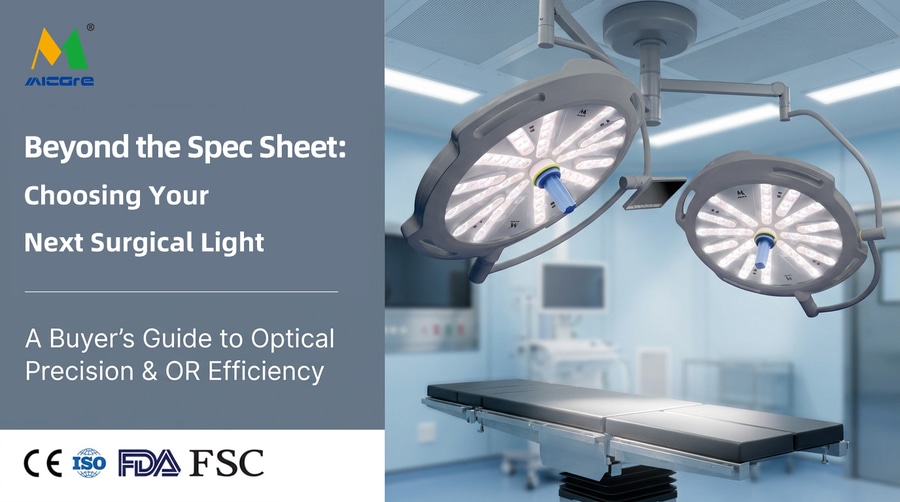
How to Choose the Right Surgical Light for Different Operating Rooms
A Buyer’s Guide to Optical Precision, OR Layouts, and Avoiding the "Spec Sheet" Trap
In a modern, digitally integrated operating room (OR), lighting is far more than a basic fixture. It is the surgeon’s "second pair of eyes." Whether it is a meticulous neurosurgical procedure, a minimally invasive laparoscopy with limited visualization, or a fast-paced veterinary operation, the quality of illumination directly dictates surgical precision, patient safety, and the chronic fatigue levels of the surgical team.
However, a "one-size-fits-all" approach to procurement often leads to underutilized equipment or wasted budget. Choosing the right surgical light requires a deep dive into clinical specialties, architectural layouts, and future-proofing strategies.
4 Critical Lighting Metrics: Beyond the Spec Sheet
Many procurement teams fall into the trap of buying based purely on data points. In reality, the success of a surgical light lies in the balance of its optical parameters.
1. Illuminance (Lux) & Spot Diameter Adjustment
Illuminance measures the intensity of light hitting the surgical field, with industry-standard ceilings topping out around $160,000 \text{ Lux}$. However, chasing maximum brightness is a mistake. Excessive, uncalibrated glare off wet tissues causes severe eye strain over long hours.
Procurement Tip: Look for systems that offer stepless dimming and motorized or manual spot-size adjustment to seamlessly transition between deep-cavity and superficial procedures.
2. Color Rendering Index (CRI): The Critical R9 Factor
While a general CRI ($R_a$) tells part of the story, the real metric to watch in surgery is $R_9$—the saturated red rendering index.
Clinical Impact: The surgical field is dominated by blood and anatomical tissue. An exceptionally high $R_9$ value (95 or above) allows surgeons to differentiate subtle variations between healthy tissues, microvasculature, and necrotic structures, drastically reducing the risk of accidental trauma.
3. Color Temperature Customization
Fixed-color temperature is a thing of the past. Modern LED systems offer an adjustable range typically between $3,500\text{K}$ and $5,000\text{K}$.
Specialty Matching: Deep general surgery or neurosurgery benefits from higher, cooler color temperatures (crisp white/blue tones) to enhance structural contrast. Conversely, lengthy orthopedic surgeries are easier on the eyes when shifted to slightly warmer tones.
4. Shadow Dilution Management
During surgery, the light path is constantly obstructed by the surgeon's head, hands, and auxiliary booms. Premium surgical lights overcome this using multi-lens LED arrays or overlapping reflector technology. Even when a significant portion of the lighthead is blocked, the remaining LEDs redirect light to maintain a perfectly illuminated, shadow-free cavity.
Form Factor: Ceiling-Mounted vs. Mobile Systems
Depending on your facility's ceiling height, laminar airflow configurations, and room turnover rates, you will need to choose between two main structural layouts.
Feature / Metric:Ceiling-Mounted Systems 、Mobile / Standalone Systems
Field Coverage:Full $360^\circ$ articulation; zero blind spots、Localized coverage; restricted by base positioning
OR Footprint:Zero floor space used; zero interference with laminar flow、Takes up floor space; potential workflow/traffic bottleneck
Stability & Drift:Spring-arm balanced; rock-solid positioning without drifting、Highly portable, but articulation is mechanically limited
Total Cost of Ownership:Higher initial cost + structural ceiling prep required、Budget-friendly; plug-and-play with zero installation costs
Best Suited For... :Main ORs, Hybrid Suites, Day Surgery Centers、ER trauma bays, Exam rooms, Vet clinics, Minor procedure rooms
Lighthead Configuration: Single Dome vs. Double Dome?
This is usually where the biggest budget debates happen.
Single-Dome Systems: Highly cost-effective and low maintenance. If your facility primarily handles routine, superficial surgeries, or localized outpatient interventions, a single, high-quality dome is more than sufficient.
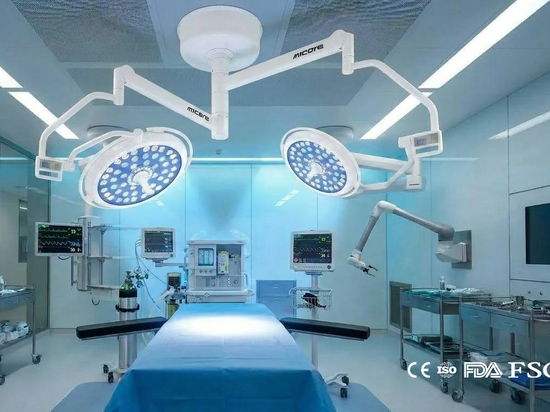
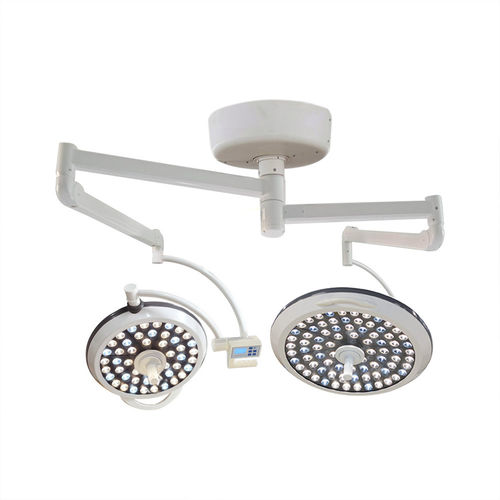
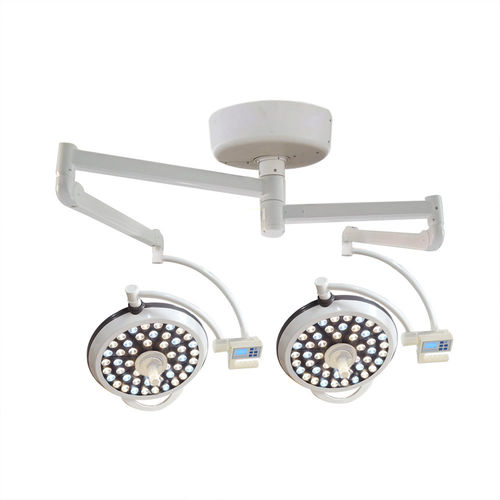
Double-Dome (Master/Satellite) Systems: The gold standard for multi-specialty hospital ORs. Dual lightheads allow the surgical team to illuminate the site from two distinct angles, completely erasing deep-cavity shadows. Furthermore, the secondary arm is ideal for integrating an in-light HD camera for surgical recording and tele-education.
The Tough Questions to Ask Suppliers During Bidding
To cut through the marketing fluff, put these specific technical questions to your vendors during the evaluation phase:
"Is the illumination dimming stepless, or does it jump in increments? What is the actual spot diameter at a 1-meter working distance?"
"What are the independent, certified test results for the $R_a$ and $R_9$ values, and do they degrade over time?"
"How does the lighthead handle heat dissipation? What is the temperature rise at the lighthead surface and at the patient level?" (Crucial for preventing tissue desiccation and maintaining laminar flow stability).
"What brand is the suspension arm system (e.g., Ondal), and can the brake/drift tension be adjusted in-house after years of use?"
"What is the local lead time for critical spare parts like power modules and LED boards once the warranty expires?"
The Verdict: Avoiding the "Spec Sheet" Trap
The most common mistake in surgical light procurement is focusing solely on maximum Lux. A light that is blindingly bright but boasts terrible color rendering or a heavy, drifting arm will be universally hated by your surgical staff.
Ultimately, you are investing in optical stability and ergonomic maneuverability. Before signing off on a purchase order, always demand an on-site trial or a physical demo. Let your orthopedic and general surgery leads physically position the light and judge the illumination themselves. A clinical team that is happy with their lighting is the best return on investment your hospital can ask for.