#Product Trends
Rethinking Instrument Logistics for Robotic Surgery
A dedicated system helps protect, organize and move robotic-arm instruments from CSSD/SPD storage to the operating room.
Robotic surgery has transformed what is possible inside the operating room, but the workflow surrounding robotic instruments extends far beyond the procedure itself. Specialized robotic-arm instruments must also be stored, organized and transported between CSSD/SPD and the OR. Protecting these delicate and valuable instruments throughout that journey requires logistics designed around their specific dimensions and handling requirements.
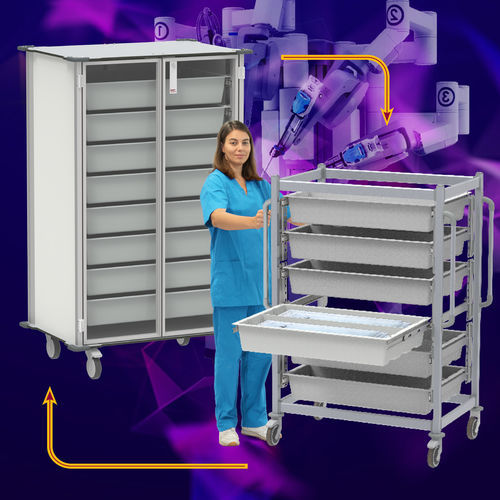
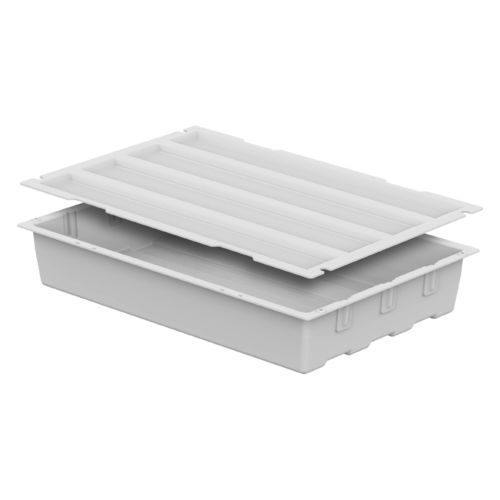
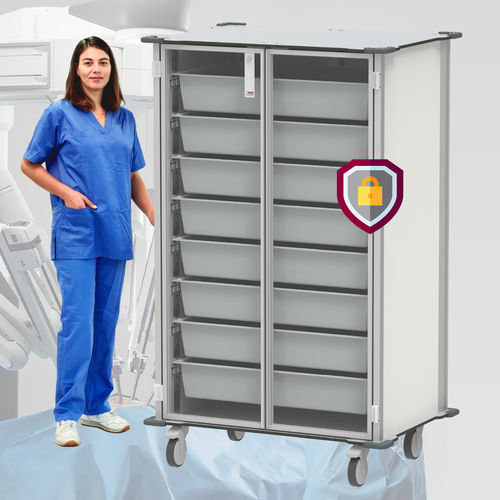
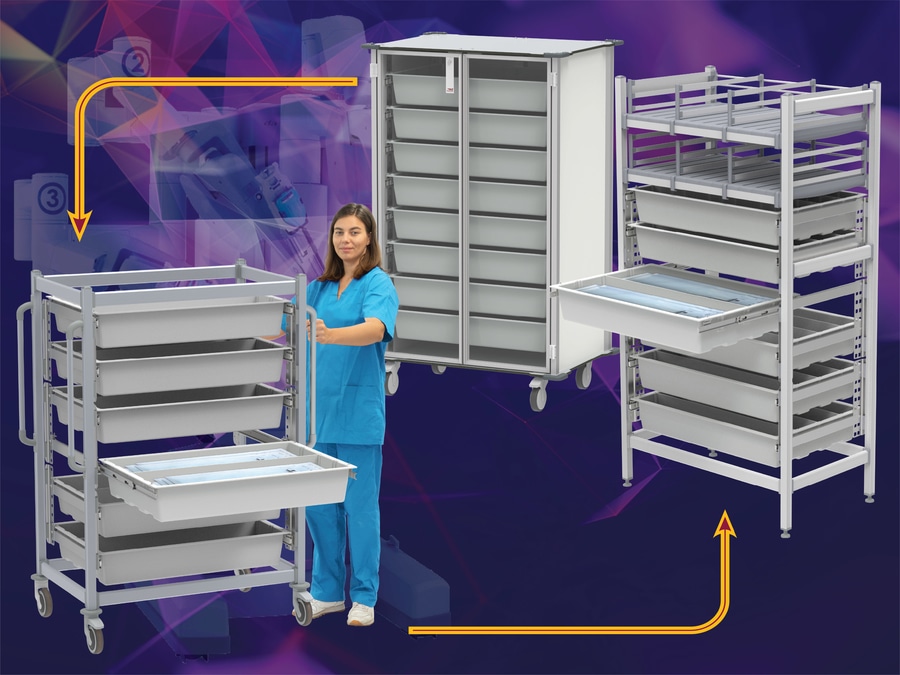
Pegasus Medical developed a dedicated storage and transportation system based on extra-large 80 × 60 cm modules designed specifically to accommodate robotic-arm instruments. The trays can be divided into four sections for organized storage, while telescopic slides provide controlled access and locking options help keep valuable instruments secure.
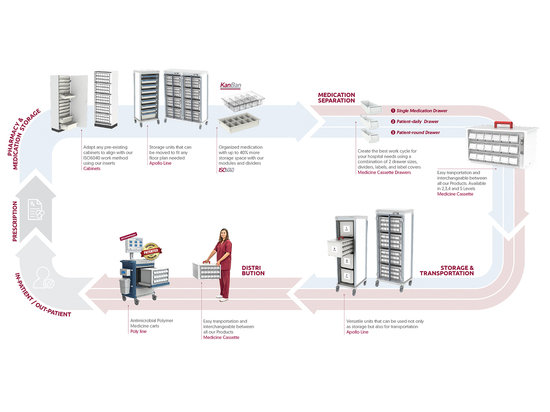
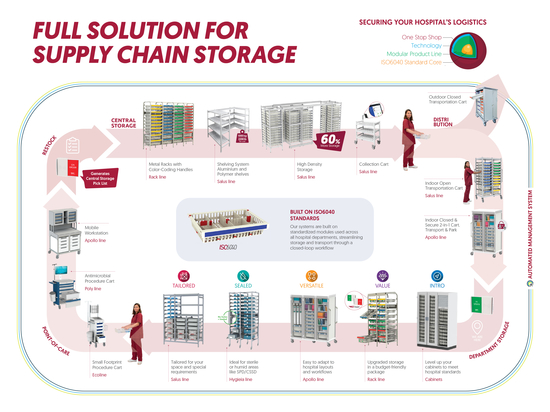
Rather than approaching storage and transportation as separate stages, the solution creates a coordinated workflow from sterile processing storage to the point of use. A dedicated Salus rack provides organized storage in CSSD/SPD, an Apollo Flex closed cart provides secure mobile storage, and a Salus open cart supports transportation between workflow stages. The Salus system incorporates a wider frame for enhanced stability, while the Apollo Flex configuration uses 12 mm HPL panels for greater durability and performance.
As sophisticated robotic technology becomes part of the surgical environment, the supporting logistics must be designed with the same level of consideration. A dedicated system for robotic-arm instruments helps hospitals maintain consistent organization, protection and efficient transport from CSSD/SPD to the OR while reducing handling risks throughout the workflow.