#Industry News
Practical Applications of Blood Gas Analysis Across Various Departments: From ICU to General Wards
Seamaty SG1
#### Blood Gas Analysis Testing
Blood gas analysis is primarily used to evaluate the respiratory function, acid-base balance, and metabolic status of the human body. It can provide real-time insights into a patient's true condition, assisting in clinical monitoring and adjustments to treatment plans. Clinically, blood gas analysis is widely applied and plays different roles across various departments.
#### 1. What is Blood Gas Analysis?
Blood gas analysis refers to the comprehensive analysis of different types of gases and acid-base substances in the blood. Common indicators include oxygen partial pressure (pO2), carbon dioxide partial pressure (pCO2), and pH levels.
However, in a broader sense, blood gas analysis not only includes blood gas analysis and acid-base balance analysis but also encompasses electrolytes, lactate, glucose, and their derivatives.
Due to its critical role in managing respiratory failure caused by lung diseases and rescuing critically ill patients, as well as in addressing acid-base balance disorders resulting from internal medicine, surgery, obstetrics and gynecology, pediatrics, shock, extensive burns, or surgical procedures, it is now widely used in various clinical departments of hospitals.
#### 2. Clinical Significance of Blood Gas Analysis
The clinical significance of blood gas analysis lies in assessing the body's respiratory function and acid-base balance status:
① Understanding the patient's respiratory status;
② Assessing the patient's tissue perfusion and metabolic status;
③ Evaluating the patient's lung function (respiratory failure) and kidney function (internal environment disorder);
④ Providing a basis for oxygen supplementation or assisted ventilation (ventilator): Essential in the ICU;
⑤ Detecting acid-base balance in the body (heart failure, kidney failure, severe diabetes, severe infection, alcohol poisoning);
⑥ Serving as an important monitoring measure for supervising the patient's condition, guiding treatment, and determining prognosis.
#### 3. Applications of Blood Gas Analysis in Clinical Departments
1. **Emergency Resuscitation**: Due to varying degrees of metabolic imbalances in critically ill patients, emergency department doctors require rapid access to the patient's blood pH, pO2, and pCO2 values to provide laboratory evidence for correcting acid-base imbalances during resuscitation. By collecting and analyzing blood samples on-site during resuscitation, obtaining quick, effective, and accurate data is crucial for the timely and accurate treatment of patients.
2. **ICU, CCU, and Other Intensive Care Units**: Critically ill patients in ICU, CCU, and other intensive care units often experience internal environment disorders, accompanied by multiple organ dysfunctions, especially lung and kidney dysfunction. This can easily lead to arterial blood gas abnormalities and acid-base balance disorders. Severe acid-base balance disorders can affect the function of vital organs and sometimes become a direct cause of death. Therefore, timely and accurate identification and management are often key factors in saving critically ill patients. Dynamic monitoring of arterial blood gas changes during treatment provides more guidance for the treatment of critically ill patients.
3. **Diagnosis of Neonatal Asphyxia**: During childbirth, certain high-risk factors before and during labor may lead to neonatal asphyxia. These newborns often exhibit mixed acidosis (respiratory and metabolic) at birth. However, as breathing is established after birth, respiratory acidosis is quickly eliminated, while metabolic acidosis persists for a longer time in a compensatory state. Umbilical cord blood gas analysis can objectively and sensitively reflect the degree of neonatal asphyxia, i.e., the state of the newborn after 1 minute of birth, which helps clinicians provide timely and correct treatment for asphyxiated newborns.
4. **Clinical Application in Pediatric Pneumonia**: Pneumonia is a serious threat to children's health and is the most common cause of death in infants and young children. Children with pneumonia are prone to hypoxia and acid-base balance disorders. Clinically, the timely detection and correct management of acid-base balance disorders often rely on the rapid and accurate measurement of oxygen partial pressure, carbon dioxide partial pressure, and pH in arterial blood. Blood gas analysis is of great guiding significance for clinicians to timely grasp and correct acid-base balance disorders in children with pediatric pneumonia and to judge the respiratory failure of children with severe pediatric pneumonia.
5. **Clinical Application in Respiratory Medicine**: Diagnosis of respiratory failure; guidance and observation of the efficacy of mechanical ventilation; daily monitoring of respiratory function and acid-base balance status in hospitalized patients (such as those with COPD, asthma, pneumonia, and other acute respiratory emergencies).
6. **Anesthesiology and Operating Room**: Anesthetized patients are prone to blood gas changes and acid-base imbalances due to the effects of disease, anesthesia, surgery, as well as intraoperative bleeding and blood transfusion, fluid infusion. About 60% of cardiac arrests occurring during anesthesia and recovery are related to hypoxemia and hypercapnia. The application of blood gas analysis during this period can provide a comprehensive understanding of the patient's respiratory function, timely detection, and accurate diagnosis of hypoxemia and hypercapnia, providing a basis for correctly handling blood gas changes and acid-base imbalances in anesthetized patients, thereby avoiding anesthesia accidents, ensuring patient safety during anesthesia and surgery, reducing surgical risks, and reducing the occurrence of intraoperative and postoperative complications.
7. **Application in Cardiology**: During the perioperative period of cardiac surgery, the patient's breathing is controlled by a ventilator, and the cardiopulmonary function is replaced by an artificial heart-lung machine during cardiopulmonary bypass. The blood gas acid-base steady state is artificially regulated, and the use of hypothermia also profoundly affects the blood gas and acid-base steady state. The application of POCT blood gas analyzer for dynamic monitoring of blood gas and acid-base steady state can accurately and comprehensively reflect the body's cardiopulmonary function and tissue metabolic status, which is of great significance for the formulation, implementation, and revision of the surgical plan.
8. **Application in Patients with Liver Cirrhosis**: In patients with liver cirrhosis, the degree of hypoxemia is often mild and easily masked by the symptoms of liver disease. However, once symptoms such as hypoxia and shortness of breath appear, the disease is often quite severe. By using a blood gas analyzer to monitor blood oxygen levels, early detection of hypoxemia in patients with liver cirrhosis can help clinicians take timely action to improve the patient's quality of life.
In conclusion, the importance and indispensable role of blood gas analysis in clinical practice cannot be overstated. It not only serves as a reference indicator for clinical diagnostic criteria and assists in tracing the cause of the disease but also guides clinical treatment and prognosis observation. More importantly, with the standardization of the medical system, the specific reports of blood gas analysis provide strong evidence-based medical evidence for medical disputes arising during clinical diagnosis and treatment.
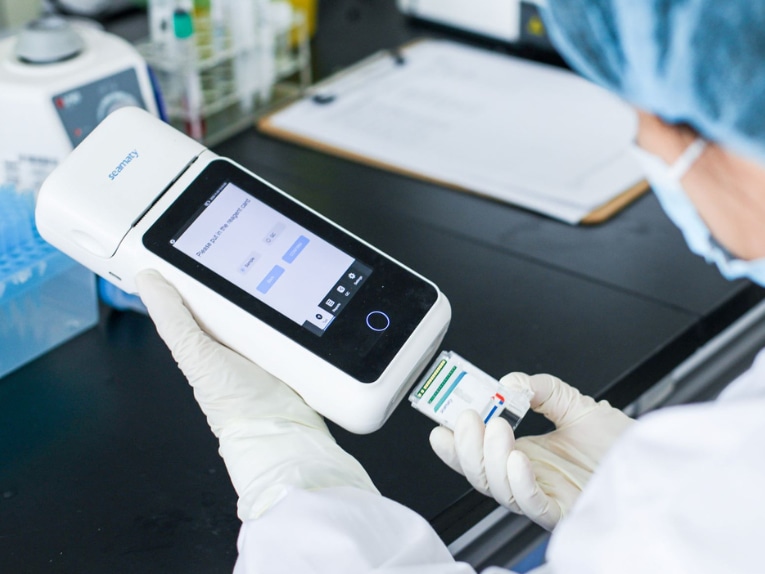
Smart SG1 Blood Gas and Electrolyte Analyzer
Dry Blood Gas, Handheld Operation, Three Steps to Results
Utilizing technologies such as biosensors, microfluidics, reagent immobilization, and liquid embedding, the complex blood gas detection is miniaturized into a device the size of a POS terminal. The device is compact and equipped with a high-capacity battery, enriching the scenarios of use. It makes blood gas detection not only limited to the laboratory but also applicable to bedside, treatment rooms, emergency departments, ambulances, and field hospitals, helping doctors perform tests at the patient's side and accelerating treatment decisions.