#Product Trends
Beneath the Surface: How Near-Infrared Vein Visualization Works
-vivolight
When we think about vein visualization, we often focus on what we can see on the skin. But the real science happens beneath the surface.
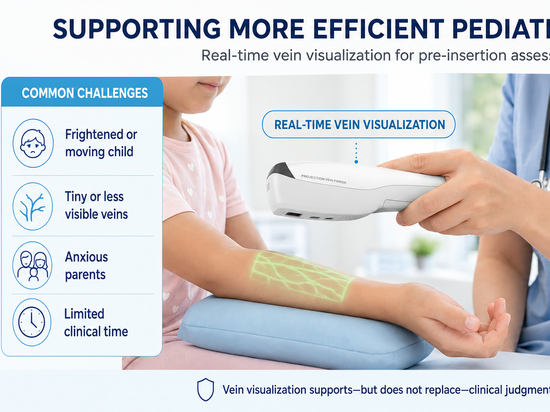
Near-infrared (NIR) vein visualization technology works by taking advantage of the unique optical properties of hemoglobin. When NIR light enters the skin, hemoglobin absorbs more light than the surrounding tissue, while most nearby tissue reflects it. This difference creates the contrast needed to visualize superficial veins in real time. Because near-infrared light penetrates deeper than visible light, clinicians can often assess veins that are difficult to identify through visual inspection or palpation alone. The technology is particularly valuable in situations where vascular access may be more challenging, including pediatric patients, older adults, individuals with darker skin tones, or patients with higher body mass.
Over the past decade, infrared vein visualization has become an increasingly common tool in hospitals, infusion centers, outpatient clinics, and emergency departments. Rather than replacing clinical judgment, it provides additional visual information that may support vein assessment before insertion and help clinicians approach vascular access with greater confidence.
As imaging technology continues to advance, the focus is no longer simply on making veins visible. It is about improving workflow efficiency, supporting patient-centered care, and helping healthcare professionals make more informed vascular access decisions.
At Vivolight Medical, we are committed to advancing vein visualization technology through continuous innovation. Our goal is to provide healthcare professionals with practical tools that support everyday clinical practice and contribute to a better patient experience.
Visit our website to learn more, or contact your Vivolight regional sales manager for product information and local support.【 www.vivolight.com 】