#Product Trends
How Medical Colon Models Redefine Digestive Endoscopy Training with Engineering-Oriented Thinking
How Medical Colon Models Redefine Digestive Endoscopy Training with Engineering-Oriented Thinking
1. Background: Dilemmas of Traditional Colonoscopy Training
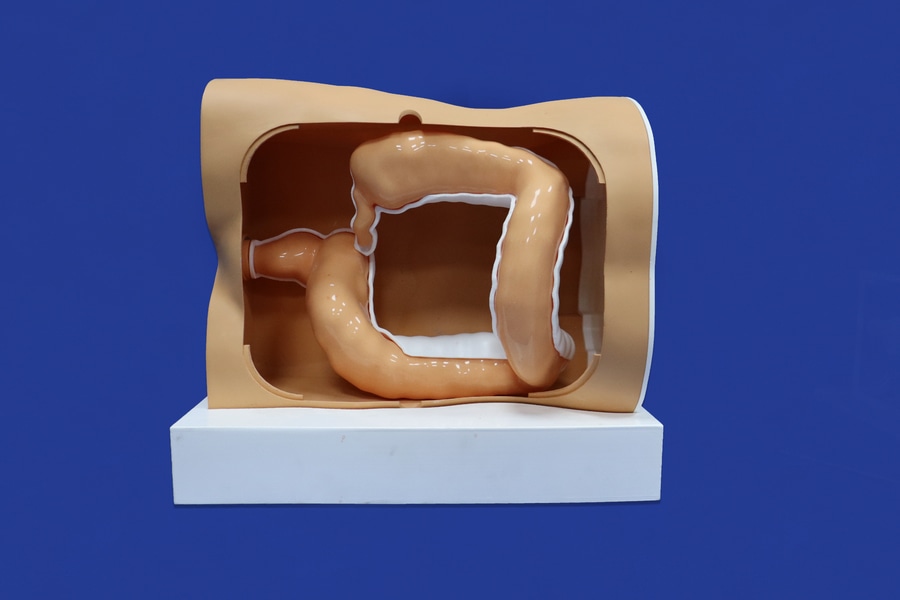
With the rapid advancement of digestive endoscopy, colonoscopy has become the cornerstone for screening, diagnosing and treating lower gastrointestinal diseases. Mastery of this technique demands physicians to possess robust spatial cognition of intricate intestinal anatomy, delicate tactile control of instruments, and real-time interpretation of dynamic endoscopic images. Conventional apprenticeship training is constrained by patient safety, uneven access to operative cases and the absence of standardized evaluation frameworks, failing to meet the urgent demand for large-scale, high-quality physician cultivation. To resolve this systemic issue, Trandomed’s colonoscopy training model ZJC-01 is far more than a simple anatomical teaching aid. Constructed with rigorous engineering logic, it serves as a high-fidelity physical organ platform supporting quantifiable, repeatable standardized endoscopy training and medical device validation through data-driven precision design, tactile simulation via advanced material science, and expandable modular functions.
2. Data-Driven Design: Precise Mapping from Clinical Scans to Physical Models
The development of ZJC-01 originates from authentic clinical anatomical data rather than speculative artistic modeling. The model is engineered strictly based on CT scans of adult lower digestive tracts, ensuring morphological faithfulness to real physiological structures. Digital medical imagery is converted into tangible 3D entities that accurately replicate the course, bending angles, lumen diameters and physiological narrowings such as hepatic and splenic flexures of the ascending, transverse and descending colon. This reverse engineering process delivers a colon phantom whose spatial configuration closely matches human intestinal anatomy. The core merit of data-guided design lies in standardized anatomical references. All trainees practice on identical, validated high-fidelity intestinal structures, eliminating variables caused by inter-patient anatomical differences. This creates an objective physical foundation for unified operational standards, assessment criteria and skill certification benchmarks. Abstract tactile feedback and navigational paths during endoscopy can be repeatedly practiced, perceived and assessed on a consistent, stable organ replica.
3. Material Calibration: Tactile Simulation Defined by Hardness Engineering Parameters
If data replication delivers visual authenticity, advanced material science achieves lifelike operative tactile feedback. The entire main structure of ZJC-01 is molded from ultra-soft silicone with precisely calibrated Shore A hardness ranging from 18A to 30A. This range is determined through meticulous calculation and experimental verification to mirror the mechanical properties of native colonic walls. During real colonoscopy, the scope interacts with intestinal tissue via sliding friction, elastic resistance and lateral pressure at curved segments. The customized elastic modulus and damping features of 18A–30A soft silicone replicate this composite mechanical response. Operators distinctly feel resistance shifts as the endoscope advances through intestinal segments, crosses mucosal folds and navigates physiological bends. This authentic tactile input cultivates proper force modulation for novices and optimizes procedural fluency for seasoned endoscopists, converting subjective tactile sensations into measurable material-based physical attributes.
4. Three-in-One Platform: Standardized Scenarios for Training, Testing and Demonstration
ZJC-01 transcends the role of a standalone skill trainer to fulfill three core functions: clinical training, device performance testing and product demonstration. For physician training, it provides a risk-free, infinitely repeatable standardized practice environment. Learners master full workflows including anal intubation, lumen-following advancement, navigation across colon segments, terminal ileum access, biopsy and simulated polypectomy. Standardized training conditions decouple skill teaching and evaluation from reliance on live patient cases, enabling uniform, homogenized education. For medical device enterprises developing colonoscopes, biopsy forceps and interventional tools, the stable simulated intestinal environment enables systematic pre-market verification of deliverability, bending flexibility, imaging clarity and grasping efficiency. Reliable performance data accelerates product iteration cycles. Meanwhile, the model acts as an intuitive display tool for presenting device strengths to clinicians and purchasers, bridging engineering specifications and clinical practical demands.