#Industry News
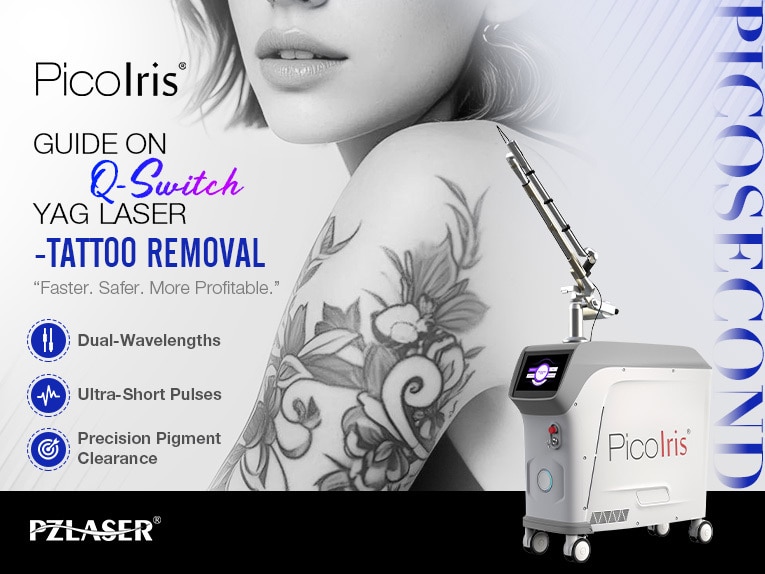
PicoIris®| Guide On Q Switch YAG Laser: Tattoo Removal
PicoIris® | “Faster. Safer. More Profitable.”
PicoIris®| Guide On Q Switch YAG Laser: Tattoo Removal
1. What Makes Tattoos Hard to Remove?
Tattoos are formed by injecting pigment particles into the dermis layer of the skin. Amateur tattoos are generally placed more superficially in the papillary dermis, while professional tattoos are deposited deeper into the reticular dermis. The complexity of professional tattoos, often involving multiple colors and denser pigment, makes them more challenging to remove. Additionally, while the immune system tries to clear tattoo pigments from the moment they’re injected, the relatively large size of ink particles (sometimes up to 970 nanometers) hinders effective removal by white blood cells, necessitating external intervention like lasers.
2. Common Methods of Tattoo Removal
Several methods have been used to attempt tattoo removal, including:
Dermabrasion: Mechanical exfoliation of the skin layers, often painful and with scarring risks.
Chemical Peels: Using acid-based solutions to peel the skin, often ineffective for deeper tattoos.
Surgical Excision: Physically cutting out the tattooed skin, suitable only for small tattoos.
Tattoo Removal Creams: Widely marketed but generally ineffective and not FDA-approved.
Laser Tattoo Removal: The gold standard in modern tattoo removal—safe, targeted, and effective.
3. How Does Laser Tattoo Removal Work?
Laser tattoo removal, especially using Q-switched lasers, works based on the principle of selective photothermolysis. The laser emits high-intensity pulses of light energy in extremely short durations (in nanoseconds or picoseconds). These pulses selectively target the tattoo ink without harming the surrounding skin.
Q-switched lasers deliver light that is absorbed by the tattoo pigments, causing them to break into smaller fragments. These smaller particles are then cleared away naturally by the body’s immune system over time. Different ink colors respond to different laser wavelengths, making laser selection crucial.
4. Frequently Asked Questions About Laser Tattoo Removal
Q: Does laser really remove tattoos?
Yes, laser treatment is currently the most effective method for tattoo removal. However, complete clearance depends on factors like tattoo age, ink color, skin type, and treatment consistency.
Q: Is laser tattoo removal safe?
When performed by trained professionals with the right device, laser tattoo removal is considered very safe. It has minimal risk of scarring or permanent skin damage.
Q: Can lasers remove a tattoo completely?
Many tattoos can be significantly faded or completely removed. However, some colors, especially light blues and greens, may be more stubborn. It’s important to manage expectations—some residual pigmentation may remain.
Q: Does laser tattoo removal hurt?
Most patients describe the sensation as similar to a rubber band snapping against the skin. Numbing cream or cold air is often used to reduce discomfort during the procedure.
5. Advantages of PicoIris® Q-Switched Laser by PZLASER
The PicoIris® from PZLASER represents an advanced generation of Q-switched Nd:YAG lasers optimized for tattoo removal and pigment treatments. It combines traditional Q-switch technology with picosecond-level innovation for greater precision and safety.
Key advantages include:
Ultra-short pulse duration: The pulse width of the picosecond laser is just 1% of traditional Q-switched lasers. This minimizes heat diffusion to surrounding skin, making it safer and more comfortable.
Photomechanical effect over photothermal: Rather than heating and potentially damaging skin tissue, the laser uses a mechanical shockwave to break ink into minuscule fragments. This reduces the risk of scarring and inflammation.
High pigment clearance: The ultra-short pulses deliver more concentrated energy to shatter ink particles thoroughly, improving removal of even stubborn colors like green or blue.
Minimized downtime: Patients often experience less redness and swelling post-treatment, leading to faster recovery and higher satisfaction.
Dual wavelength system: PicoIris® provides both 1064nm and 532nm wavelengths, allowing treatment of a wide spectrum of ink colors and skin types.
6. Factors That Influence Tattoo Removal Results
Laser tattoo removal outcomes depend on multiple variables:
1. Treatment parameters: Appropriate settings (fluence, spot size, repetition rate) matter. Successful sessions typically produce a temporary "frosting" effect—tiny gas bubbles that indicate ink breakdown.
2. Ink color and depth: Black ink responds best to laser treatment. Light colors like yellow or turquoise are more difficult. Deeper and denser pigments require more sessions.
3. Skin type and tone: Fair skin allows for a broader range of laser settings with fewer side effects. For darker skin tones, lasers like QS Nd\:YAG (1064nm) are safer due to reduced melanin absorption.
4. Immune system response: A stronger immune system can clear broken ink particles faster.
5. Tattoo age and quality: Older tattoos and amateur designs tend to fade quicker than new or professionally inked tattoos.
7. Final Thoughts
Laser tattoo removal, especially using advanced systems like PZLASER’s PicoIris®, offers a safe and effective way to fade or erase unwanted tattoos. However, no device can guarantee complete restoration to pre-ink skin. Factors like skin type, tattoo complexity, and individual healing responses mean results can vary. Consulting a qualified professional and setting realistic expectations is crucial for a successful journey.
With PicoIris®, clinics can offer superior pigment and tattoo removal services—shorter treatment times, fewer side effects, and optimal outcomes for clients seeking to turn the page on past ink.