#Product Trends
Model Bedside Infotainment Terminal Features
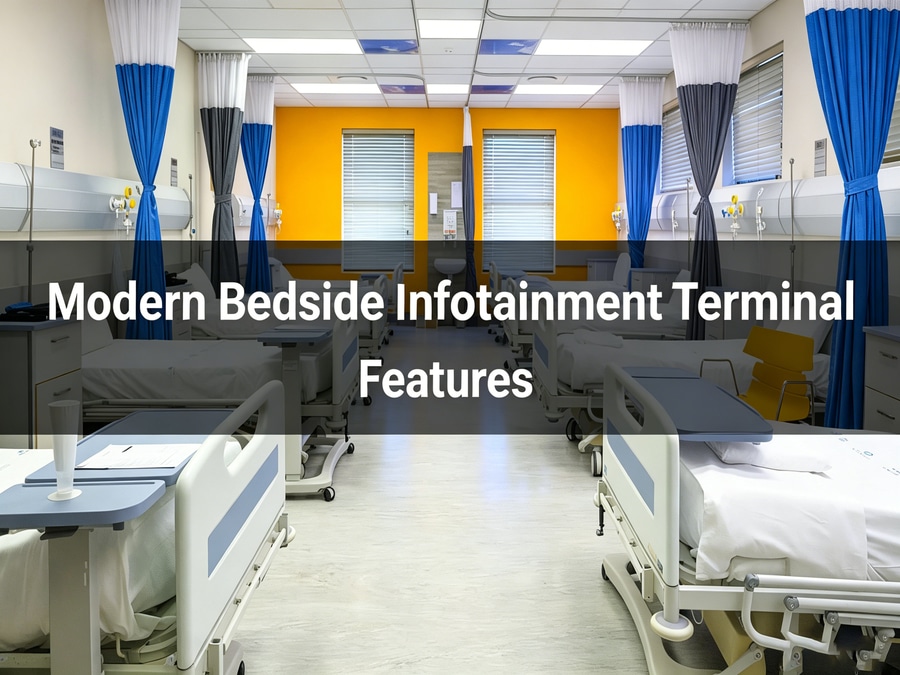
Bedside infotainment terminals are now a standard part of modern hospital rooms, supporting patient entertainment, communication, and clinical workflows.
1. Seamless Integration with Hospital Information Systems
Modern bedside infotainment terminals are no longer standalone devices. Their core value lies in how effectively they integrate with hospital information systems to improve care efficiency, data accuracy, and patient experience.
1.1 EMR / EHR Integration
The terminal should connect seamlessly with EMR and EHR systems to synchronize patient data in real time. This allows patients to access personalized information such as care plans, medication schedules, and discharge instructions directly at the bedside.
1.2 Nurse Call & Clinical Workflow Systems
By integrating with nurse call systems, bedside infotainment terminals enable patients to request assistance quickly through a simple touch interface. Requests are delivered instantly to nursing staff, helping shorten response times.
2. Interactive Patient Entertainment & Engagement Features
Interactive entertainment and engagement functions transform bedside infotainment terminals into tools that improve patient satisfaction while supporting care communication.
2.1 Multimedia Entertainment Options
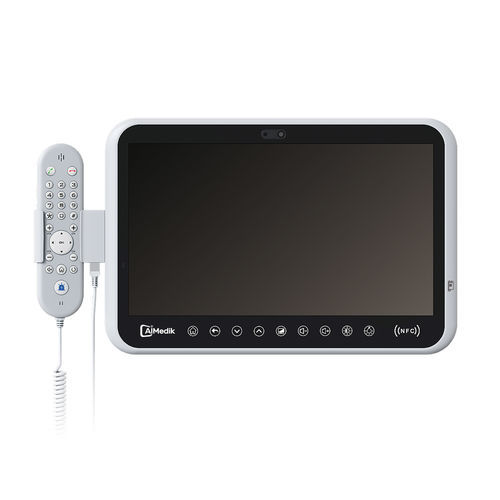
Modern bedside infotainment terminals offer a wide range of multimedia entertainment, including live TV, video-on-demand, music, and internet access. Touchscreen operation and personalized user profiles allow patients to easily control content without additional devices.
2.2 Patient Education & Engagement Tools
Beyond entertainment, bedside infotainment terminals support patient education through videos, interactive guides, and digital care instructions. Patients can better understand procedures, medications, and recovery plans at their own pace.
3. Secure Communication & Telemedicine Capabilities
Secure communication and telemedicine functions allow bedside infotainment terminals to support timely interaction between patients and healthcare providers while meeting strict data protection standards.
3.1 Secure Messaging with Medical Staff
Modern bedside infotainment terminals enable secure, encrypted messaging between patients and medical staff. Patients can send non-urgent requests or questions directly through the terminal, reducing unnecessary nurse call interruptions.
3.2 Video Calling & Remote Consultation
Integrated video calling allows patients to connect with doctors, specialists, or family members directly from the bedside. For clinical use, remote consultations support specialist access without physical presence, improving care coordination and response times.
4. Future-Ready Features for Smart Wards
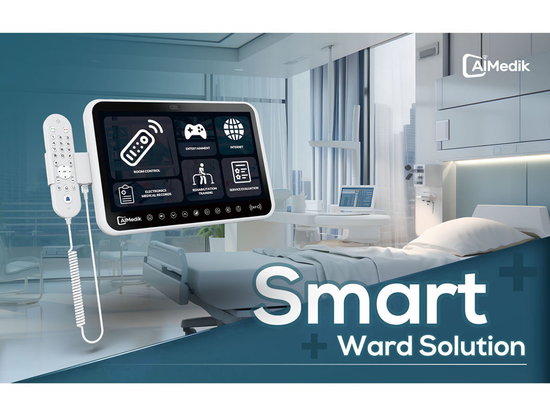
Modern bedside infotainment terminals are evolving to support the next generation of smart hospital wards. Future-ready features focus on personalization, connectivity, and alignment with hospital digital transformation strategies.
AI-powered content recommendation can provide patients with tailored entertainment, education, and health guidance based on their preferences and care needs. Integration with smart ward systems enables seamless coordination between devices, sensors, and clinical workflows, creating a more responsive and efficient care environment. Designed to align with hospital digital transformation pathways, these terminals ensure long-term adaptability, supporting innovations such as predictive analytics, telehealth expansion, and connected patient monitoring.