#Product Trends
Instant Markerless Registration for TMS Navigation
Improves registration speed, accuracy, and patient comfort.
Spatial registration is the foundation of accurate transcranial magnetic stimulation (TMS) navigation. It aligns the patient’s CT or MRI data with their actual position during treatment.
Conventional optical navigation typically requires manual facial landmark registration and a head-mounted tracking marker. Although widely used, this approach adds setup time, may cause discomfort, and can lose accuracy if the patient or marker moves.
The Challenge
Traditional workflows have three main limitations:
Time-consuming registration
Manual landmark selection increases preparation time.
Head-mounted markers
External trackers may affect patient comfort and complicate the workflow.
Risk of positioning error
Patient movement or marker displacement can reduce navigation accuracy and compromise stimulation targeting.
A Markerless Upgrade
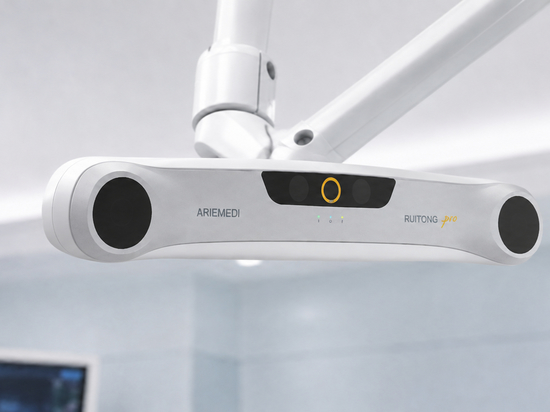
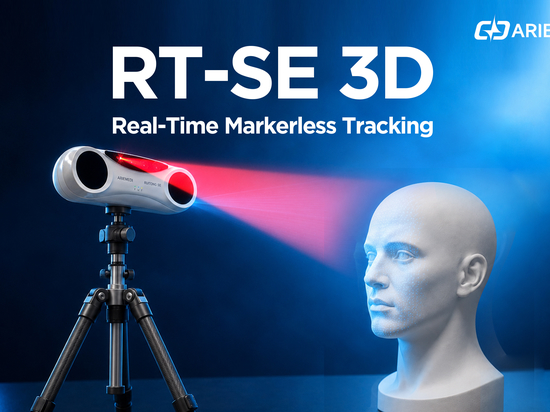
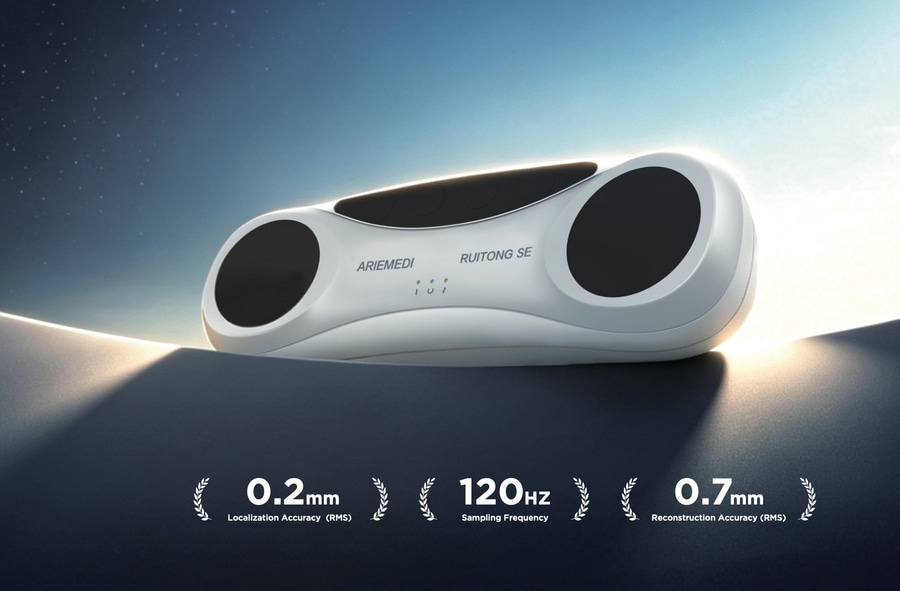
ARIEMEDI’s markerless TMS navigation solution combines 3D structured light with infrared optical tracking. Powered by spatial mapping and real-time tracking algorithms, it improves registration speed, accuracy, and patient comfort.
Registration in Seconds
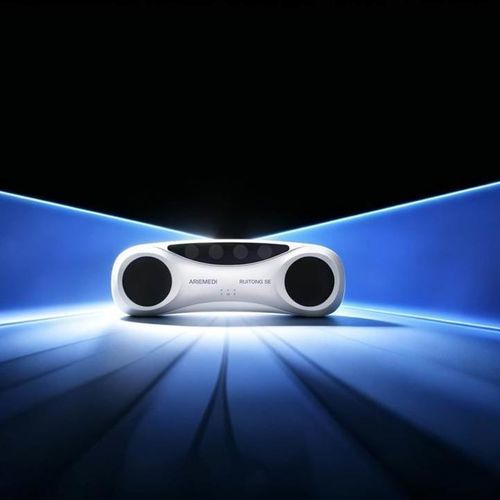
The Ruitong stereo tracking camera automatically detects the patient’s face and rapidly captures dense 3D point-cloud data. Using the patient’s CT or MRI scan, it completes registration in under five seconds with submillimeter accuracy.
This significantly reduces setup time, increases daily treatment capacity, and supports high-volume psychiatry and rehabilitation workflows.
No Head-Mounted Marker
The system extracts facial features directly and uses them for accurate spatial registration. Patients no longer need to wear a tracking target, improving comfort while reducing equipment, consumables, and preparation steps.
Real-Time Markerless Tracking
The patient’s 3D facial geometry acts as a natural spatial reference. During treatment, 2D facial recognition works together with 3D depth data to continuously track head position and compensate for movement in real time.
Clinical Benefits
• Greater comfort for patients
• Faster, simpler setup for clinicians
• Continuous compensation for head movement
• Lower risk of errors caused by marker displacement
• More efficient TMS treatment workflows
By integrating 3D structured light with TMS navigation, ARIEMEDI replaces manual point-by-point registration with fast, markerless tracking—delivering a more efficient, comfortable, and precise approach to image-guided neuromodulation.