
#Product Trends
Why Affordable Ultrasound Matters in 2025
Introducing the F3i + L3i: Affordable Ultrasound
Rising Pressure on Global Healthcare Resources
Healthcare systems worldwide are facing increasing strain. Aging populations, a growing burden of chronic disease, and unexpected public health crises have pushed medical institutions to the limit. For many small and mid-sized hospitals, private clinics, and healthcare providers in emerging markets, the challenge is not only clinical capacity, but also financial sustainability. These facilities require diagnostic imaging solutions that are reliable, accessible, and affordable. In this context, affordable ultrasound is no longer a “nice to have,” but an essential tool that enables providers to maintain quality care while managing constrained budgets.
Expanding Need in Developing and Under-Resourced Regions
The demand for cost-effective ultrasound solutions is particularly evident in developing countries and under-resourced regions, where equitable access to imaging can be transformative. Recent years provide concrete evidence:
- Indonesia (2023–2024): The Ministry of Health procured 876 ultrasound systems through a World Bank program, deploying them across multiple regions to strengthen regional hospitals.
- Zambia (2022–2024): National procurement included 20 ultrasound units with three probes and 10 mobile systems, with additional portable units added in 2024, reinforcing frontline hospitals and district health facilities.
- Ghana (2021): The Ministry of Health approved US$5.75 million for ultrasound systems to expand public hospital imaging capacity under its COVID-19 response plan.
- Kenya (2022–2023): Public hospitals and teaching institutions tendered for cart-based diagnostic ultrasound and echocardiography systems, supporting both general diagnostics and specialty care.
- Pakistan (2023–2024): Provincial health authorities specified general-purpose, trolley-mounted ultrasound systems for district-level hospitals.
These cases illustrate a clear trend: governments and public hospitals are investing in laptop-style and cart-based ultrasound systems, ensuring essential diagnostic services are available at scale and close to patients.
Breaking the Myth: Affordable No Longer Means Low Performance
The perception that “low cost equals low performance” is rapidly being dismantled. Advances in engineering, smart design, and workflow optimization have enabled affordable ultrasound systems to deliver high-quality imaging, multi-specialty versatility, and efficient operation at a fraction of the price of premium machines. For physicians, this means they no longer have to compromise between budget and quality—affordable ultrasound is proving itself as a clinically robust, future-ready investment.
Introducing the F3i + L3i: Affordable Ultrasound Without Compromise
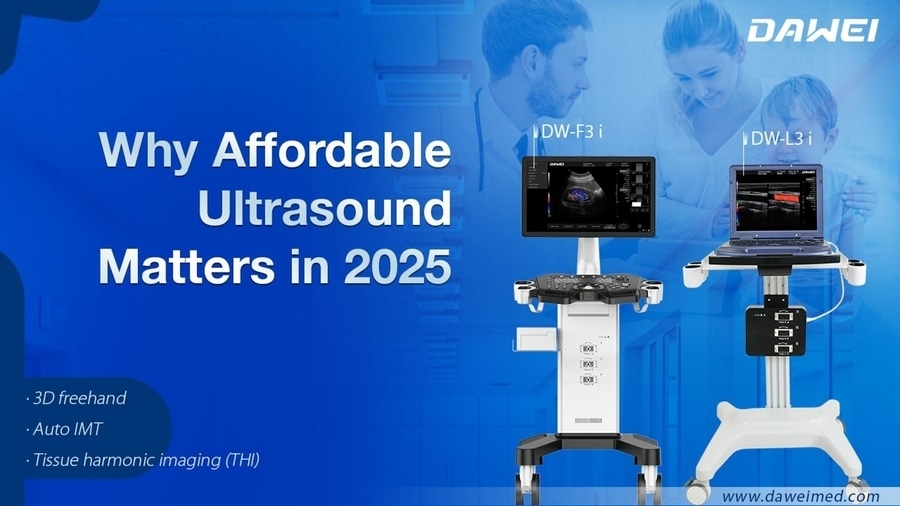
Responding to this global demand, Dawei Medical has launched the F3i and L3i systems, designed to deliver high-quality imaging, mobility, and affordability:
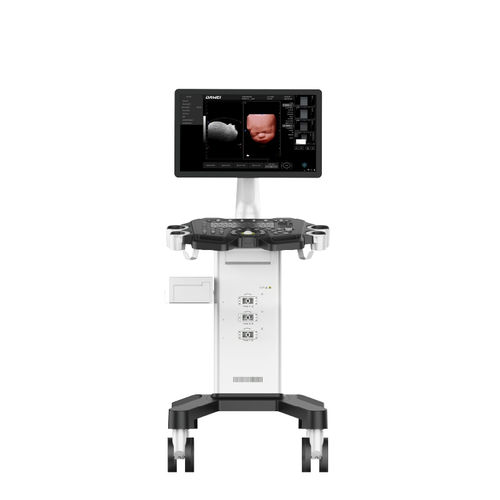
· F3i – A practical, cart-based ultrasound system tailored for multi-specialty use. It delivers clear imaging for OB/GYN, cardiology, and abdominal diagnostics, with intuitive interfaces and multi-department applicability—perfect for busy clinical settings.
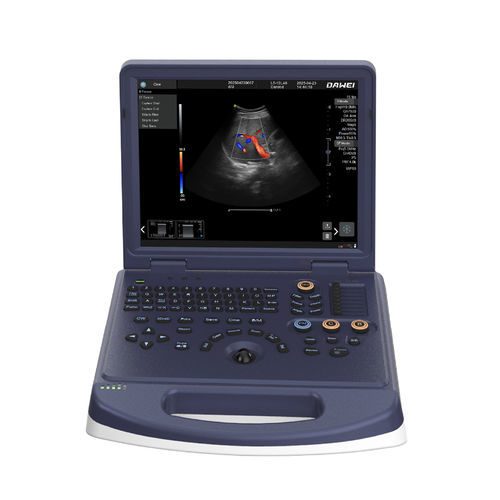
· L3i – A value-focused, laptop-style ultrasound solution built for portability and ease. Ideal for mobile clinics, teaching environments, and community outreach—bringing consistent imaging capabilities directly to patients where they need it most.
Together, F3i and L3i represent the next generation of affordable ultrasound: the F3i for stable, continuous clinical use in hospitals, and the L3i for flexible, on-the-go applications. Both systems address the pressing need for accessible, reliable, and multi-functional imaging in emerging markets and resource-limited settings.
Conclusion
In 2025, affordable ultrasound stands at the intersection of equity and innovation. As global health systems face the dual challenge of expanding access and containing costs, solutions like the F3i and L3i offer a powerful answer: advanced imaging made accessible, without compromise. For small hospitals, private practices, and public networks in emerging markets, these systems are not just machines—they are enablers of better care, timely diagnosis, and healthier communities.