
#Industry News
Radiology Is Moving Beyond the Imaging Room
The Future of Mobile Digital Radiography
or decades, radiology departments were designed around a centralized workflow. Patients were transported to dedicated imaging suites, examinations were performed using fixed X-ray systems, and images were reviewed before clinical decisions were made.
Today, healthcare delivery is changing rapidly.
Hospitals are under increasing pressure to provide faster diagnoses, improve patient safety, optimize workflows, and expand access to medical imaging beyond traditional radiology rooms. As a result, mobility has become one of the most important trends shaping the future of diagnostic imaging.
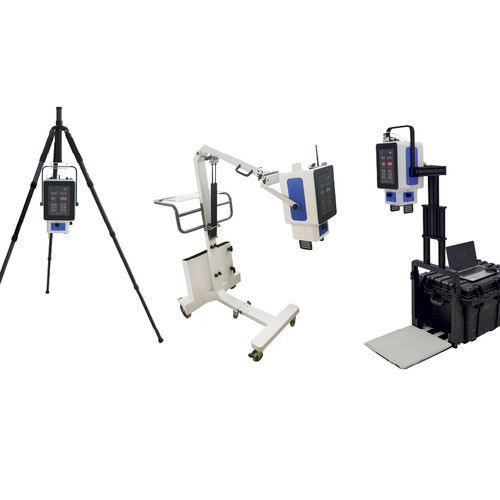
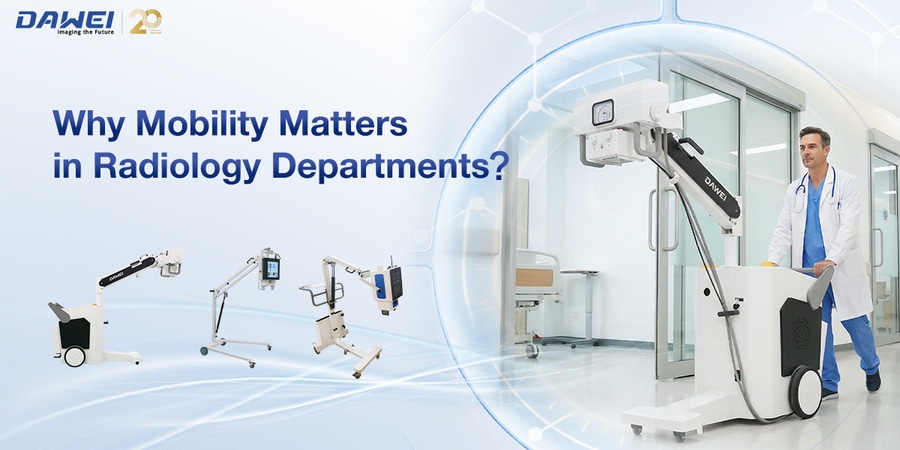
Mobile Digital Radiography (Mobile DR) systems are no longer viewed merely as supplementary equipment. They are increasingly becoming essential tools for point-of-care imaging, enabling radiology services to reach patients wherever care is delivered.
From intensive care units (ICUs) and emergency departments to operating rooms and remote healthcare facilities, mobile DR is redefining how medical imaging is performed.
The Shift Toward Point-of-Care Imaging
Modern healthcare is moving toward a patient-centered model.
Instead of transporting critically ill patients to imaging departments, clinicians increasingly prefer bringing imaging technology directly to the patient.
This approach aligns with the broader trend of Point-of-Care (POC) diagnostics, where clinical information is obtained at the bedside to support immediate decision-making.
According to a joint publication by the World Health Organization (WHO) and the International Atomic Energy Agency (IAEA), portable digital radiography systems are increasingly used to provide diagnostic imaging in locations where access to conventional imaging infrastructure is limited, while also supporting outreach and mobile healthcare services beyond hospital settings (WHO, 2021).¹
The ability to acquire diagnostic images at the patient's location reduces delays and allows healthcare teams to act more quickly in critical situations.
Why Mobile DR Is Becoming Essential
1. Faster Clinical Decision-Making
In emergency medicine, every minute matters. Mobile Digital Radiography (Mobile DR) enables immediate bedside imaging for trauma, respiratory distress, and critically ill patients, eliminating transport delays and accelerating diagnosis. This leads to faster fracture detection, chest imaging, postoperative assessment, and improved treatment turnaround time, ultimately enhancing emergency department workflow efficiency.²
2. Improved Safety for Critical Patients
ICU, ventilated, trauma, post-surgical, and isolation patients are often too unstable for transport. Mobile DR reduces risks such as equipment disconnection, hemodynamic instability, and workflow disruption. Clinical studies show bedside radiography improves patient safety by minimizing transport-related complications, making mobility essential in critical care environments.³
3. Better Infection Prevention and Control
Hospital patient transport increases cross-infection risks, especially in isolation settings. Mobile DR allows imaging directly in ICU rooms, isolation wards, and treatment areas, reducing patient movement and supporting infection control protocols. This approach has become increasingly important since the COVID-19 pandemic and is now widely adopted in modern hospital imaging workflows.²
4. Increased Efficiency for Radiology Departments
Rising imaging demand, staff shortages, and limited radiography rooms are major challenges for hospitals. Mobile DR extends imaging capacity beyond fixed X-ray suites, enabling examinations in wards, ICUs, and operating theatres. This decentralized workflow improves radiology efficiency, reduces bottlenecks, and supports faster diagnostic cycles without additional infrastructure investment.
The Future: Mobility as a Strategic Investment
Historically, hospitals viewed mobile X-ray systems as secondary equipment reserved for specific situations.
That perception is changing. Market analyses indicate strong growth in mobile radiography adoption, driven by demand for bedside imaging, point-of-care diagnostics, and patient-centered care models.⁵
As healthcare continues to evolve toward more flexible and decentralized models, mobility will become a defining characteristic of next-generation radiology departments.
References
World Health Organization (WHO) & International Atomic Energy Agency (IAEA). Portable Digital Radiography System: Technical Specifications, 2021.
Selvaraj DM. Portable Radiography: Advantages and Advances, iCliniq, 2024.
Toppenberg MD et al. Mobile X-ray Outside the Hospital: A Scoping Review, BMC Health Services Research, 2020.
Pan L. et al. Opportunities and Challenges in the Application of Large Artificial Intelligence Models in Radiology, 2024.
Mobile Radiography Systems Market Analysis – Growth Driven by Bedside Imaging and Point-of-Care Diagnostics.