#Product Trends
Medical Tablet IP Ratings: What Matters for Hospital Cleaning and Disinfection?
IP Ratings Are a Starting Point, Not a Guarantee: Choosing Medical Tablets for Real-World Cleaning
Medical tablets are handled throughout the day in hospitals, from patient rooms and nursing stations to operating rooms and emergency departments. Regular disinfection is essential, but repeated exposure to cleaning chemicals, moisture, and wiping can gradually affect a device’s housing, touchscreen, and seals.
So how can hospitals choose a medical tablet that stands up to daily cleaning? One important factor is its IP protection rating, although this is only part of the picture.
Different Hospital Environments, Different Cleaning Requirements
Not every hospital department follows the same disinfection routine.
In general wards, medical tablets are typically cleaned with approved disinfectant wipes. Isolation rooms often require more frequent cleaning, sometimes involving chlorine-based or hydrogen peroxide disinfectants. In operating rooms, staff may disinfect devices between procedures, while emergency department teams handle and clean tablets frequently.
These routines place different demands on medical hardware. Cleaning chemicals can gradually damage plastic housings, protective coatings, and seals, especially when staff disinfect devices several times a day.
This makes the choice of housing materials and protective design just as important as the tablet’s computing performance.
What Do IP54, IP65, and IP66 Mean for Medical Tablets?
IP ratings describe how well a device is protected against dust and water entering its enclosure. For medical tablets, they provide a useful starting point when considering different cleaning environments.
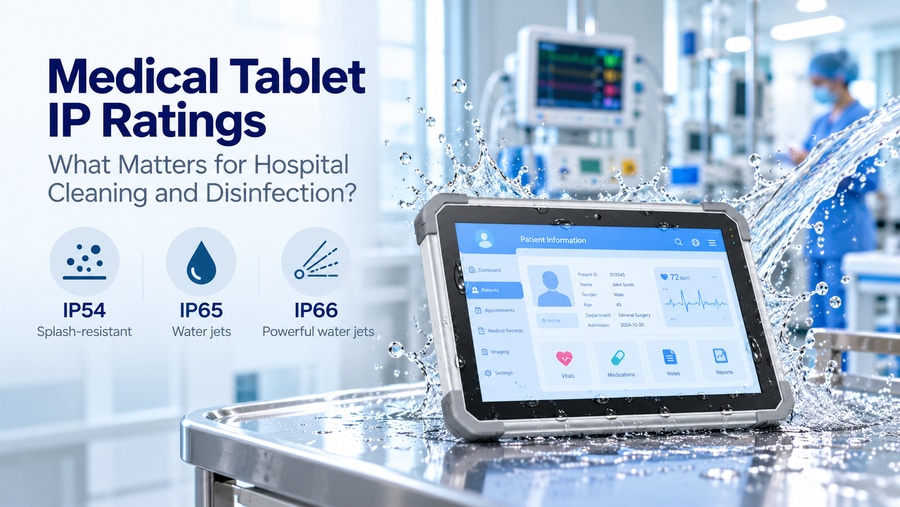
IP54 offers protection against dust and water splashes. It is commonly suitable for devices used at medical workstations or on carts where surface wiping is the main cleaning method.
IP65 provides complete dust protection and resistance to water jets. It offers a higher level of sealing for mobile medical tablets that are frequently handled and cleaned.
IP66 adds protection against more powerful water jets, providing an additional level of water-ingress resistance for demanding environments.
However, a higher IP rating does not necessarily mean that a tablet can tolerate stronger disinfectants. IP testing measures dust and water ingress, not resistance to alcohol, chlorine, or other cleaning chemicals.
Matching Medical Tablets to Clinical Workflows
Different protection levels can help hospitals select hardware for specific applications.
For example, Estone’s MD-100 medical tablet PC features IP65 protection for mobile nursing and bedside applications. The MW-100 rugged tablet PC combines IP66 protection with a slim, lightweight design. The MD-150 medical tablet PC features IP54 protection and a 15.6-inch display, making it ideal for medical carts and workstations that rely mainly on wiping.
The right choice depends on where the tablet will be used, how frequently it needs cleaning, and which disinfectants the hospital uses.
Why IP Ratings Alone Are Not Enough
Repeated exposure to incompatible cleaning chemicals can degrade materials, even on an IP66-rated medical tablet.
Before selecting a device, hospital IT and infection control teams should check whether the manufacturer has approved the disinfectants used in their facilities. They should also consider recommended contact times, cleaning frequency, and whether the touchscreen, connectors, and housing materials can withstand repeated disinfection.
A well-sealed enclosure protects internal electronics, but durable materials and proper maintenance also support long-term reliability.
Choosing the Right Medical Tablet for Hospital Use
There is no single IP rating that fits every hospital environment. A tablet used mainly for bedside documentation may have different protection requirements from one used in an isolation ward or on a mobile medical imaging cart.
For hospital procurement teams, the goal is not simply to choose the highest IP rating. It is to find a medical tablet PC whose protection level, materials, and approved cleaning procedures match the hospital’s daily disinfection workflow.
Making that distinction can help reduce equipment wear, improve long-term reliability, and support consistent infection control practices.