#Product Trends
Eye Tracking for Multimodal Behavioral Research
Combining gaze data with EEG, physiological signals, and experimental events provides a more comprehensive view of attention, cognition, and human behavior.
Modern behavioral research increasingly combines multiple measurement methods. Eye tracking may be used alongside EEG, fNIRS, ECG, electrodermal activity, motion tracking, audio recordings, or other physiological and behavioral signals.
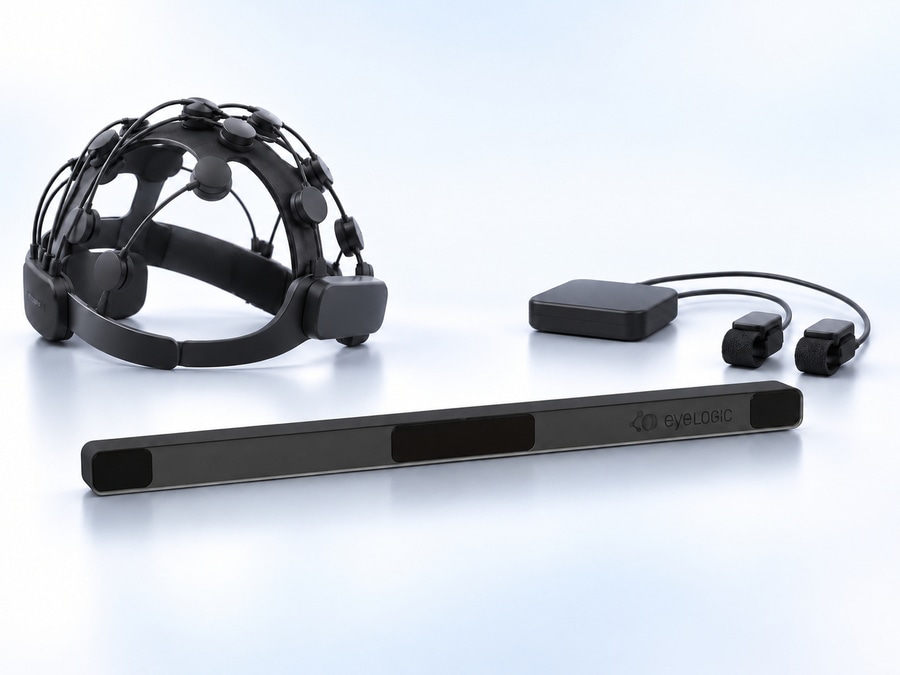
Each modality provides a different perspective. Eye tracking shows where visual attention is directed, how long information is inspected, and how gaze moves between relevant elements. Physiological and neural measurements can add information about cognitive processing, arousal, workload, or emotional responses. When these signals are synchronized, researchers can investigate not only what participants looked at, but also how their responses developed over time.
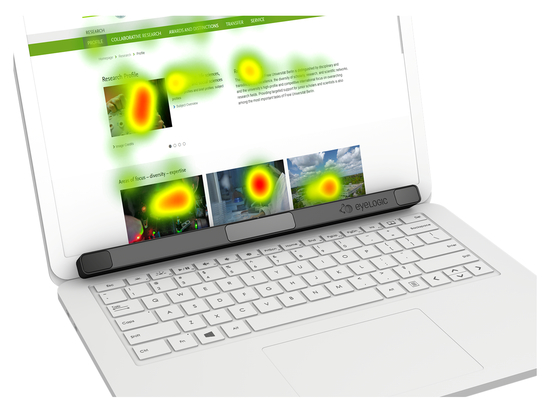
EyeLogic develops screen-based eye-tracking systems for flexible integration into multimodal behavioral research environments. The compact EyeLogic Lite 120 screen-based eye tracker is designed for versatile studies in psychology, neuroscience, education, linguistics, and human-computer interaction.
For experiments requiring a higher temporal resolution, the LogicOne 250 Hz research eye tracker supports the detailed investigation of fixations, saccades, and other time-sensitive aspects of gaze behavior.
Both systems can be integrated into customized research environments through the EyeLogic SDK and supported third-party integrations. Real-time data access and support for Lab Streaming Layer enable researchers to connect eye tracking with external sensors, experiment software, and existing data-acquisition workflows.
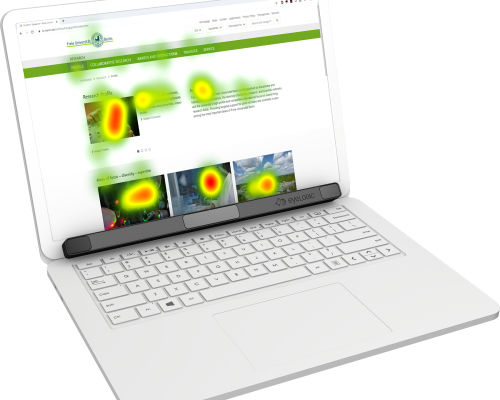
Researchers looking for an integrated environment can use InsightLab eye-tracking research software for experiment design, synchronized recording, gaze visualization, fixation and saccade analysis, Areas of Interest, heat maps, scan paths, and data export.
Reliable multimodal research depends on more than collecting several data streams. Stable timing, transparent processing, consistent experimental procedures, and access to relevant data are essential for reproducible results. EyeLogic therefore focuses on providing researchers with flexible hardware, software, and integration tools that can be adapted to different scientific questions.
By adding precise gaze information to multimodal experiments, research teams can gain a more complete understanding of the relationship between visual attention, cognitive processing, physiological responses, and observable behavior.