#Product Trends
EyeLogic Strengthens Joint Eye-Tracking Research with Universities
Collaborative research activities help align eye-tracking hardware, software, and experimental workflows with the practical requirements of academic research.
Scientific eye-tracking technology benefits from close cooperation between technology developers and academic researchers. Research groups contribute methodological expertise, clearly defined scientific questions, and demanding experimental environments. Technology providers contribute measurement hardware, software development, system integration, and technical validation.
EyeLogic works with universities and academic research groups to develop, evaluate, and improve eye-tracking methods for scientific studies. These joint activities address research fields including psychology, neuroscience, reading and language processing, education, human-computer interaction, and behavioral science.
Collaboration can begin during the planning of an experiment. Depending on the project, EyeLogic may support the selection of an appropriate sampling rate, the design of the technical setup, integration with existing experiment software, synchronization with additional sensors, or access to real-time and exported gaze data.
Pilot studies and technical evaluations provide valuable feedback about calibration procedures, tracking robustness, data quality, participant requirements, and analysis workflows. This feedback helps EyeLogic understand how eye-tracking technology performs under realistic research conditions. Where a requirement is relevant to a broader group of researchers, it may also contribute to future software functions, integrations, or workflow improvements.
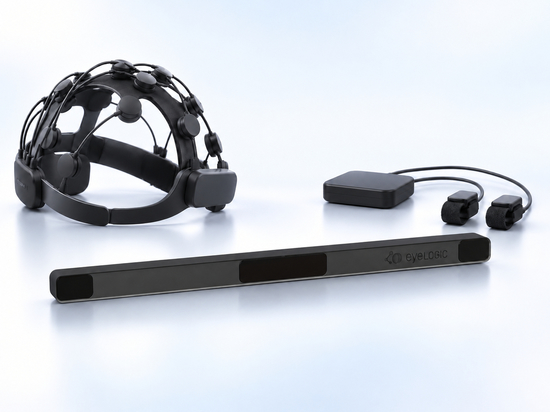
EyeLogic offers different components for academic eye-tracking research. The portable Lite 120 screen-based eye tracker is suitable for a wide range of behavioral studies and flexible laboratory setups.
The LogicOne 250 Hz eye tracker provides a higher temporal resolution for researchers investigating fixations, saccades, reading behavior, and other time-sensitive characteristics of eye movements.
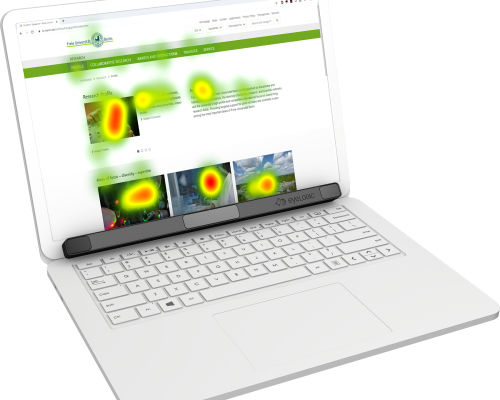
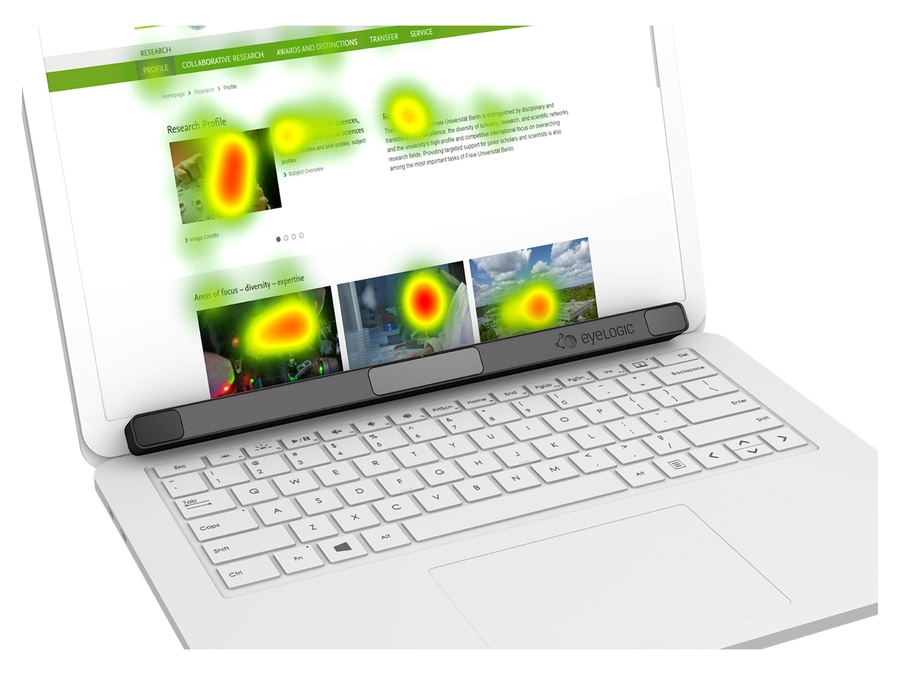
For teams looking for a complete experimental workflow, InsightLab eye-tracking research software combines experiment design, data acquisition, visualization, analysis, and export. Researchers with established scripts or custom applications can instead use the EyeLogic SDK and supported integrations to incorporate the eye tracker into their own environment.
These modular options allow universities to select the configuration that best fits their research methods rather than adapting their scientific questions to a fixed technical workflow.
EyeLogic is open to joint research projects, pilot studies, validation activities, and collaborative funding proposals with universities and research institutions. The objective is to combine academic expertise with reliable eye-tracking technology and create measurement solutions that support transparent, reproducible, and scientifically meaningful research.