#Industry News
Double-Leg Balance Assessment: From Observation to Objective Data
How force plates provide deeper insight into postural control for rehabilitation and performance.
Double-leg balance may appear simple, but maintaining a stable standing position requires continuous interaction between the visual, vestibular, proprioceptive, neuromuscular, and musculoskeletal systems. Assessing this ability can provide valuable information in rehabilitation, injury prevention, return-to-play, and sports performance.
Traditional balance tests often rely on visual observation and may not detect subtle changes in postural control. Force plates provide a more objective approach by measuring center of pressure (CoP) displacement, postural sway, and weight distribution between the lower limbs.
Key metrics such as ellipse area, CoP path length, and mean velocity help practitioners quantify stability and monitor changes over time. Comparing eyes-open and eyes-closed conditions through the Romberg test can also show how much vision contributes to postural control.
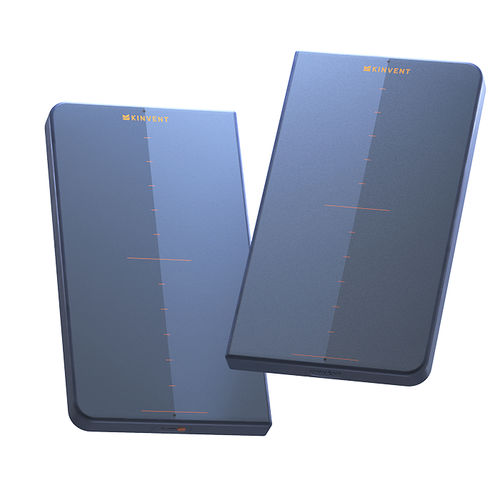
Solutions such as the KINVENT K-Force Plates make these measurements accessible in everyday practice, while real-time biofeedback allows patients and athletes to visualize their loading patterns and actively adjust their postural strategies.
In this article, learn how to perform a standardized double-leg balance assessment, interpret key CoP metrics, and use objective balance data to guide rehabilitation and performance.