#Industry News
Rehab After Total Knee Replacement: Moving from Time-Based to Criteria-Based Recovery
How objective measures of mobility, strength, balance, and function can help clinicians personalize rehabilitation after total knee replacement.
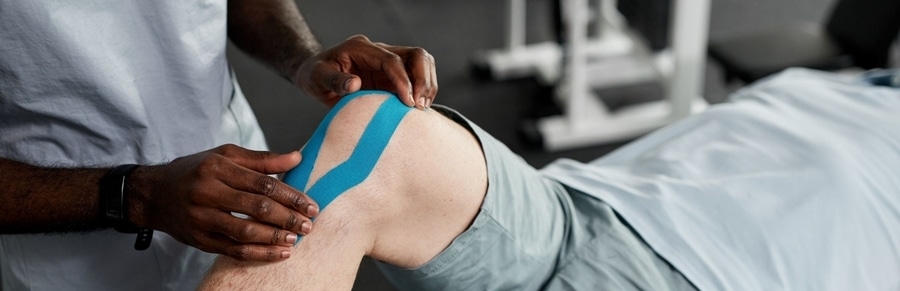
Recovery after total knee replacement can vary significantly from one patient to another. Two patients at the same post-operative stage may present very different levels of strength, mobility, symmetry, and motor control. This is why rehabilitation should go beyond a fixed timeline and focus on measurable functional progress.
A criteria-based approach allows clinicians to monitor key indicators throughout recovery, including range of motion, quadriceps strength, limb symmetry, balance, gait quality, functional performance, and patient-reported outcomes.
From the early restoration of mobility and quadriceps activation to more advanced strengthening and return to activity, objective assessments can help determine when a patient is ready to progress to the next stage. Functional tests such as the Timed Up and Go, Sit-to-Stand, Stair Climb Test, Single Leg Stance, and 6-Minute Walk Test can also provide measurable markers of recovery.
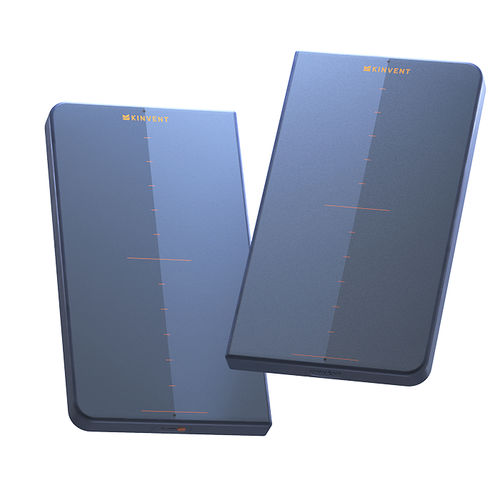
Connected assessment tools can complement clinical expertise throughout this process. K-Move can monitor range of motion, K-Myo muscle activation, dynamometry muscle strength, force plates loading symmetry and balance, and K-Power movement velocity and power.
By combining clinical reasoning with objective data and functional criteria, clinicians can better individualize progression and guide patients toward a safer and more complete recovery after total knee replacement.