#Industry News
Drop Jump Test: Is Box Height Distorting Your Performance Data?
A scientific study reveals how differences between box height and actual drop height can affect jump measurements and the reliability of athlete assessments.
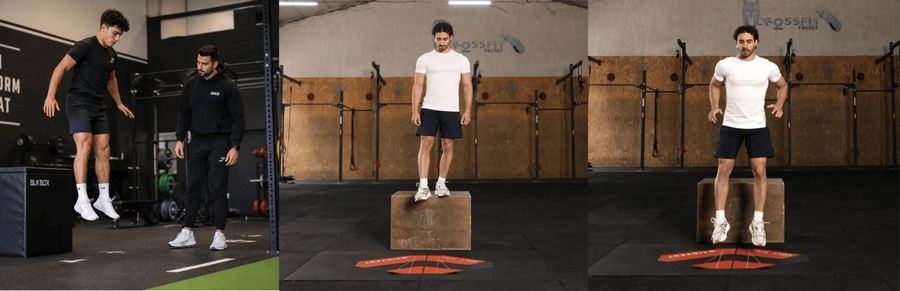
The Drop Jump Test is widely used to assess explosive power, reactive strength, and plyometric performance. By measuring jump height, ground contact time, and the Reactive Strength Index (RSI), practitioners can monitor neuromuscular performance and guide training decisions.
But one common assumption may compromise these results: a 40 cm box does not necessarily produce a 40 cm drop. The way an athlete steps off the box can change the actual drop height, influencing landing mechanics and performance measurements.
A study involving 10 semi-professional volleyball players compared drop jumps performed from 20, 40, and 60 cm using different measurement methods. With the KINVENT K-Force Plates and K-Deltas, researchers found that calculated jump height could vary by 16.1% to 26.6% depending on the analysis method, with discrepancies becoming more pronounced at higher box heights.
These findings highlight the importance of accurate measurement and standardized protocols. Incorrect assumptions about drop height can affect jump height calculations, touchdown velocity, and the interpretation of reactive strength, potentially leading to misleading conclusions about athlete performance.
Discover the study's key findings and practical recommendations to improve Drop Jump Test accuracy, interpret force plate data more reliably, and make better-informed decisions in plyometric training and athlete monitoring.