#Industry News
New Research Project Explores Insect Protein Processing for Sustainable Food Solutions
Redefining Nutrition: What Will the Future Taste Like?
In light of the challenges posed by global population growth, increasing environmental pressures and limited natural resources, the scientific community and industry are actively seeking sustainable solutions to feed the world’s population. One promising avenue lies in the use of alternative protein sources – such as insects.
The “ProtinA” project
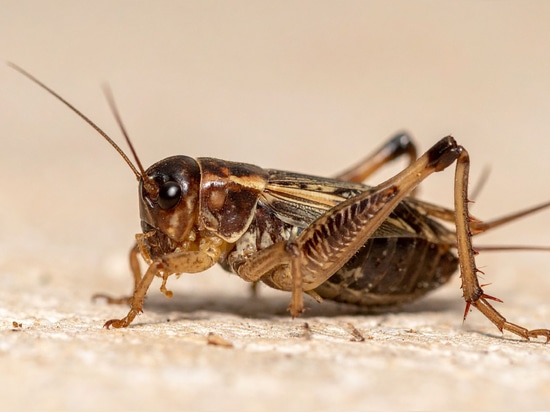
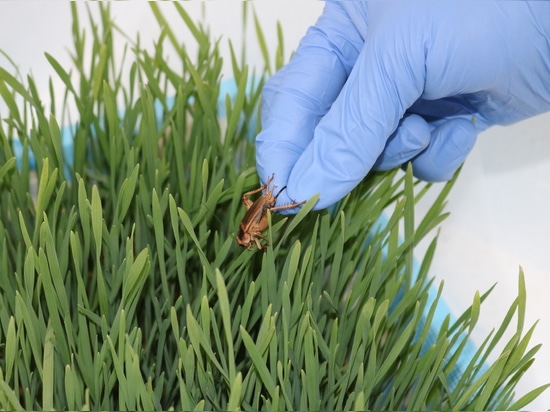
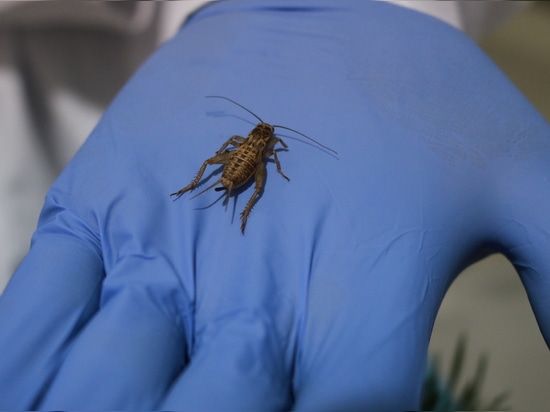
(full title: Nutrition-optimised development of alternative protein sources through innovative and sustainable processing technologies, using the example of the house cricket Acheta domesticus) brings together the expertise of the Leibniz Institute for Agricultural Engineering and Bioeconomy (ATB) in Potsdam, the German Institute of Human Nutrition, and three industry partners, including the company membraPure GmbH.
Proteins are an essential component of a balanced diet and fulfil a variety of vital functions in the human body. They serve as building blocks for cells, tissues and muscles, contribute to the formation of enzymes and hormones, and support the immune system. As the human body cannot produce sufficient quantities of protein itself, a continuous supply through food is necessary.
Traditionally, protein sources have included animal and plant-based products such as meat, fish and pulses. However, in light of population growth, limited natural resources and climate change, increasing efforts are being made to identify alternative protein sources.
These alternatives aim to make protein supply more sustainable whilst reducing the environmental impact of large-scale livestock farming.
In this context, insects are considered a promising option. They require fewer resources such as feed, land and water, produce lower CO₂ emissions and yet still provide high-quality protein and essential micronutrients.
However, for their use in food production, it is crucial not only to ensure hygienic processing conditions but also to fully understand their nutritional composition, particularly their amino acid profile and how this changes during processing.
This is where the ProtinA research project comes in, specifically aimed at developing new solutions.
The aim of the project is to analyse and optimise different processing methods for alternative protein sources using crickets as a model organism. A key question is how the technological processes affect the nutritional quality of the resulting food products. The results are intended not only to be scientifically useful but also to highlight concrete practical applications.
A central element of the project is the precise control of processing procedures. The research examines how individual process steps affect protein structure and function. Optical analysis methods make it possible to visualise these changes in real time and control them in a targeted manner.
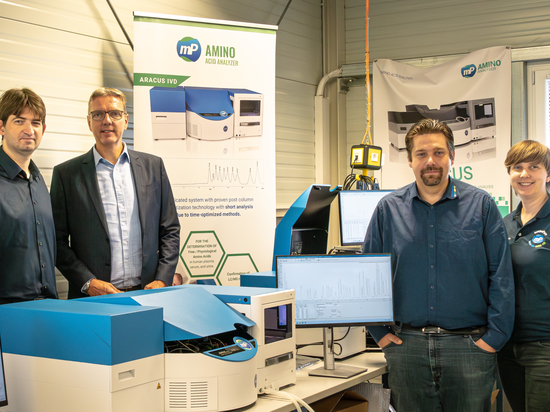
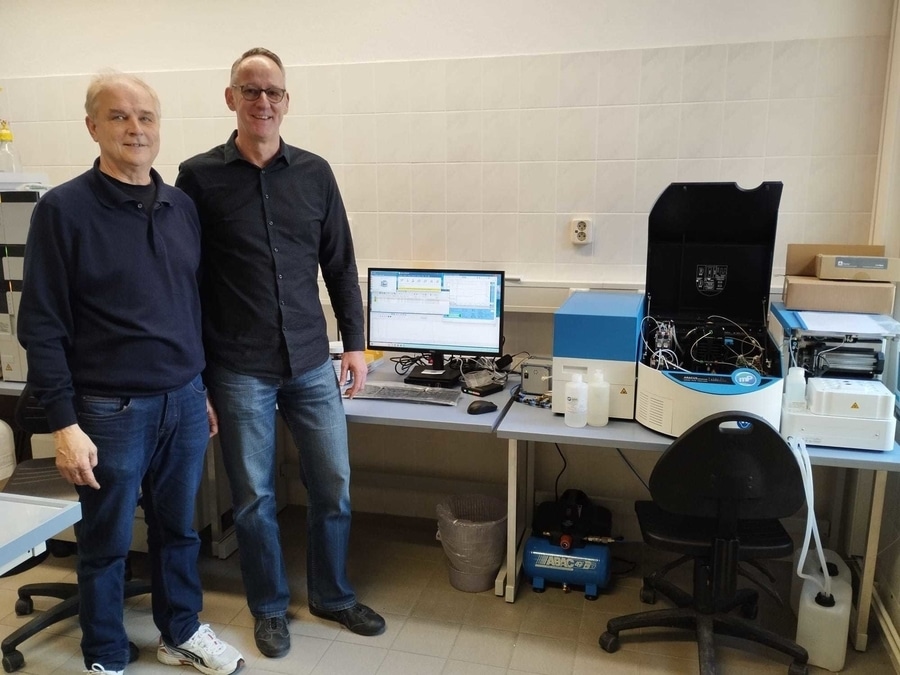
“An important aspect here is the amino acid composition. To determine this, we are developing a standardisable protocol for sample preparation and quantification,” explains Dr Alexander Angersbach, research associate at membraPure GmbH. A key analytical tool in this project is amino acid analysis using an amino acid analyser. This system enables both qualitative and quantitative determination of individual amino acids.
The amino acid analyser enables reliable detection even at very low concentrations and is not significantly affected by complex sample matrices. Compared to other analytical methods such as LC-MS/MS or HPLC, it generally requires less complex sample preparation.
Both free and bound amino acids can be analysed. Free amino acids are determined by post-column derivatisation: following chromatographic separation, a reagent reacts with the amino acids to form stable, coloured derivatives. Primary amino acids produce violet compounds, whilst secondary amino acids form yellow derivatives. These signals are detected and quantified based on the peak areas.
Amino acid analysis is particularly important for so-called ‘novel foods’, including products based on insect proteins. Regulatory authorities such as the European Food Safety Authority (EFSA) require detailed amino acid profiles to assess protein quality. Whilst amino acid analysis is not mandatory for most conventional foods – where only the total protein content needs to be stated – it is becoming increasingly important due to the growing market for plant-based proteins, meat alternatives and functional foods. In many cases, detailed amino acid profiles also serve marketing purposes.
Additional requirements are defined by organisations such as LUFA (Agricultural Testing and Research Institutes), which assess both the content and quality of amino acids in food. During production, it is essential to ensure the stability and availability of amino acids, which often requires carefully controlled processing conditions.
Amino acids themselves can be sensitive compounds. They can undergo chemical changes both during biological processes and during sample preparation, for example through oxidation. In some cases, the original amino acid is no longer detectable as it has been converted into another compound – such as glutamine, which converts into glutamic acid.
The processing strategies developed in the project are designed to ensure that the bioavailability of the proteins – that is, their utilisation by the human body – is preserved as fully as possible. This is tested both in the test tube (in vitro) and in biological models (in vivo) to gain a comprehensive understanding of the relationships between processing and nutrient effects.
Furthermore, by carefully controlling the individual steps, it is possible to avoid unnecessarily heavy processing of foodstuffs. This not only protects product quality but also contributes to the conservation of resources and thus to environmental sustainability.
“Our research approach ranges from alternative animal-based raw materials through the individual processing steps to the nutritional assessment of the end product,” says Dr Oliver Schlüter, Head of the ATB’s “Healthy Foods” programme area. “Initially, we are focusing on liquid, protein-rich food systems, with dry product forms to follow later.”
Those responsible for the project are confident that the findings obtained within the framework of ProtinA will be transferable to other alternative protein sources and various product categories in the future. In this way, innovative, nutrient-rich and sustainable foods could be developed in the long term that are also accepted by consumers.
The research project is funded by the Federal Ministry of Food and Agriculture (BMEL) as part of the Innovation Promotion Programme (funding code: 281A809B21) and supported by the Federal Office for Agriculture and Food (BLE).