#Product Trends
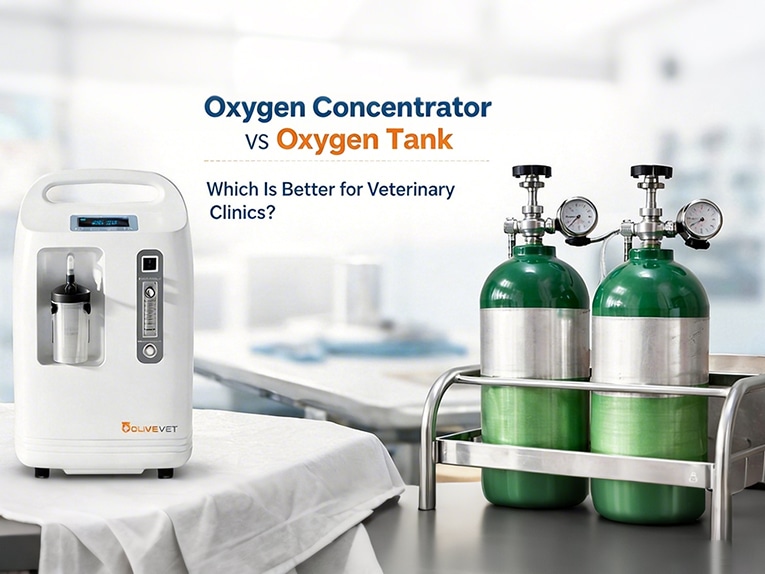
Oxygen Concentrator vs Oxygen Tank:
Which Is Better for Veterinary Clinics?
That’s usually the exact question running through a vet’s head when oxygen therapy stops being “occasional” and becomes part of daily clinic life.
If you run a veterinary clinic, you’ve probably worried about at least one of these:
Running out of oxygen at the worst possible moment
Safety risks with high-pressure cylinders
Rising refill and delivery costs
Whether switching to a concentrator is actually worth it
This article breaks down oxygen concentrator vs oxygen tank in plain language, based on how clinics really operate.
Why oxygen supply is critical in veterinary clinics
Oxygen isn’t optional in modern veterinary care.
It’s used every day for:
Surgical anaesthesia
Post-operative recovery
Respiratory distress cases
ICU and critical care support
Small animals that deteriorate fast
When oxygen isn’t reliable, everything else in the clinic slows down or stops.
What is an oxygen tank?
An oxygen tank, also called an oxygen cylinder, stores pre-filled oxygen under high pressure.
Once it’s empty, it must be replaced or refilled.
When oxygen tanks still make sense
Low oxygen usage clinics
Emergency backup situations
Mobile or power-limited environments
Clinics with reliable local refill suppliers
For occasional use, tanks can still work.
Common problems with oxygen tanks
They run out without warning
Refill delays disrupt procedures
High-pressure safety concerns
Storage and compliance requirements
I’ve heard more than one clinic say they only realised the tank was empty when they needed it most.
What is an oxygen concentrator?
An oxygen concentrator doesn’t store oxygen.
It produces oxygen continuously by filtering nitrogen out of room air.
As long as there’s power, it keeps delivering oxygen.
Why veterinary clinics are switching to oxygen concentrators
No refills required
No risk of running out
Lower long-term costs
Safer low-pressure operation
Consistent oxygen supply
This is why concentrators have become standard equipment in many modern clinics.
Cost comparison over time
Oxygen tanks look cheaper upfront.
But long term, clinics pay for:
Refill fees
Transport and delivery
Downtime risks
Emergency replacements
Oxygen concentrators cost more initially, but ongoing costs are minimal.
Most clinics hit the break-even point faster than expected.
Safety considerations in veterinary clinics
Safety is often overlooked until something goes wrong.
Oxygen tanks introduce:
High-pressure hazards
Fall and impact risks
Fire and storage concerns
Oxygen concentrators operate at low pressure, making them safer for indoor clinical use.
Daily workflow impact
Here’s the real question.
Do you want your staff checking oxygen levels, or focusing on patients?
With oxygen tanks:
Monitor pressure levels
Swap cylinders
Schedule refills
With oxygen concentrators:
Turn it on
Use oxygen
Turn it off
Which option is better for different clinic types?
Small veterinary clinics:
A 5L veterinary oxygen concentrator is usually sufficient for routine surgeries and oxygen therapy.
Large veterinary hospitals:
Multiple concentrators paired with oxygen tanks as emergency backup.
Emergency and mobile use:
Oxygen tanks still play an important role where power access is limited.
Why oxygen concentrators are becoming the standard
Clinics don’t switch because it’s trendy.
They switch because reliability matters.
No refill stress
Predictable oxygen supply
Improved safety
Lower long-term costs
How to choose the right veterinary oxygen concentrator
If you’re considering the switch, focus on practical factors:
Flow rate (5L covers most small animal needs)
Continuous operation capability
Low noise levels
Stable oxygen concentration
Easy maintenance
FAQs: oxygen concentrator vs oxygen tank
Can a clinic replace oxygen tanks completely?
Most clinics keep one tank as emergency backup, even after switching to concentrators.
Is an oxygen concentrator safe for animals?
Yes. They’re widely used for dogs, cats, and small animals.
Can a concentrator run continuously?
Quality veterinary units are designed for continuous operation.
Is a 5L unit enough?
For most small to medium veterinary clinics, yes.
Final verdict
If you’re deciding between oxygen concentrator vs oxygen tank, here’s the honest answer.
Oxygen tanks work well as emergency backups
Oxygen concentrators are better for daily veterinary use
Most modern clinics use both, but the concentrator becomes the backbone of the system.