#Product Trends
Uric Acid in Reptiles and Birds: A Key Parameter for Renal Assessment
Why Uric Acid Matters in Exotic Animal Diagnostics
1、Why Uric Acid Matters in Exotic Animal Diagnostics
In reptiles and birds, urea alone may not provide a complete picture of renal function. Many of these animals are uricotelic, meaning they excrete most nitrogenous waste in the form of uric acid. This makes uric acid an important biochemical parameter when evaluating renal health in these species.
Unlike mammals, whose renal assessments commonly rely on parameters such as urea and creatinine, birds and many reptiles require a more species-specific approach to biochemical interpretation. Applying conventional mammalian reference values and diagnostic assumptions without considering these physiological differences may lead to misleading conclusions.
2、Uric Acid: An Important but Not Early Marker
Elevated uric acid concentrations can indicate impaired renal excretion. However, the increase may not become apparent until substantial renal functional impairment has occurred. A normal uric acid result therefore does not necessarily exclude early renal disease.
For this reason, serial measurements can provide more useful clinical information than a single isolated result. Evaluating changes over time, alongside physical examination, clinical history and other diagnostic findings, helps veterinarians develop a more comprehensive assessment of renal health.
3、Feeding History and Other Clinical Factors
An elevated uric acid result does not automatically indicate kidney disease. In carnivorous species, particularly certain snakes and other reptiles, uric acid concentrations may increase physiologically after feeding. The timing, type and quantity of the most recent meal can therefore influence the interpretation of biochemical results.
Dehydration, gout and dietary factors should also be considered during the diagnostic process. Depending on the species and clinical presentation, additional investigations may be needed to distinguish physiological variation from pathological changes.
Recording feeding history and maintaining consistency in sampling conditions, where clinically appropriate, can improve the interpretability of serial results. Because metabolic responses differ among species, fasting and sampling protocols should be determined according to the animal's specific needs.
4、Supporting In-Clinic Testing with the Seamaty QT3
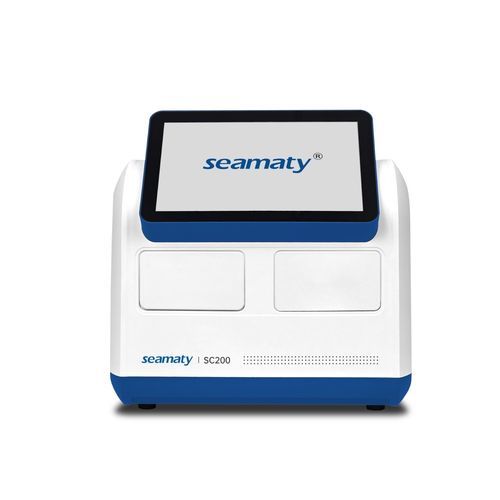
The Seamaty QT3 Veterinary Blood Chemistry Analyzer provides an automated, in-clinic testing solution for veterinary practices working with exotic animals and reptiles. Its dedicated reptile and exotic animal reagent rotor supports a multi-parameter approach to biochemical assessment.
The profile specified for this application includes uric acid alongside other clinically relevant parameters, such as calcium, phosphorus, total protein, AST, creatine kinase (CK) and glucose. Reviewing these parameters together helps veterinarians assess biochemical findings in a broader clinical context rather than relying on uric acid alone.
Based on microfluidic technology, the QT3 supports automated testing with a compact analyzer design. Its sector rotor requires a sample volume of 60 μL, and the stated testing time is approximately 9–12 minutes per sample. These features support practical biochemical testing within veterinary clinics.
For reptile and exotic animal medicine, the combination of appropriate parameter selection, species-specific interpretation and serial monitoring is essential to meaningful diagnostic assessment. By bringing multi-parameter biochemical testing into the clinic, the Seamaty QT3 supports a more structured approach to evaluating renal health and related metabolic changes in these patients.