#Product Trends
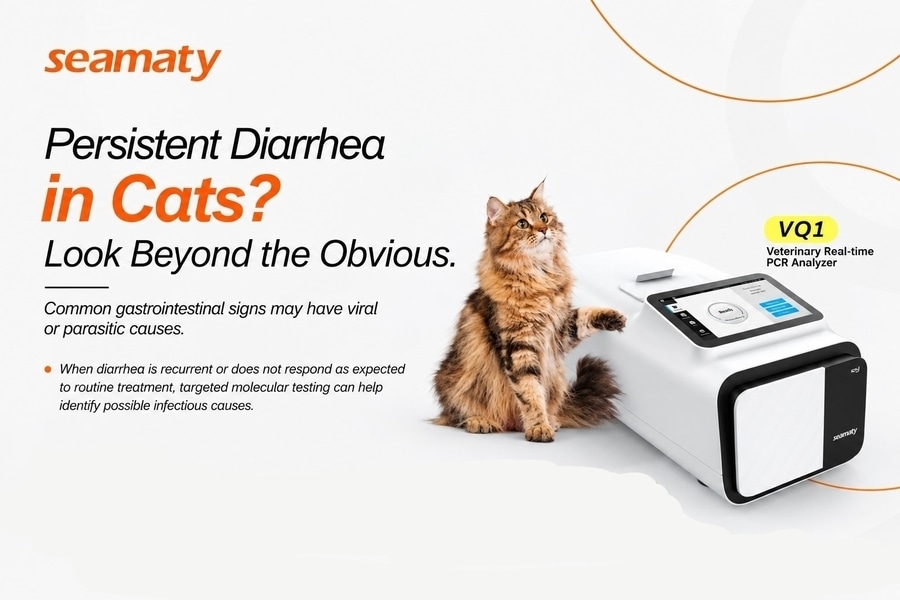
Persistent Diarrhea in Cats: When Targeted Molecular Testing Can Support the Diagnostic Workup
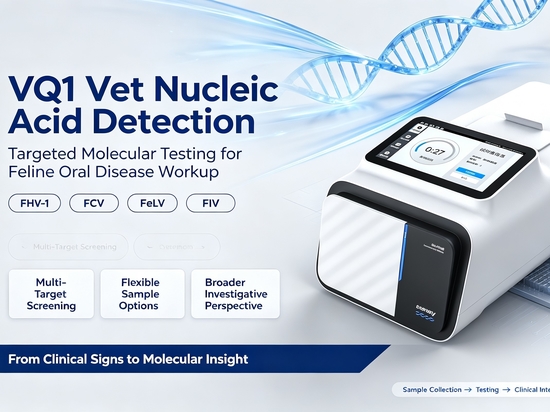
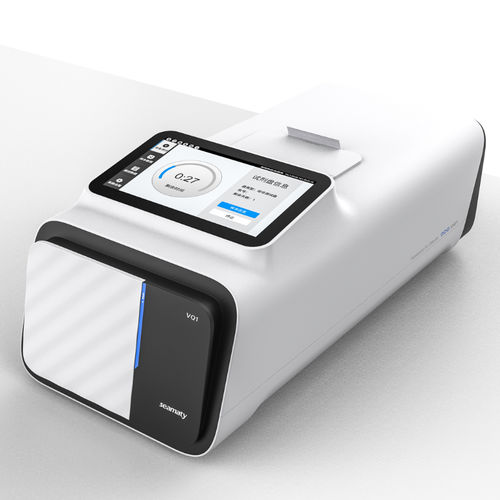
Vet Fully Automated Nucleic Acid Detection System
Persistent or recurrent diarrhea in cats can have multiple underlying causes. When gastrointestinal signs continue, recur, or do not respond as expected to routine treatment, identifying potential infectious pathogens can help veterinarians develop a more focused diagnostic workup.
Molecular testing can provide a targeted approach by detecting specific viral and parasitic pathogens that may be associated with feline gastrointestinal disease.
1、Targeted Detection of Four Common Feline Pathogens
The Seamaty VQ1 is a fully automated nucleic acid detection system designed for veterinary molecular diagnostics. Its feline gastrointestinal panel detects four viral and parasitic targets:
● Feline coronavirus (FCoV)
● Feline panleukopenia virus (FPV)
● Tritrichomonas foetus
● Giardia lamblia
Testing multiple targets in a single panel can help veterinarians investigate several potential infectious causes when clinical signs are nonspecific or persistent.
2、Supporting Testing in Multi-Cat Environments
Gastrointestinal infections can be particularly challenging to manage in environments where multiple cats live in close proximity.
Targeted pathogen screening may be considered in situations such as:
● Multi-cat households
● Animal shelters
● Breeding facilities
● Suspected diarrhea outbreaks
● Newly introduced cats
● Cats with recurrent or persistent gastrointestinal signs
In these settings, molecular testing can provide additional diagnostic information that may support decisions regarding further clinical evaluation and infection-control measures.
3、Simple Sample Integration
The VQ1 feline gastrointestinal panel can work with sample types including rectal swabs and intestinal lavage fluid, allowing pathogen testing to be incorporated into the veterinary diagnostic workflow.
The VQ1 uses a closed microfluidic cartridge containing freeze-dried reagents. Sample preparation, nucleic acid processing, and amplification are integrated into the testing process, reducing the need for complex liquid reagent handling and helping minimize potential contamination and operator-related errors.
4、Automated Molecular Testing in Veterinary Practice
The VQ1 combines real-time fluorescent quantitative PCR with an automated cartridge-based workflow. Its temperature control system can achieve a heating and cooling rate of up to 8°C per second, while the complete testing process takes approximately 40 minutes per sample.
The operating workflow is designed around four basic steps:
● Prepare the sample
● Add the sample to the cartridge
● Insert the cartridge into the analyzer
● Read the result
The system also incorporates built-in quality control to monitor testing performance during each run.
5、Bringing Molecular Diagnostics Closer to Veterinary Care
For veterinary clinics and animal healthcare facilities, access to molecular testing within the clinical workflow can be useful when a more targeted investigation of infectious disease is required.
By combining multiple pathogen targets with automated sample processing and real-time PCR technology, the VQ1 provides a compact molecular diagnostic solution for veterinary applications.
For cats with persistent or recurrent diarrhea, targeted molecular testing can be one component of a broader diagnostic approach, helping veterinarians investigate specific infectious causes alongside clinical history, physical examination, and other laboratory findings.