#Product Trends
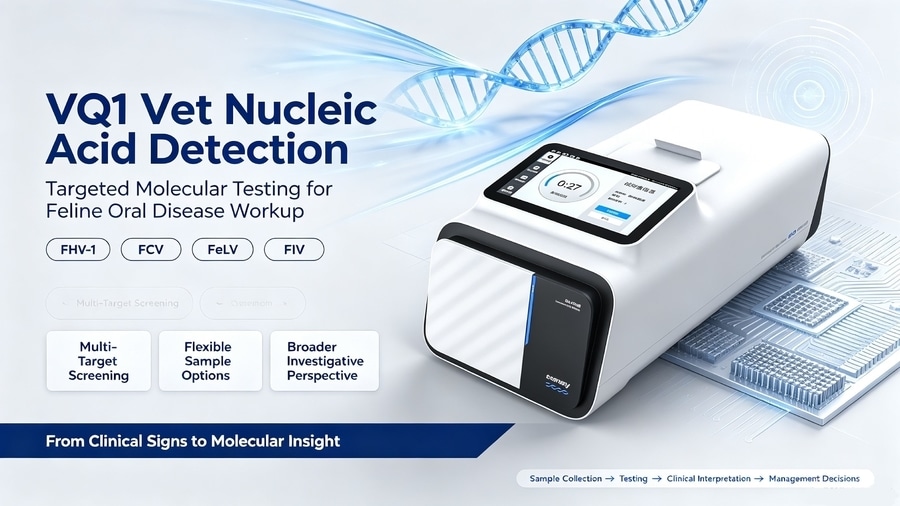
VQ1 Vet Nucleic Acid Detection: A More Complete Molecular Approach to Feline Gingivitis and Stomatitis
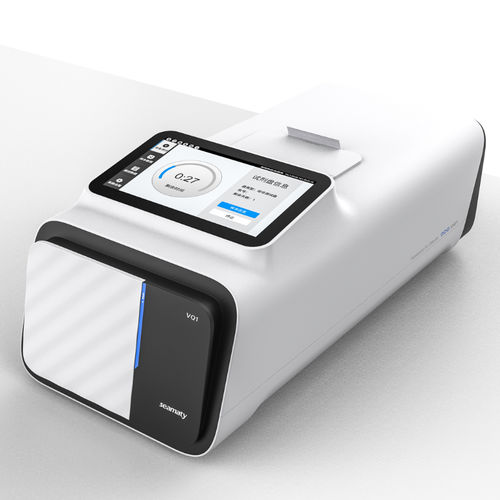
Vet Fully Automated Nucleic Acid Detection System
Chronic feline gingivitis and stomatitis can be challenging to evaluate. Although inflammation is visible in the oral cavity, the underlying factors may extend beyond what can be observed during a routine oral examination.
In cats with persistent or recurrent oral inflammation, infectious contributors and immune status may need to be considered as part of a more comprehensive diagnostic workup. VQ1 Vet Nucleic Acid Detection provides a targeted molecular testing solution for screening four relevant viral targets associated with feline infectious and immunosuppressive conditions.
1、Looking Beyond Visible Oral Inflammation
Feline gingivitis and stomatitis can present with oral redness, swelling, ulceration, pain, and difficulty eating. However, clinical signs alone may not reveal whether infectious agents are contributing to the condition.
Targeted nucleic acid testing can provide additional information by screening for specific viral targets, helping veterinary professionals investigate potential infectious contributors alongside clinical examination and other diagnostic methods.
The VQ1 Vet Nucleic Acid Detection system can be used to screen for four relevant feline viral targets:
● Feline Herpesvirus Type 1 (FHV-1)
● Feline Calicivirus (FCV)
● Feline Leukemia Virus (FeLV)
● Feline Immunodeficiency Virus (FIV)
By evaluating multiple targets, veterinarians can obtain a broader molecular perspective when investigating cats with persistent oral disease.
2、Four Relevant Viral Targets in One Molecular Testing Approach
● Feline Herpesvirus Type 1 (FHV-1)
FHV-1 is an important feline viral pathogen that is commonly associated with respiratory and ocular disease. In cats presenting with chronic upper respiratory or ocular signs together with oral inflammation, molecular testing can help investigate whether FHV-1 is present in the sampled material.
● Feline Calicivirus (FCV)
FCV is another important feline viral pathogen and can be associated with oral lesions as well as respiratory disease. Screening for FCV may be particularly relevant when oral inflammation occurs alongside other compatible clinical signs.
● Feline Leukemia Virus (FeLV)
FeLV is an important infectious disease concern in cats because of its association with immune dysfunction and other systemic complications. Testing for FeLV can contribute to the evaluation of cats with persistent or unexplained disease, particularly when immunosuppression is a clinical consideration.
● Feline Immunodeficiency Virus (FIV)
FIV can affect the feline immune system and may be associated with an increased susceptibility to secondary or persistent health problems. Including FIV in the molecular screening strategy can help investigate whether an underlying immunosuppressive condition may be relevant to a chronic oral disease presentation.
3、Why Simultaneous Screening Matters
Chronic feline stomatitis may involve more than a single infectious factor. Detecting individual pathogens separately can provide useful information, but a multi-target approach can offer a more comprehensive starting point for investigation.
Simultaneous screening for FHV-1, FCV, FeLV, and FIV can support evaluation from two complementary perspectives:
3.1. Direct viral infection
The test can help investigate the presence of specific viral targets that may be relevant to the cat's clinical presentation.
3.2. Potential underlying immunosuppression
Screening for FeLV and FIV can help veterinarians consider whether an underlying immune-related factor may be contributing to persistent or recurrent disease.
This broader approach can be especially valuable when clinical signs are chronic, recurrent, or difficult to explain based on oral examination alone.
4、Flexible Sample Options for Veterinary Testing
Depending on the pathogen being investigated, VQ1 testing can accommodate different sample types, including:
● Ocular swabs
● Nasal swabs
● Oropharyngeal swabs
● EDTA whole blood
The availability of different sample options allows veterinary professionals to select an appropriate specimen according to the suspected pathogen and clinical situation.
Proper sample collection and handling remain essential for obtaining reliable molecular testing results.
5、A Practical Tool for Multi-Cat Environments
Molecular screening can also be useful in veterinary environments where multiple cats are housed together.
In multi-cat households, shelters, breeding facilities, rescue organizations, and veterinary hospitals, infected cats and asymptomatic carriers may have implications for infection-control decisions.
Targeted viral screening can therefore contribute to a more informed assessment of individual animals and may support decisions related to:
● Infection-control measures
● Cat grouping and management
● Monitoring of potentially exposed animals
● Investigation of recurring infectious problems
● Further diagnostic evaluation of clinically affected cats
For multi-cat environments, combining clinical observation with targeted molecular testing can provide a more structured approach to infectious disease investigation.
6、VQ1 Vet Nucleic Acid Detection: Supporting a More Complete Workup
The goal of molecular testing is not to replace clinical examination or other diagnostic methods. Instead, it can add targeted information when infectious disease is part of the differential diagnosis.
With its multi-target approach, VQ1 Vet Nucleic Acid Detection is designed to support veterinary professionals in investigating relevant feline viral targets through nucleic acid testing.
● For cats with chronic or recurrent gingivitis and stomatitis, a more complete diagnostic strategy may include:
Clinical examination → Appropriate sample collection → Targeted molecular testing → Interpretation with other clinical findings → Further diagnostic or management decisions
By incorporating targeted molecular testing into the diagnostic workflow, veterinary teams can move beyond evaluating only visible oral lesions and investigate potential infectious and immune-related contributors.
7、Build a More Complete Feline Stomatitis Workup with VQ1
Chronic feline gingivitis and stomatitis can be multifactorial, making a comprehensive diagnostic approach important.
VQ1 Vet Nucleic Acid Detection provides targeted screening for FHV-1, FCV, FeLV, and FIV, helping veterinary professionals investigate relevant viral contributors and consider potential immunosuppressive factors.
Whether used in individual patient evaluation or as part of infectious disease screening in multi-cat environments, targeted molecular testing can add valuable information to the overall diagnostic workflow.
Build a more complete feline stomatitis workup with targeted molecular testing — with VQ1 Vet Nucleic Acid Detection.