#Product Trends
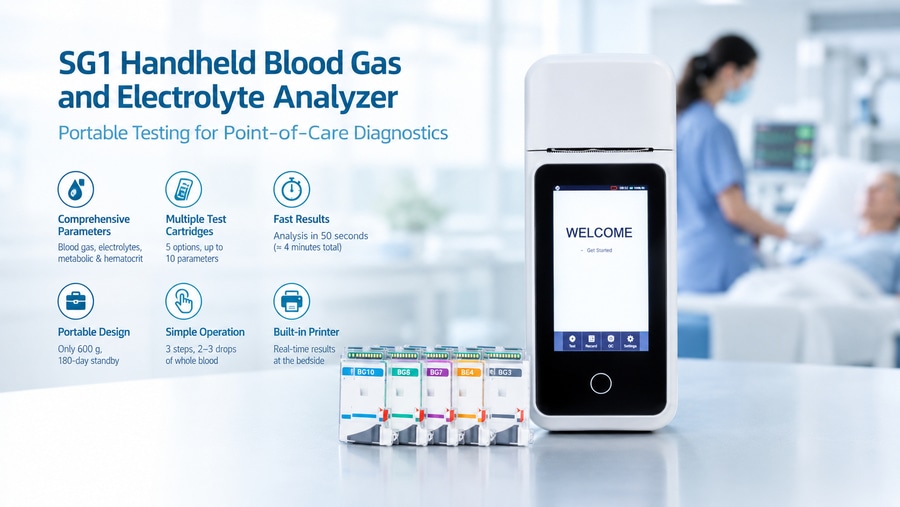
SG1 Handheld Blood Gas and Electrolyte Analyzer: Portable Testing for Point-of-Care Diagnostics
Features and Clinical Applications of the SG1
Introduction
Rapid assessment of blood gas status, electrolyte balance, and acid-base homeostasis is essential in emergency medicine, critical care, perioperative monitoring, and other clinical settings. Timely access to these parameters helps healthcare professionals evaluate a patient's physiological condition and supports clinical decision-making.
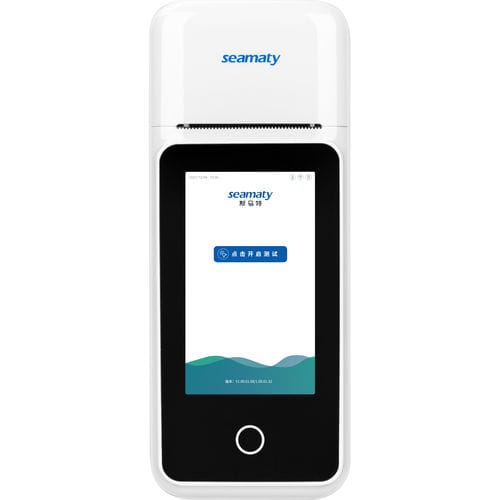
The SG1 Handheld Blood Gas and Electrolyte Analyzer is designed to provide portable point-of-care testing (POCT) with a compact form factor, dry test cartridge technology, and a streamlined operating procedure. By combining blood gas, electrolyte, metabolic, and hematocrit measurements in one platform, the SG1 supports a range of clinical testing requirements across hospital departments and emergency care environments.
1、Comprehensive Testing Parameters
The SG1 supports the measurement of multiple parameters related to respiratory function, electrolyte status, and metabolic balance. Depending on the selected test cartridge, the analyzer can measure up to 10 parameters from a single test.
Blood gas parameters:
• pH
• Partial pressure of carbon dioxide (pCO₂)
• Partial pressure of oxygen (pO₂)
Electrolyte parameters:
• Potassium (K⁺)
• Sodium (Na⁺)
• Chloride (Cl⁻)
• Ionized calcium (Ca²⁺)
Metabolic parameters:
• Glucose (Glu)
• Lactate (Lac)
Hematocrit:
• Hematocrit (Hct)
The analyzer also provides calculated parameters, including total carbon dioxide (tCO₂), calculated hemoglobin (cHgb), bicarbonate (cHCO₃⁻), base excess in extracellular fluid (BE(ecf)), base excess in blood (BE(b)), calculated oxygen saturation (cSO₂), and anion gap (AG), where supported by the selected testing configuration.
This combination of measured and calculated values provides a broader picture of a patient's acid-base status, oxygenation, ventilation, electrolyte balance, and metabolic condition.
2、Flexible Test Cartridge Options
The SG1 uses dry test cartridges to accommodate different clinical testing needs. Five cartridge configurations are available, allowing healthcare facilities to select the appropriate panel according to their testing requirements.
Cartridge&Test Parameters:
• BG10:pH, pO₂, pCO₂, K⁺, Na⁺, Cl⁻, Ca²⁺, Hct, Glu, Lac
• BG8:pH, pO₂, pCO₂, K⁺, Na⁺, Cl⁻, Ca²⁺, Hct
• BG7:pH, pO₂, pCO₂, K⁺, Na⁺, Ca²⁺, Cl⁻
• BE4:K⁺, Na⁺, Cl⁻, Ca²⁺
• BG3:pH, pO₂, pCO₂
The BG10 cartridge offers a broader panel combining blood gas, electrolyte, hematocrit, glucose, and lactate testing. The BG8 and BG7 configurations focus on blood gas and electrolyte assessment, while the BE4 cartridge is designed for electrolyte testing and BG3 focuses on core blood gas parameters.
This range of options enables healthcare providers to align cartridge selection with clinical priorities and avoid using a broader testing panel when a more focused assessment is sufficient.
3、Designed for Portable Point-of-Care Testing
● Compact and Lightweight Design
Weighing approximately 600 g, the SG1 is designed for portability and flexible deployment. Its built-in lithium battery provides a standby duration of up to 180 days under specified conditions, supporting use in settings where continuous access to mains power may be inconvenient.
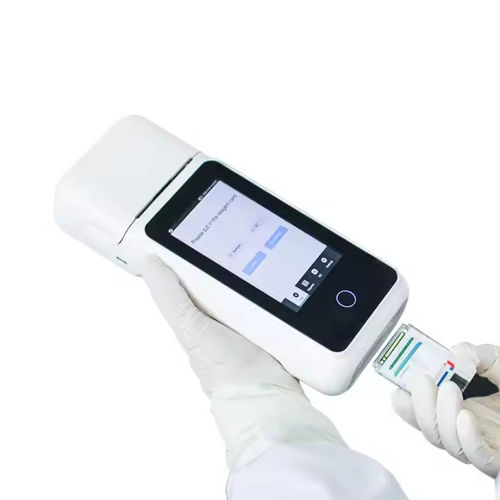
Its handheld format makes it suitable for bedside testing, emergency departments, critical care units, and selected prehospital environments.
● Simplified Testing Workflow
The SG1 features a three-step operating procedure and requires only 2–3 drops of whole blood, according to the stated product specifications. Its dry cartridge-based design simplifies routine testing and avoids the need for conventional wet reagent packs.
The reduced sample requirement and streamlined workflow can be beneficial when rapid results are needed or when sample volume is limited. As with any blood gas testing system, appropriate sample collection, handling, and cartridge use remain important for obtaining reliable results.
● Rapid Analysis and Result Reporting
The sample analysis process takes approximately 50 seconds, while the complete workflow—including calibration, reaction, testing, and result generation—is specified at approximately four minutes.
A built-in thermal printer enables immediate printing of test results at the point of care. This supports timely review and documentation without requiring a separate printer.
● Practical Cartridge Storage
The SG1 test cartridges have a stated shelf life of seven months when stored at 10–30°C and 12 months when refrigerated at 2–8°C, subject to the applicable product instructions.
These storage characteristics can help healthcare facilities plan inventory and manage cartridge availability across different clinical environments. Facilities should follow the manufacturer's specified storage and handling requirements to maintain product performance.
4、Clinical Applications Across Healthcare Settings
● Internal Medicine
Blood gas and electrolyte testing can support the assessment of patients with conditions associated with fluid loss, electrolyte disturbances, or acid-base abnormalities, including diarrhea, vomiting, and heart failure. When combined with clinical findings and other investigations, these results can help clinicians evaluate physiological status and guide further management.
● Surgery and Perioperative Care
During surgical procedures, blood gas and electrolyte measurements can assist with monitoring acid-base balance, ventilation, oxygenation, and electrolyte status. Rapid access to relevant results may support perioperative assessment and clinical management.
● Intensive Care Units
Critically ill patients may require repeated assessment of respiratory function, acid-base status, and electrolyte balance. The SG1's portable design and multiple testing options make it suitable for point-of-care assessment in intensive care environments, subject to the clinical requirements of the facility.
● Emergency Departments
In emergency care, rapid blood gas and electrolyte testing can contribute to the assessment of patients presenting with respiratory compromise, metabolic disturbances, altered consciousness, or seizures. Glucose and lactate measurements, when included in the selected cartridge, provide additional information relevant to acute patient evaluation.
● Laboratory Medicine
The analyzer can support decentralized testing and selected clinical workflows involving the assessment of gas exchange, acid-base balance, and electrolyte status. Its role should be determined by each laboratory's testing protocols, quality requirements, and intended clinical applications.
● Prehospital Emergency Care
Portable testing can be valuable in selected prehospital settings where access to a central laboratory is limited. The SG1's compact design and battery-powered operation may facilitate rapid assessment of electrolyte disturbances, ventilation, oxygenation, and metabolic status when appropriate sample-handling and quality-control procedures can be maintained.
5、Supporting Efficient Clinical Workflows
The SG1 combines several practical features for point-of-care testing: a handheld design, small whole-blood sample requirement, dry test cartridges, multiple panel configurations, rapid analysis, and integrated result printing.
These characteristics may help reduce operational complexity and support timely access to clinically relevant information. The dry cartridge format also eliminates the need for conventional wet reagent packs, which may simplify consumable management compared with some wet-reagent-based systems.
Actual workflow efficiency and operating costs will depend on cartridge selection, testing frequency, storage conditions, quality-control requirements, and local clinical protocols.
Conclusion
The SG1 Handheld Blood Gas and Electrolyte Analyzer provides a portable solution for point-of-care assessment of blood gas status, electrolytes, and selected metabolic parameters. Its five cartridge configurations, lightweight design, small sample requirement, rapid analysis, and built-in thermal printer support a variety of testing needs across emergency, critical care, perioperative, and other clinical environments.
By combining flexible test menus with a compact, dry cartridge-based platform, the SG1 offers healthcare facilities an option for bringing selected blood gas and electrolyte testing closer to the patient. Its suitability for a particular application should be evaluated according to the required test parameters, clinical workflow, quality-control procedures, and applicable regulatory requirements.