#Product Trends
Beyond Neuromodulation: Blossom² and the Future of Neuroplasticity Research
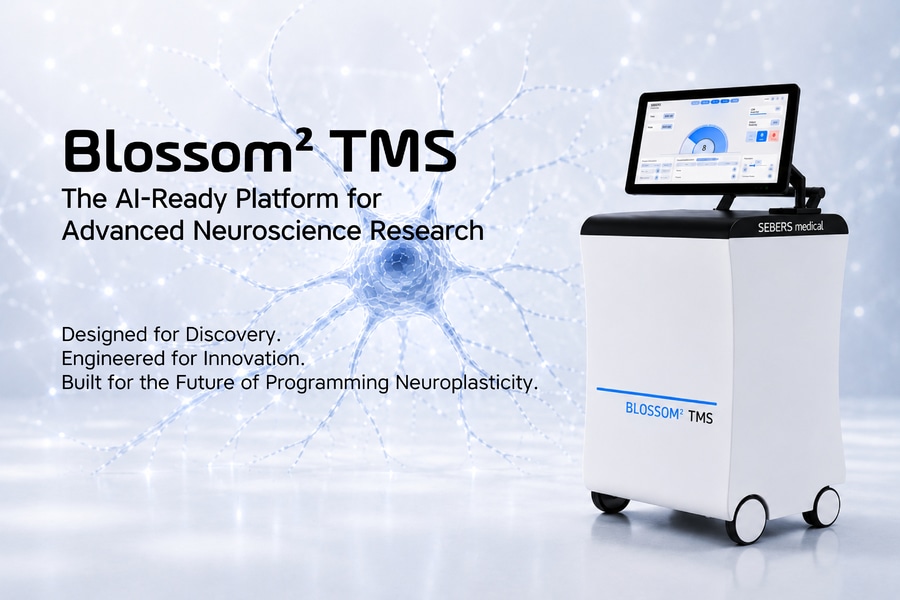
A next-generation TMS research platform designed for individualized stimulation, advanced neuroplasticity protocols, and programmable brain research.
Neuroplasticity has become one of the most exciting areas of modern neuroscience. As researchers increasingly seek to understand how the human brain adapts, learns, and reorganizes itself, the demand for more flexible and physiologically precise stimulation technologies continues to grow.
Transcranial Magnetic Stimulation (TMS) has evolved from a tool primarily used to modulate cortical excitability into a powerful research method for investigating the mechanisms of synaptic plasticity. While conventional TMS systems typically provide predefined stimulation protocols, today's neuroscience increasingly requires programmable stimulation architectures that can be adapted to individual neurophysiology and novel experimental paradigms.
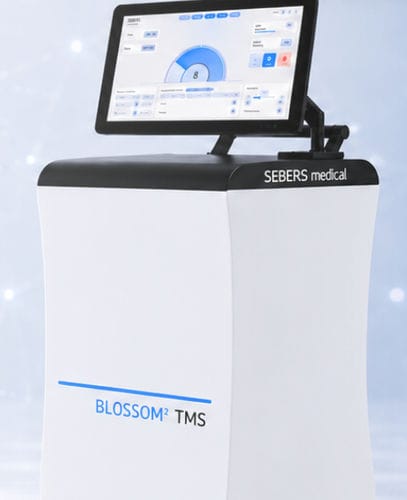
This is the vision behind Blossom², SEBERS Medical's next-generation research TMS platform.
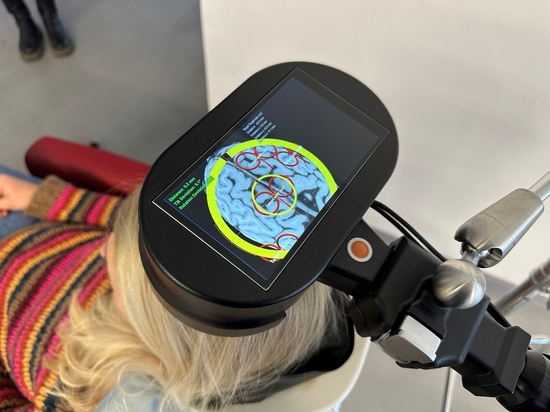
Rather than limiting researchers to a fixed set of stimulation protocols, Blossom² was developed as a highly flexible research system capable of supporting both established and emerging neuroplasticity paradigms. Researchers can freely design stimulation sequences with sub-millisecond timing precision, implement customized burst architectures, investigate paired-pulse interactions, and explore stimulation frequencies of up to 1,000 Hz. The platform supports conventional rTMS as well as advanced paradigms including Quadripulse Stimulation (QPS), individualized QPS (iQPS), paired-pulse TMS, programmable burst stimulation, and future adaptive stimulation strategies.
One of the major scientific motivations behind Blossom² is the growing evidence supporting Quadripulse Stimulation (QPS) as one of the most promising approaches for studying human cortical plasticity. In their comprehensive review, Matsumoto and Ugawa conclude:
"Based on this evidence, we propose that QPS is currently the most powerful and reliable non-invasive brain stimulation method to induce neural plasticity in humans."
This statement highlights an important direction in modern TMS research. Rather than simply increasing stimulation intensity or frequency, researchers are increasingly investigating how precisely timed stimulation patterns interact with the brain's intrinsic physiology to shape long-term potentiation (LTP)- and long-term depression (LTD)-like mechanisms. QPS has been shown to induce robust and reproducible plasticity with lower interindividual variability than several conventional stimulation paradigms, making it an attractive tool for both basic neuroscience and translational research.
Blossom² builds upon these scientific developments by enabling investigators to move beyond fixed protocols. The platform introduces individualized pulse timing with microsecond-level resolution, allowing researchers to investigate I-wave latency-dependent stimulation, programmable pulse sequences, and subject-specific neuroplasticity protocols. Such flexibility opens new opportunities to study the physiological mechanisms underlying learning, motor control, cognition, recovery after neurological injury, and future personalized neuromodulation strategies.
The system has also been designed with the future of neuroscience in mind. Its AI-ready software architecture, integrated trigger interfaces, and planned support for closed-loop stimulation workflows provide a foundation for next-generation experimental paradigms that combine TMS with EEG, EMG, neuronavigation, and intelligent protocol optimization. As research increasingly moves toward adaptive and individualized stimulation, these capabilities are expected to become increasingly important.
By combining high-performance stimulation hardware with exceptional programmability, Blossom² enables researchers to investigate neuroplasticity rather than simply applying predefined stimulation protocols. It offers a versatile research platform for universities, neuroscience laboratories, translational research centers, and investigators developing the next generation of non-invasive brain stimulation technologies.
As neuroscience shifts from standardized stimulation toward individualized plasticity induction, Blossom² aims to provide the flexibility required to explore the next frontier of human brain research.