


#Product Trends
Selecting Surgical Lights: Upgrading Procurement Decisions from “Looking at Specifications” to “Weighing Factors”
Based on an analysis of 11 core parameters across 5 mainstream devices, this article explains how the entropy-weighted method is reshaping the objective evaluation system for operating room equipment.
Key Takeaways: In the operating room, if a surgical light fails mid-procedure, there is no chance to recover. Faced with the complex specifications on the market, hospital procurement is shifting from “looking at price and relying on experience” to “letting the data speak for itself.” This article introduces an objective evaluation model based on the entropy-weighted method and conducts a comparative analysis of 11 core parameters across five mainstream devices, providing a reusable decision-making framework for selecting operating room equipment.
01 Industry Trends: Why Does the Procurement of Surgical Lights Require a “Decision-Making Upgrade”?
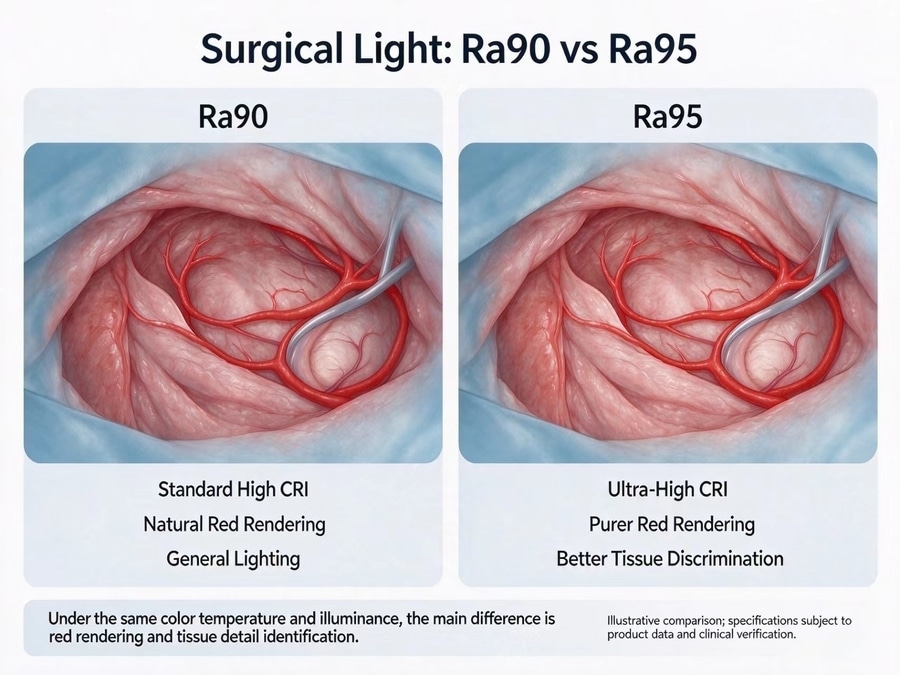
In today’s world, where life-support equipment such as anesthesia machines and patient monitors has become highly intelligent, surgical lights are often underestimated. However, the blurring of tissue boundaries caused by the lights turning off or color distortion during surgery is a very real surgical risk.
Traditional procurement often faces two extremes: first, an exclusive focus on low price, which overlooks the hidden shortcomings of low-cost LEDs in color rendering index (Ra), heat dissipation design, and lumen maintenance; second, a reliance solely on experience, where decisions are made based on the subjective preferences of a single expert.
Modern operating room construction is a systematic endeavor. Clinicians require accurate color rendering and deep-cavity illumination; nurses need smooth, easily disinfectable lamp arms; engineers focus on heat dissipation and maintenance; and infection control departments must ensure there are no blind spots in sterilization. Faced with these multidimensional conflicting demands, medical equipment procurement urgently requires an evaluation tool capable of quantifying the needs of all stakeholders while eliminating human bias.
02 Methodological Innovation: The “Entropy Weight Method” That Lets the Data Speak for Itself
How can the overall performance of a dental operating light be objectively evaluated? The industry has begun to adopt comprehensive evaluation techniques that incorporate parameters such as illuminance, color temperature, lifespan, and color rendering index into a unified model.
Among these, the Entropy Weight Method stands out for its objectivity. Its core logic is as follows:
· If several products have similar data for a particular metric (e.g., all have a lifespan of 50,000 hours), and that metric cannot “distinguish between them,” its weight is low;
· If the distribution of a metric (such as the color rendering index) varies significantly across different products—meaning it better distinguishes between high- and low-quality options—it is assigned a higher weight.
Weight allocation is no longer determined by an individual’s subjective preferences but by the degree of dispersion in the data itself. This method is particularly well-suited for bidding scenarios involving multiple brands and parameters, effectively mitigating bias in procurement decisions.
03 Data Analysis: Side-by-Side Comparison of Five Mainstream Devices
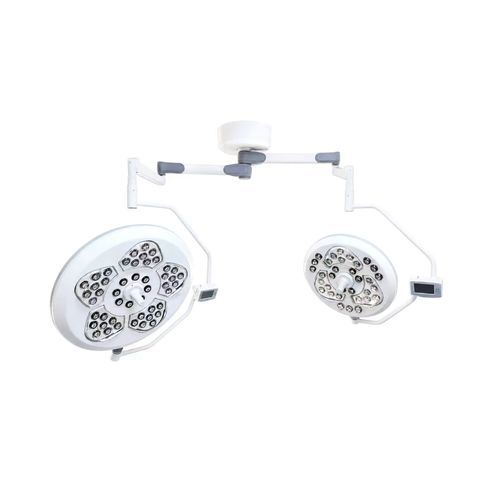
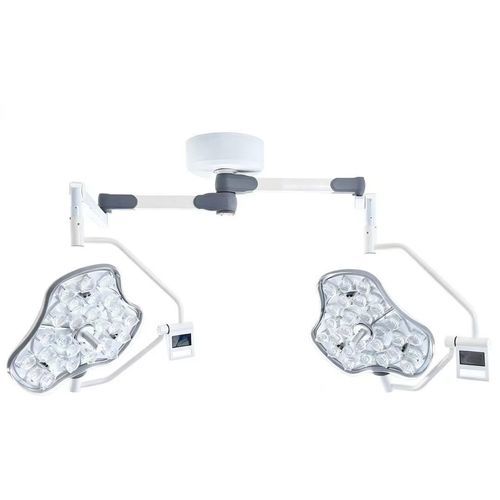
In a certain evaluation model based on publicly available technical data, researchers extracted 11 core parameters from five mainstream surgical lights and performed calculations using the entropy-weighted method.
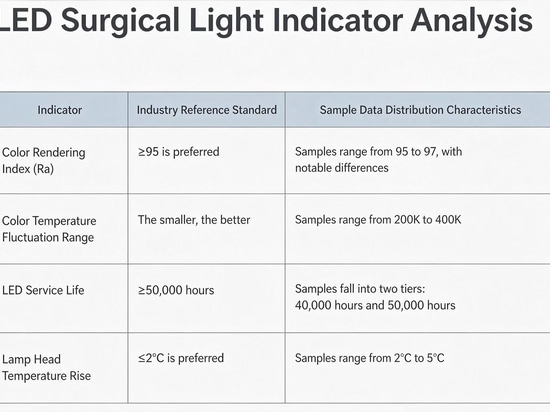
An overview of the core parameters (excerpt) is shown in the figure below
(Note: For the full list of 11 parameters and specific values for the 5 models, please refer to the complete version of the
Entropy-Weighted Calculation Results: Which Metrics Are Most “Valuable”?
According to the calculations, the top five metrics by weight are, in order:
1. Color Rendering Index (Ra) — Weight: 0.1486
2. Color Temperature Fluctuation Range — Weight: 0.1447
3. LED Lifespan — Weight: 0.1333
4. Weight — Weight: 0.0972
5. Number of Bulbs — Weight: 0.0847
Analysis: Color rendering index and color temperature stability are the key factors distinguishing products from one another. This means that, budget permitting, prioritizing high color rendering and consistent light color is crucial for enhancing surgical safety margins. Based on this model, models F2 and F3 in the sample rank high in overall scores; however, this only reflects their performance within specific parameter sets. The procurement team must also comprehensively consider unquantified factors such as after-sales service and sterilization validation.
04 Procurement Practices: A Systems Engineering Approach Involving Multi-Department Collaboration
Behind every high-quality surgical light lies a rigorous procurement process. An increasing number of hospitals are establishing the following collaborative mechanisms:
· Clinical Departments: Define minimum requirements for spot size, color rendering, and deep-cavity illumination;
· Nursing Team: Test the feel of the lamp arm controls and the ease of handle removal;
· Equipment Department: Evaluates heat dissipation, energy consumption, and the interchangeability of accessories;
· Infection Control Office: Verifies whether materials can withstand high-temperature, high-pressure sterilization at 134°C or low-temperature plasma sterilization.
Integrating the needs of all parties using objective data models (such as the entropy-weighted method) transforms “I think” into “the data shows”—this is not only an upgrade to procurement tools but also a commitment to patient safety and the quality of medical care.
05 Conclusion
When selecting surgical lights, not making the lowest price the sole criterion is, at its core, a matter of respect for surgical risks. By incorporating data into procurement decisions and eliminating potential risks, we ensure that every light illuminating the operating table can withstand the ultimate clinical test.
About WEYUAN Medical
WEYUAN Medical has specialized in operating room equipment for 27 years, and our quality management system is certified to ISO 13485. We are committed to providing medical institutions worldwide with surgical lights and comprehensive solutions that stand up to clinical scrutiny.
· Access Complete Data: To obtain a comprehensive comparison table of 11 parameters across 5 devices, as well as an Excel template for entropy-weighted scoring, please visit our official website at https://smartoperatingroom.com/.
· Selection Consultation: If you need assistance with model selection and configuration calculations tailored to your hospital’s operating room setup, please contact us.
(The data in this article is sourced from the IEC 60601-2-41 standard, the YY 9706.241-2020 standard, and publicly available technical documentation from manufacturers. The content of this article is provided for procurement reference only and does not constitute a product recommendation or the sole basis for clinical decision-making. Specific model selection should be based on your hospital’s actual circumstances.)
 鄂公网安备42018502009510号