
#Product Trends
I-arch: A new biomechanics approach
I-arch: A new biomechanics approach
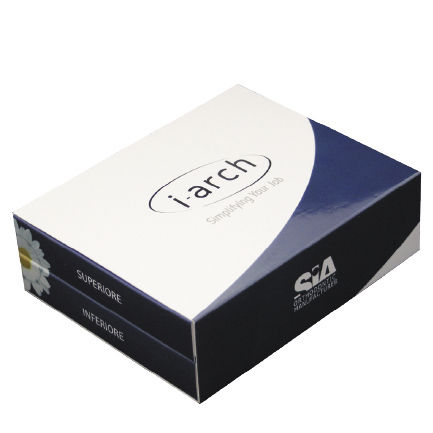
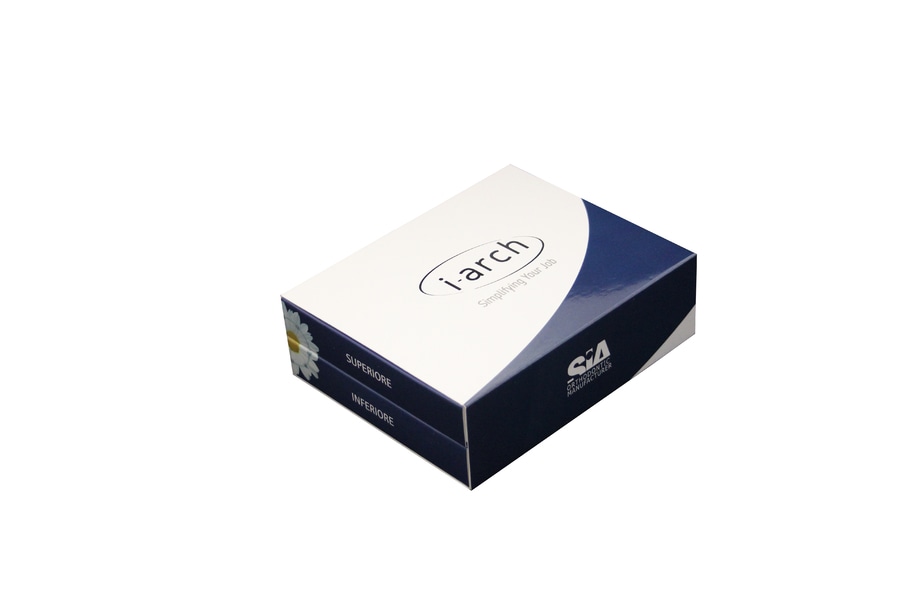
The i-arch is a unique and innovative system of orthodontic
archwires made of a special alloy, based on years of
research at Sia Orthodontic Manufacturer. It allows a
highly innovative orthodontic biomechanical approach
and characterised by effectiveness, simplicity, complementarity
and biological compatibility. The effectiveness
is due to the use of rectangular archwires, producing an
immediate delivery of torque, from the alignment and levelling
stage. The simplicity is assured by the reduced
number of wires—only three—to be used. The complementarity
arises from the possibility of using i-arch with
any straight-wire prescription. The biological compatibility
is ensured by the use of very gentle forces (from 40 g) for
movement of the teeth, reducing the traumatic effects—
especially at the beginning—of the orthodontic treatment.
The i-arch system has the following features:
• reduced size of the two switched sections compared
with conventional archwires;
• very light forces, especially in the initial phase of treatment;
• simplicity and ease of use, thanks to the reduced number
of archwires (only three); and
• compatibility: you can use i-arch regardless of the
straight-wire prescription used (both conventional or
self-ligating brackets can be used), and with either a
0.018 in. slot or a 0.022 in. slot. When using conventional
brackets with 0.022 in. slot, we recommend
using metal ligatures at the beginning instead of elastomeric
modules, in order to seat the wire well down
in the slot.
The i-arch system offers the following
benefits:
• immediate torque delivery, which allows reduction of
the treatment time and effective 3D movement of the
tooth from the beginning of therapy;
• effectiveness in obtaining an increase in the size of the
arch;
• reduction of pain for the patient;
• reduction of bone damage, especially at the level of
the vestibular cortical bone; and
• an easy clinical protocol that results in reduced chair
time and requires a lower stock of archwires in the
practice.