
#Industry News
Using optical 3D mocap to test the effect of fatigue on basketball players’ shooting
How fatigue affects basketball shooting: a biomechanical approach with 3DMA
Basketball is an explosive and demanding sport that requires a combination of endurance, precision, and technique. One of the key elements that can define the outcome of a game is shooting accuracy. But what happens when fatigue sets in? How much does tiredness affect shooting consistency and efficiency? To answer this question with scientific rigor, biomechanical analysis using 3DMA optical motion capture technology offers a precise and powerful approach.
Capturing fatigue with 3D technology
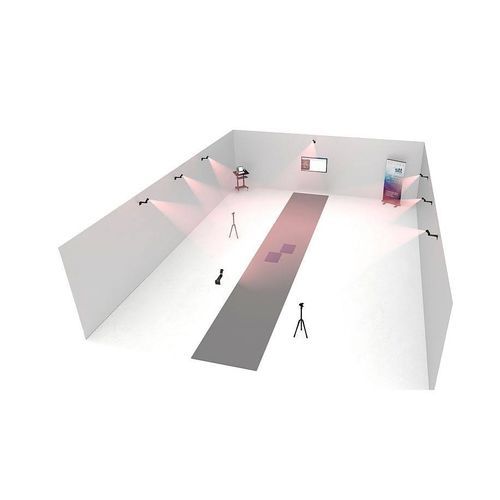
To explore how fatigue impacts performance, a recent study used optical 3D motion capture to analyze the shooting of basketball players before and after a fatigue-inducing exercise. Thanks to high-speed cameras and reflective markers strategically placed on the players’ bodies, researchers captured the full complexity of the shooting gesture in three dimensions and with millimetric precision.
The results confirmed what many coaches have long suspected: fatigue significantly reduces shooting accuracy and consistency. But beyond intuition, the data obtained allowed the researchers to identify how and why these changes occur. Changes in body alignment, shooting angles, or loss of coordination during the jump — all of this can be measured and analyzed with high precision.
3DMA: A complete system for advanced biomechanical analysis
This study used the 3DMA system, an optical 3D motion capture solution developed by STT Systems. 3DMA is not only a capture engine; it also includes a wide range of analysis protocols adapted to different sports and clinical contexts. For basketball, this means the ability to analyze body movement in real time, frame by frame, with speeds from 100 to 360 FPS and a marker tracking error of less than 1 mm.
Additionally, the Jump protocol included in 3DMA allows for biomechanical assessment of vertical jumps, including countermovement and squat jumps — an essential complement when evaluating shooting mechanics, since most shots in real competition are executed after a jump.
What kind of data does 3DMA provide?
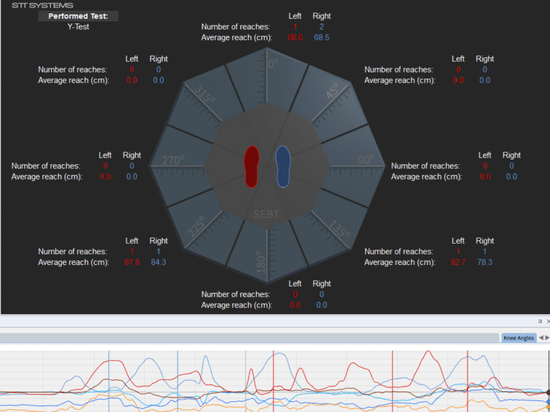
- Kinematic curves of all joints involved in the shot (shoulder, elbow, wrist, hip, knee, ankle)
- Angular velocity and acceleration during the shot
- Range of motion in each joint
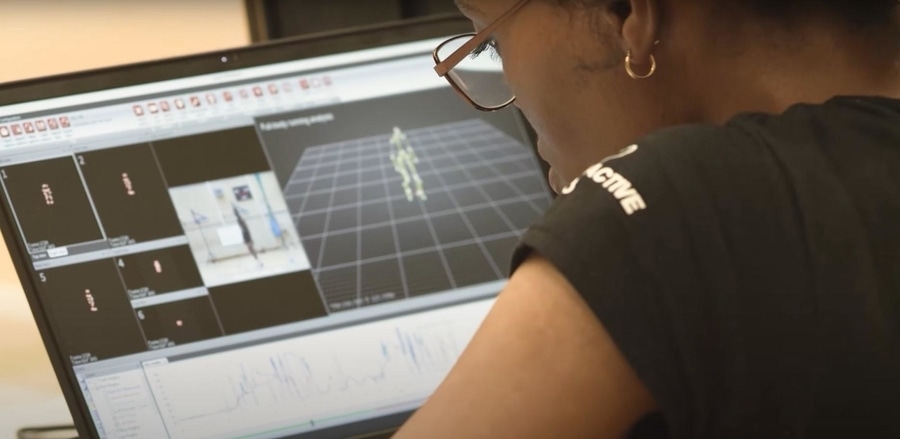
- Real-time 3D visualization of the gesture
- Automatic reports and metric panels
- Comparison between pre-fatigue and post-fatigue shots
This data is not only useful for researchers. Trainers, coaches, and sports scientists can use the same tools to detect inefficiencies, improve technique, and develop individualized training plans aimed at enhancing performance and minimizing fatigue-related risks.
Integration with other systems
3DMA integrates seamlessly with force platforms, EMG systems, pressure mats, and even real video footage. This allows for a multimodal analysis of the shooting gesture — not only how the athlete moves, but also how much force they generate, which muscles are activated, and what impact fatigue has at every level of execution.
Why does it matter?
Fatigue is inevitable in any sport, especially in high-intensity, high-frequency competitions like basketball. Understanding how it affects technical execution — not just through subjective perception but through objective data — allows coaches to make more informed decisions about player rotation, load management, and individualized technical training.
A future with smarter training
Thanks to 3DMA, it’s possible to go beyond video observation or manual correction. Today, biomechanics provides real-time, quantitative feedback that can be translated into performance improvement. Whether in professional teams, universities, or sports science centers, 3DMA opens the door to a new way of working: more precise, more scientific, and more tailored to the needs of each athlete.
In short:
- Fatigue affects shooting performance — this has now been objectively proven.
- Optical 3D motion capture allows us to analyze this effect in detail.
- 3DMA is the most complete system to evaluate these variables with maximum precision and flexibility.
- Coaches and professionals can now rely on biomechanics not only to assess, but also to improve performance.
If you're working in sports performance, coaching, or sports science and want to know more about how biomechanics can enhance your methodology, 3DMA might be the key tool you’re looking for.