
#Product Trends
Biomechanical analysis of ice hockey with iSen
Ice hockey analysis with iSen
Ice hockey is one of the fastest and most demanding sports in the world. It combines speed, power, agility, precision, and constant physical contact. In such a high-intensity environment, optimizing player performance and preventing injuries is not just important — it’s essential. To achieve this, understanding how players move on the ice is key. That’s where biomechanical analysis with inertial sensors comes in.
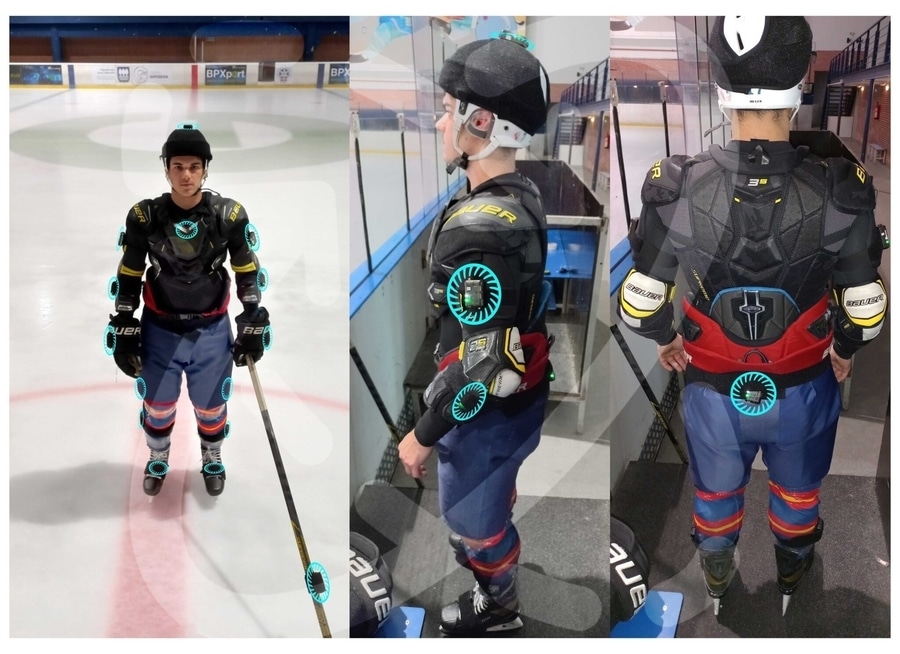
Thanks to the use of inertial sensors (IMUs), it is now possible to accurately and objectively measure players' movements. These sensors are placed on strategic points of the body — such as the wrists, shoulders, or hips — and record real-time data on body acceleration, speed, and orientation. All this information makes it possible to analyze skating technique, shot efficiency, balance, and stability during gameplay.
But it's not just about improving performance. One of the main benefits of biomechanical analysis in hockey is the ability to identify movement patterns that could pose an injury risk. With this data, coaches can design personalized training programs to correct technical errors and reduce the likelihood of musculoskeletal injuries.
For this kind of analysis, one of the most complete and versatile solutions on the market is iSen. Developed by STT Systems, iSen is a portable system that provides all the tools needed for biomechanical analysis, biofeedback, and report generation — quickly and easily. It fits into a backpack and is ready to use in minutes.
How does iSen work?
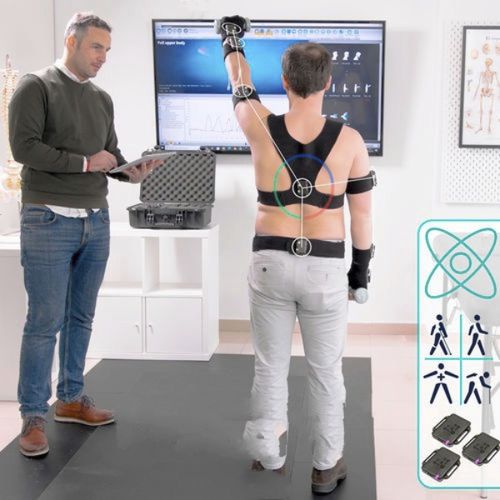
The iSen system uses wireless inertial sensors that communicate via Wi-Fi. These sensors can be used flexibly — from 1 to 17 units — depending on which part of the body needs to be analyzed. In addition, data samples are synchronized with a timestamp, making it easy to integrate with other devices like video cameras or force plates.
The iSen software enables real-time 3D visualization of the player's skeleton, making technical analysis easier for coaches and performance professionals. And to streamline workflows, it features an automatic report generator that exports analysis results with a single click.
Key features of iSen:
- Wireless communication via Wi-Fi
- Flexible sensor configuration (1 to 17 sensors)
- Sampling frequency up to 400 Hz
- Real-time 3D visualization
- Video integration as a reference
- High precision: angular error < 0.5° in pitch and roll
- Compatibility with third-party devices
- Ready-to-use report templates
iSen applications in ice hockey
In the hockey context, iSen can evaluate multiple aspects of player performance. For example:
- Skating technique: analysis of hip angles, stride length, movement frequency, and mechanical efficiency
- Shooting power: assessment of force transfer from lower limbs to the stick
- Stability and balance: detection of postural imbalances that may affect performance or increase injury risk
- Trunk control and defensive movements: observation of coordination between trunk and upper body
Thanks to the system’s precision and portability, motion capture can be performed directly on the ice or during specific training sessions — with no need to bring the player into a lab.
Beyond performance: injury prevention
One of the biggest challenges in hockey is preventing injuries caused by overuse, impacts, or biomechanical imbalances. Through inertial sensor analysis, asymmetries, compensations, or forced postures that are not visible to the naked eye can be detected. This information is extremely valuable for coaches, physiotherapists, and rehabilitation specialists.
Additionally, with video integration, it’s possible to correlate specific game events with concrete biomechanical data — for example, analyzing a fall and evaluating whether a prior pattern may have contributed to it.
iSen: a solution adaptable to various needs
The iSen motion analysis module can be configured for different levels of assessment: from upper-body analysis (shoulders, arms) to full-body capture. It’s also possible to create custom protocols based on the team’s or athlete’s needs.
The system adapts to both individual analysis and full team assessments, enabling comparative evaluation between players or long-term monitoring over the season.
Conclusion
Biomechanical analysis with inertial sensors represents a turning point in sports performance evaluation. In high-intensity sports like ice hockey — where every millisecond and every angle counts — having objective data makes all the difference.
iSen is a complete, accurate, and easy-to-use tool that allows coaches, performance staff, and medical professionals to gain detailed insights into player movement, make better decisions, and design more effective and safer training programs.
If you’re part of a hockey team or work with high-performance athletes, iSen can help you take their performance to the next level — while minimizing risk and unlocking their full potential on the ice.