#Industry News
Everything You Need to Know About Sharps and Infectious Waste Shredding Technologies
Enhancing Safety, Efficiency, and Compliance in Medical Waste Management
Today, most medical waste treatment systems rely on integrated shredding functions to maximize both efficiency and safety. But what is the real purpose of this crucial step, and which technologies deliver the best results?
It is important to distinguish between advanced “integrated” systems, which combine shredding and decontamination in a single unit, and systems that perform these functions separately. Regulatory trends increasingly favor integrated solutions, as handling waste between separate machines increases the risk of incomplete treatment and contamination. In countries such as France, shredding and disinfection must occur within the same equipment.
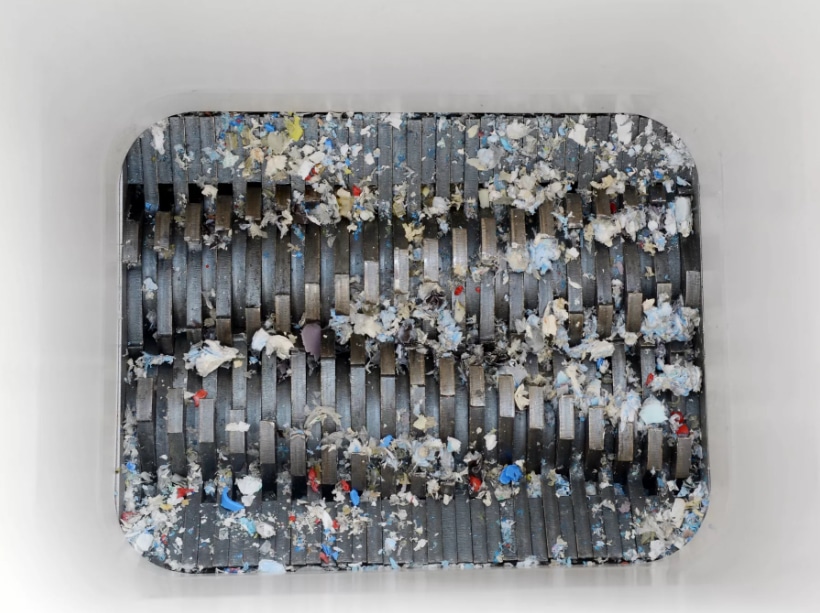
Shredding medical waste serves multiple purposes: reducing volume—sometimes by up to 80%—to minimize environmental impact during transport; mitigating the psychological effect on operators and the public by transforming the waste’s appearance; decreasing mechanical hazards from sharp or cutting objects; and promoting uniform decontamination by enabling better penetration of sterilization agents such as steam. Modern standards, such as NFX 30 503-1, require a particle size below 30 mm after shredding and decontamination.
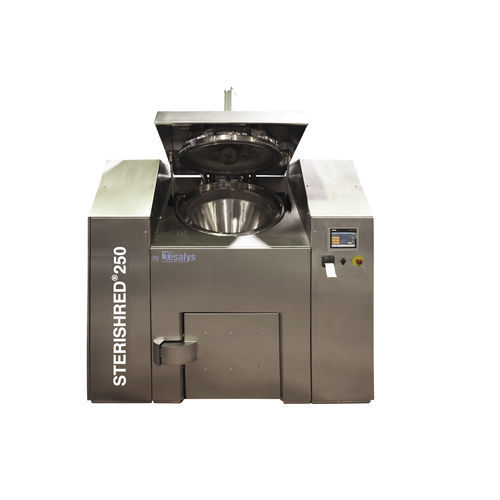
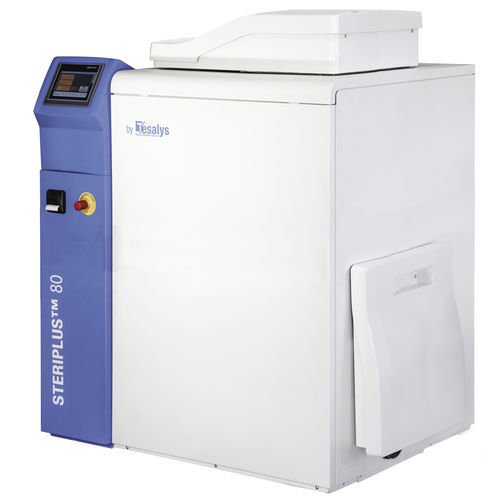
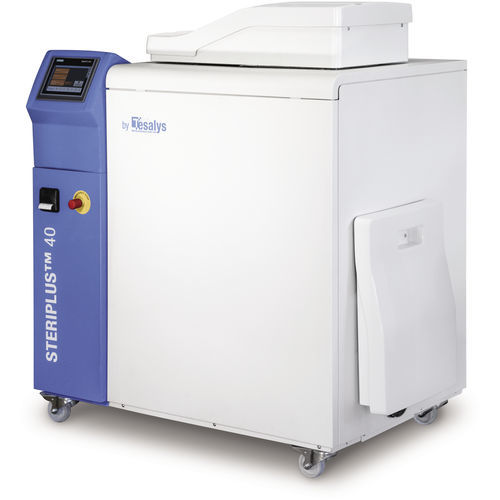
Two primary shredding technologies exist in integrated systems: rotary blade shredders and dual- or four-shaft cutters. Rotary blade systems operate like a high-speed blender, efficiently cutting most waste but sometimes failing with lighter or irregular items and generating high noise levels. Dual- or four-shaft cutters, used in Tesalys’ TESASHRED™ technology, shred all types of medical waste—including plastics, metals, glass, textiles, and liquids—at lower speeds, ensuring safety, reliability, and minimal noise. The TESASHRED™ knives, made of extra-hard steel (Hardox®), guarantee both high performance and durability, achieving a particle size of 10–15 mm for treated waste.
Special attention is required for sharps, which pose both mechanical and psychological risks. TESASHRED™ technology has been independently tested and shown to reduce sharps to under 3 cm in 92% of cases, exceeding regulatory requirements. Following best practices, including the use of certified containers and personal protective equipment, ensures safe handling and optimal waste treatment.
In summary, integrated shredding solutions like TESASHRED™ improve operator safety, enhance decontamination, and fully comply with international standards. Choosing high-quality shredding technology ensures that your infectious waste is processed safely, efficiently, and sustainably.