#Industry News
Renal Denervation (RDN): A New Frontier in Hypertension Treatment
Renal Denervation (RDN): A New Frontier in Hypertension Treatment
High blood pressure, or hypertension, is a major risk factor for heart disease, stroke, and kidney failure. While medications are often effective, some patients suffer from resistant hypertension, where even multiple drugs fail to control their blood pressure. A promising solution for these patients is a procedure called Renal Denervation (RDN).
What is RDN?
Renal Denervation is a minimally invasive procedure that targets the renal sympathetic nerves, which run along the renal arteries leading to the kidneys. These nerves play a role in regulating blood pressure. In RDN, a catheter-based device delivers radiofrequency (RF) energy or ultrasound to disrupt these overactive nerves, helping to lower blood pressure.
The procedure is performed via a small incision, and patients usually go home the same day or the next. Clinical trials have shown that RDN can safely and effectively reduce blood pressure in appropriate patients.
Simulating RDN with Our 3D Printed Model
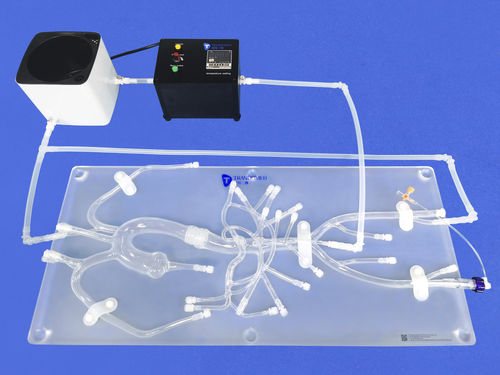
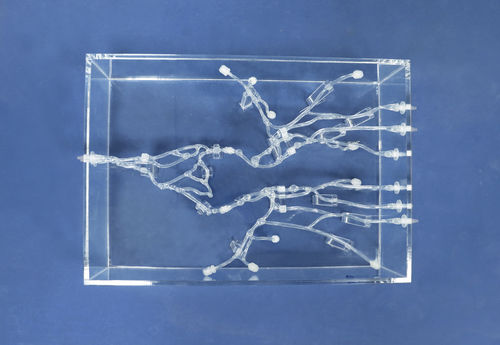
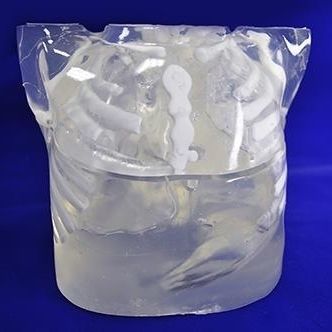
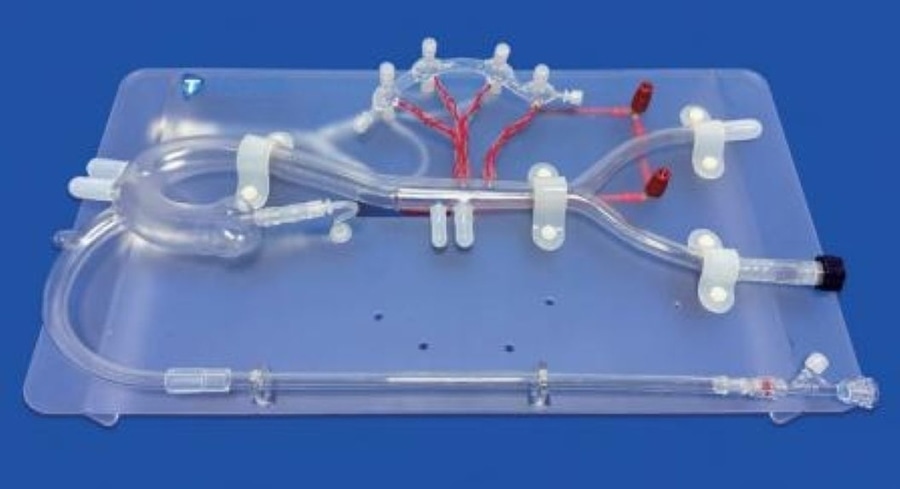
Understanding and mastering RDN requires both technical skill and a clear view of how the procedure affects the body—something not always possible in real patients. That’s where our 3D printed RDN simulation model comes in.
Key Features of the RDN Simulation Model
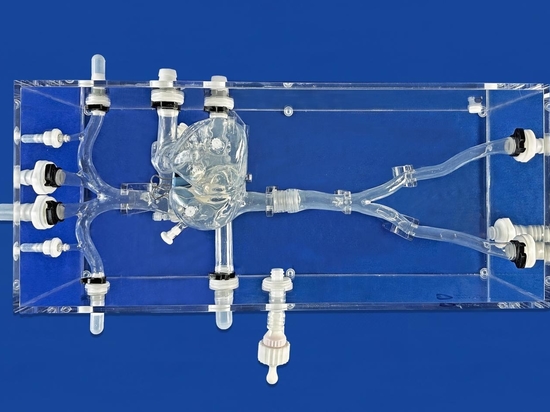
• Highly Transparent Design: The model is made from ultra-clear materials, allowing a crystal-clear view of the renal artery and catheter placement. This helps clients test the wall apposition (how closely the device touches the artery wall), which is critical for effective nerve ablation.
• Realistic Impedance Drop: During ablation, the model mimics the impedance drop seen in human tissue, offering users a realistic feedback experience like in actual procedures.
• Unlimited Reuse: The model is engineered for repeated use without performance degradation, making it ideal for ongoing training, demonstrations, and R&D.
• Adjustable Resistance: Multiple mechanisms allow for customizable impedance settings, simulating various clinical scenarios and vessel conditions.
• Thermochromic Visualization: Equipped with temperature-sensitive pigments, the model changes color as the temperature rises during ablation. This feature visually reveals the nerve denervation process in real-time, making the invisible physiological effect visible.
• Customizable Color Effects: Both the temperature threshold and color-change intensity can be adjusted to match different training needs or product demonstrations.
Who Benefits from This Model?
• Physicians: Practice catheter navigation and ablation techniques in a risk-free environment.
• Device Developers: Showcase and validate the performance of new RDN catheters, especially wall apposition and energy delivery.
• Medical Institutions: Train staff efficiently with a reliable and reusable teaching tool that enhances understanding of the RDN process.
Conclusion
Renal Denervation offers new hope for patients with resistant hypertension, and our advanced 3D printed model helps bring this innovation to life. By making the invisible visible, our model empowers training, testing, and innovation—safely, clearly, and repeatedly.
Whether you're a medical professional, researcher, or device manufacturer, our RDN simulation platform is designed to help you see better, train better, and perform better.