#Product Trends
randomed Radial Artery Puncture Training Model: A High-Fidelity Solution for Clinical Skill Training and Device Development
randomed Radial Artery Puncture Training Model: A High-Fidelity Solution for Clinical Skill Training and Device Development
Radial artery puncture and catheterization is an essential clinical technique widely used in perioperative blood pressure monitoring, arterial blood gas analysis, intensive care, anesthesia, and cardiovascular procedures. However, traditional palpation-guided puncture techniques involve a significant learning curve, especially for distal radial access, where smaller vessel diameter and anatomical variations increase procedural difficulty.
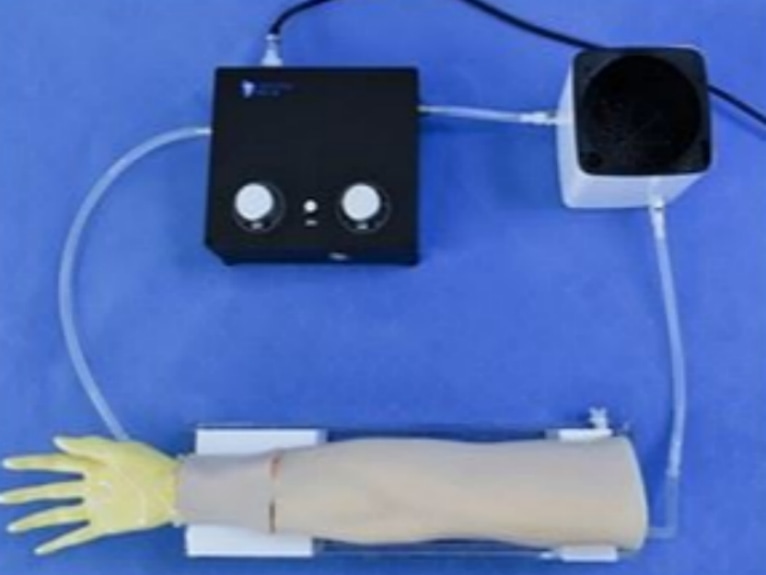
To address these challenges, Trandomed (Trando 3D Medical Technology) has developed a high-fidelity Radial Artery Puncture Training Model, providing a standardized, repeatable, and risk-free platform for medical training, procedural demonstration, and medical device testing.
Addressing Clinical Challenges Through Simulation-Based Training
Successful radial artery puncture depends on multiple factors, including vascular anatomy, puncture site selection, needle angle control, insertion depth, and recognition of tactile feedback during vessel entry.
Patients with small arteries, vascular tortuosity, or vascular calcification may present additional challenges. Traditional “learning by performing procedures on patients” approaches can extend the training period and increase risks during early clinical practice.
High-fidelity simulation models provide an effective solution by allowing medical students, residents, and physicians to repeatedly practice essential techniques in a controlled environment before clinical application.
Accurate Anatomical Reconstruction Based on Human Data
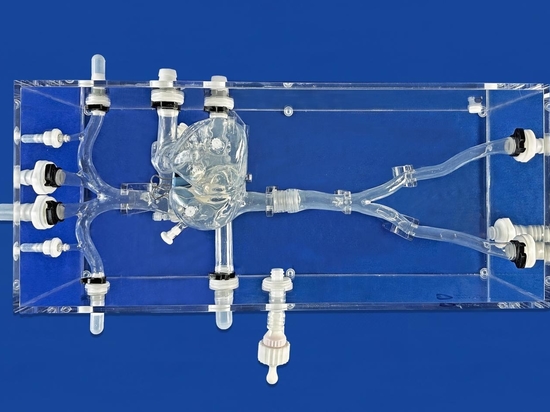
The Trandomed Radial Artery Puncture Training Model is developed based on human anatomical data and advanced 3D reconstruction technology. It accurately reproduces key vascular structures involved in arterial access procedures, including the brachial artery, radial artery, ulnar artery, cephalic vein, and related vascular pathways.
The model adopts a modular design and is manufactured using high-performance simulation materials. With a high-transparency soft silicone structure and optimized mechanical properties, it provides realistic elasticity, puncture resistance, and tactile feedback.
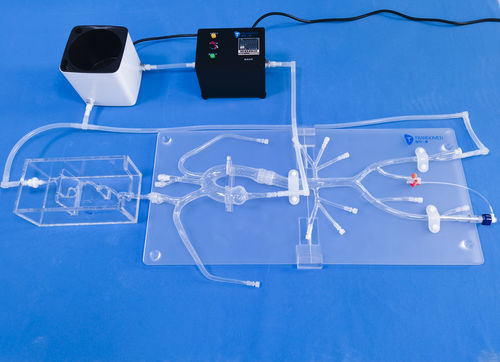
The model dimensions are approximately 125 cm in length, 53 cm in width, and 24 cm in height, providing a complete anatomical pathway while maintaining convenient operation space.
The vascular structures are reconstructed according to adult anatomical characteristics, enabling simulation of realistic vessel positioning, depth, and spatial relationships.
Realistic Material Feedback and Procedural Visualization
Material properties are critical for simulation fidelity. The model uses soft silicone with an approximate hardness of 40 Shore A, providing flexibility and resistance similar to human vascular tissues.
During training, users can experience realistic puncture sensations, including skin penetration, vessel wall resistance, and simulated blood return after successful arterial puncture. These features help trainees improve needle control, puncture angle adjustment, and procedural confidence.
The transparent silicone structure also enables visualization of catheter and guidewire movement for training and device evaluation.
Dynamic Blood Flow Simulation and Physiological Environment
By integrating pulsatile pumps, pressure sensors, and flow control systems, the model can simulate physiological blood flow conditions, including pulsation, pressure variation, and circulation patterns.
Under simulated arterial pressure conditions, the model provides more realistic feedback compared with static anatomical models. When combined with imaging equipment and contrast media, it can support vascular visualization and angiographic evaluation.
This dynamic simulation capability helps users better understand the relationship between device operation and physiological conditions.
Applications in Training and Device Testing
The Trandomed Radial Artery Puncture Training Model supports applications including:
1.Radial artery puncture and catheterization training
2.Ultrasound-guided vascular access training
3.Clinical procedure demonstration
4.Medical device testing and validation
For medical education, the model allows trainees to repeatedly practice puncture techniques, catheter placement, and procedural workflows without patient risk, helping establish stable skills and shorten the learning curve.
For medical device companies, the model provides a realistic platform for evaluating catheters, guidewires, introducers, and other vascular access devices, including device performance, maneuverability, and usability assessment.
Advancing Medical Simulation Technology
As a professional developer of high-fidelity medical simulation solutions, Trandomed provides customized and standardized simulation products for cardiovascular, respiratory, digestive, and urological interventions.
From medical image processing and 3D reconstruction to silicone manufacturing and system integration, Trandomed combines clinical expertise with engineering innovation to support hospitals, medical schools, and medical device companies worldwide.
The Radial Artery Puncture Training Model demonstrates Trandomed’s commitment to improving medical education, accelerating device innovation, and providing advanced simulation solutions for minimally invasive procedures.