#Product Trends
Cardiac Interventional Simulation Model: Transforming Cardiovascular Training Through Advanced Simulation Technology
Cardiac Interventional Simulation Model: Transforming Cardiovascular Training Through Advanced Simulation Technology
Cardiovascular diseases remain among the leading causes of death worldwide. Interventional therapy requires physicians to have excellent procedural accuracy, anatomical understanding, and device manipulation skills. Traditional training methods, including animal experiments and clinical observation, face limitations such as anatomical differences, limited repeatability, and long learning curves.
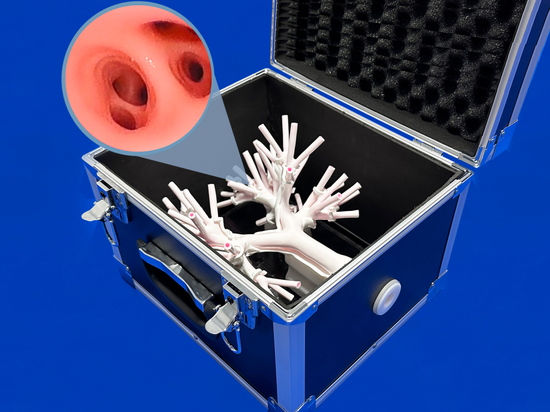
Based on real human anatomical data, cardiac interventional simulation models are becoming essential platforms for cardiovascular training, procedural education, and medical device development. Trandomed (Trando 3D Medical Technology) combines medical expertise with advanced 3D reconstruction and manufacturing technologies to provide high-fidelity simulation solutions for cardiovascular intervention.
Anatomical Reconstruction Based on Clinical Imaging Data
The core value of a cardiac interventional simulation model lies in accurate reproduction of human anatomy. Unlike traditional teaching tools, advanced models are developed through systematic reconstruction based on clinical CT and MRI imaging data.
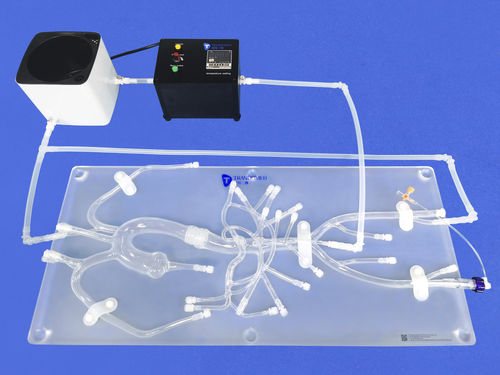
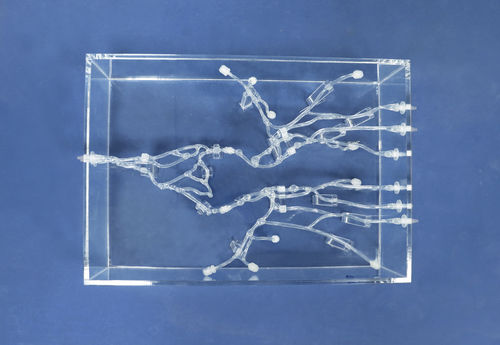
Trandomed cardiac interventional models adopt a 1:1 anatomical reconstruction approach, reproducing major access pathways including the femoral artery, femoral vein, subclavian vein, and radial artery. Vascular pathways, diameters, and anatomical angles are accurately restored according to clinical imaging data.
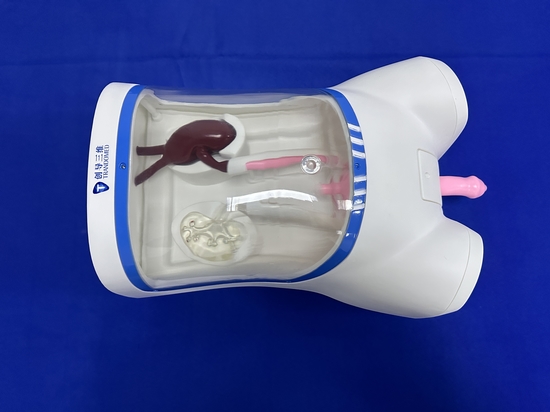
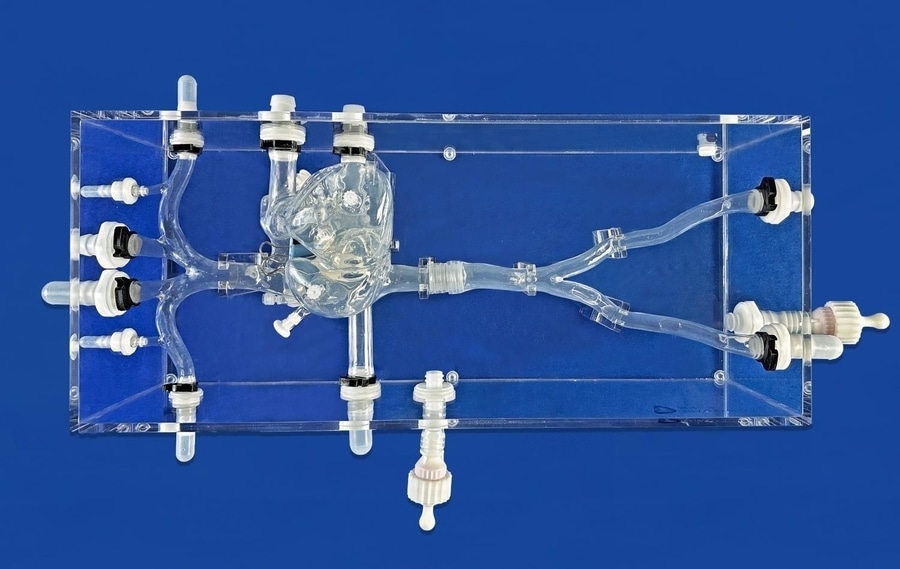
For left atrial appendage occlusion training, the model reproduces the left atrial appendage and surrounding anatomical structures, providing a realistic environment for device delivery and deployment practice.
This clinical data-driven approach allows trainees to develop three-dimensional anatomical understanding and overcome the limitations of two-dimensional imaging-based learning. It also provides a reliable foundation for advanced procedural simulation under different anatomical conditions.
Realistic Material Properties and Visualization
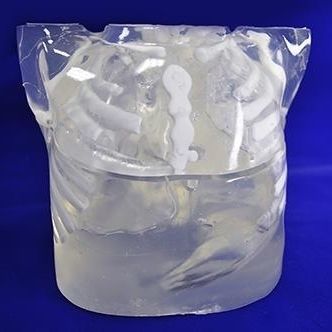
Simulation fidelity depends not only on anatomy but also on operational feedback. Trandomed uses high-transparency soft silicone materials with customizable hardness, including approximately 40 Shore A and softer options such as 20A or 0A.
The optimized material properties simulate the mechanical characteristics of vascular tissues, providing realistic resistance, advancement feedback, and tactile response during device manipulation.
The transparent silicone structure enables clear observation of guidewire navigation, balloon expansion, and valve deployment. Both operators and instructors can evaluate device movement and positioning, making training more repeatable, objective, and effective.
Specialized Simulation for Cardiac Procedures
Different cardiac interventions require specific anatomical pathways and procedural skills. Trandomed models feature modular designs to support various applications.
For Transcatheter Aortic Valve Replacement (TAVR), customized valve components with different sizes and anatomical characteristics can be integrated for valve positioning and deployment training under various simulated conditions.
For Left Atrial Appendage Occlusion (LAAO), the model supports complete workflow training from device delivery to occluder release, allowing physicians to practice device selection, pathway planning, positioning, and deployment techniques.
The model also supports training and demonstration for pacemaker implantation and electrophysiology procedures, providing a practical platform for procedural education and device evaluation.
Hemodynamic Simulation and Imaging Compatibility
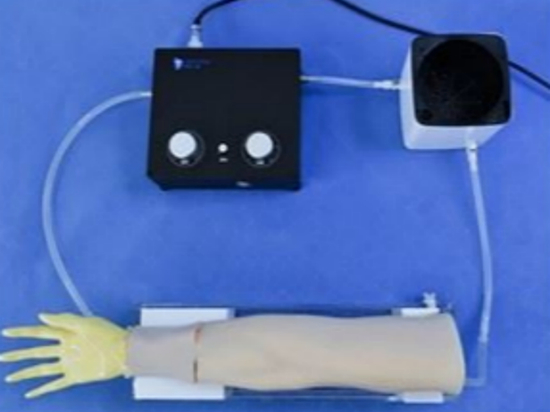
Modern interventional training requires more than static anatomy. Trandomed hemodynamic simulation systems integrate pulsatile pumps, pressure sensors, and flow sensors to simulate physiological circulation conditions, including flow rate, pressure, and heart rhythm.
The models are compatible with DSA and X-ray imaging systems. When combined with contrast media, they provide realistic vascular visualization for procedural evaluation and device testing.
This combination of anatomical accuracy, functional simulation, and imaging compatibility enables researchers and engineers to evaluate interventional devices in a controlled and clinically relevant environment.
Supporting Training and Medical Innovation
Trandomed cardiac interventional simulation models provide hospitals, medical schools, and medical device companies with a safe and repeatable platform for training, demonstration, and product evaluation.
For medical device development, the models support usability testing, human factors evaluation, ergonomic assessment, and performance verification of interventional devices, helping accelerate product optimization before clinical application.
With clinical imaging data as the foundation, advanced materials as the support, and modular design as the development direction, Trandomed continues to advance high-fidelity medical simulation technology and provide innovative solutions for cardiovascular training and interventional device development worldwide.