#Product Trends
User Guide for TAVR Training Model: Key Points for Transcatheter Aortic Valve Replacement Simulation
User Guide for TAVR Training Model: Key Points for Transcatheter Aortic Valve Replacement Simulation
With the aging of the population, aortic stenosis has become a prevalent cardiac disease. As a minimally invasive interventional therapy, Transcatheter Aortic Valve Replacement (TAVR) features minimal trauma and rapid recovery, making it particularly suitable for elderly patients and those with multiple comorbidities.
Nevertheless, TAVR is technically demanding and high-risk compared with other interventional procedures. Improper operation may lead to severe complications such as vascular rupture and thrombosis.
The traditional training model of "watching procedures first and then performing surgeries independently" tends to raise medical risks. In particular, primary hospitals are still faced with a shortage of senior physicians proficient in TAVR.
The launch of TAVR training models addresses this challenge by providing physicians with a safe and controllable training environment.
User Guide for TAVR Training Model
Pre-training Preparation
Prior to using the TAVR training model, it is essential to fully understand the patient’s individualized anatomical characteristics.
By importing the patient’s CT or MRI data into the model system, a personalized training plan can be formulated to enhance the relevance and effectiveness of training.
Model Selection and Configuration
Selecting an appropriate model based on training objectives is critical.
For beginners, it is recommended to start with physical models, and then progress gradually to biological tissue models and digital twin models. Physicians with practical experience may directly use AI-guided models to practice managing complex complications.
Operational Procedure Training
Training with the TAVR model shall follow a progressive approach:
1.Catheter manipulation training: Master the skills of advancing catheters within blood vessels to avoid vascular injuries.
2.Valve positioning training: Learn to accurately deploy prosthetic valves under image guidance.
3.Deployment skill training: Grasp the timing and force control for valve release.
4.Complication management training: Learn to handle various potential complications.
Post-training Evaluation and Feedback
High-quality TAVR training models deliver objective and quantitative evaluation indicators to help physicians assess their operational proficiency.
Analysis of Key Points for TAVR Simulation
Anatomical Structure Recognition
The top priority of TAVR training is to master cardiac anatomy, especially the complex structure of the aortic root.
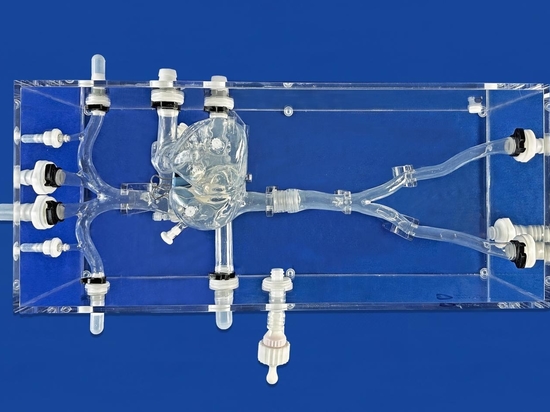
Premium TAVR training models accurately replicate key structures including the aortic annulus, coronary ostia and left ventricular outflow tract, enabling physicians to achieve rapid identification and positioning during real surgeries.
Image Navigation Skills
TAVR procedures rely heavily on medical image navigation. During model training, physicians need to integrate two-dimensional fluoroscopic images with three-dimensional anatomical structures, so as to cultivate spatial imagination and hand-eye coordination — capabilities vital for accurate valve placement.
Strategies for Managing Complications
TAVR training models can simulate various complication scenarios to help physicians develop coping strategies. Common complications include coronary artery obstruction, paravalvular leakage, conduction block and vascular complications. Repeated drills help physicians build instinctive responses and improve their ability to handle emergencies.
Team Collaboration
A TAVR procedure requires multidisciplinary teamwork, involving cardiologists, cardiac surgeons, anesthesiologists, ultrasonographers and nursing staff. Advanced TAVR training models support team-based training, helping professionals from different departments refine coordination and optimize surgical workflows.
Team Collaboration
A TAVR procedure requires multidisciplinary teamwork, involving cardiologists, cardiac surgeons, anesthesiologists, ultrasonographers and nursing staff. Advanced TAVR training models support team-based training, helping professionals from different departments refine coordination and optimize surgical workflows.
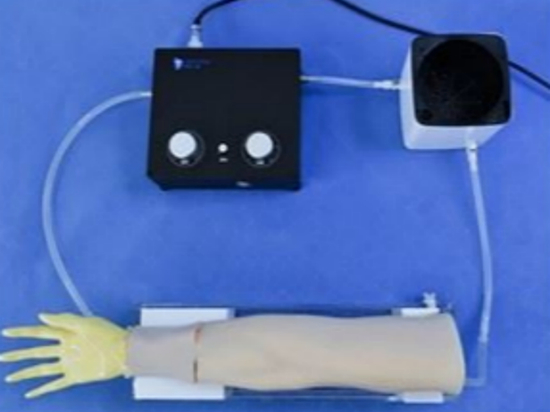
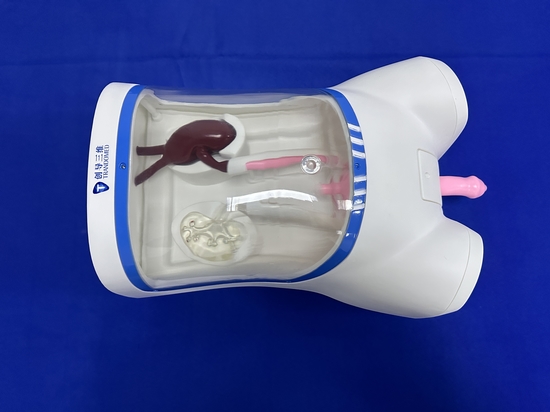
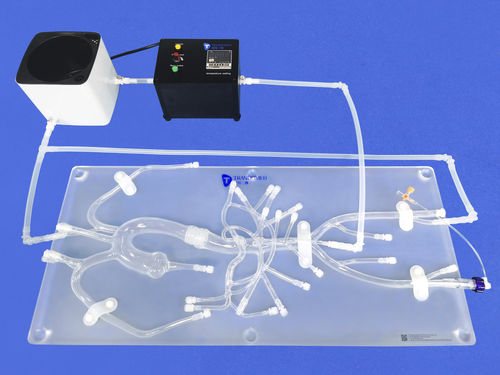
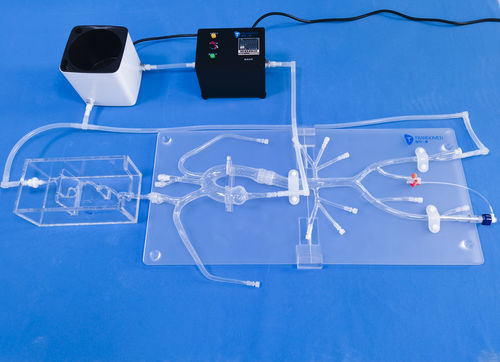
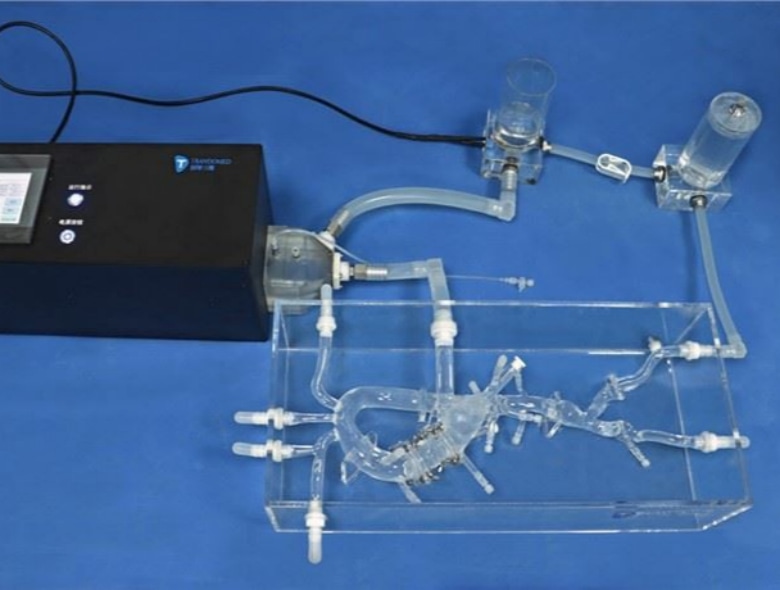
The Trandomed’s TAVR training model serves as an ideal teaching tool for novice physicians. It restores real three-dimensional cardiac anatomical structures and surgical scenarios, making up for the planar visual limitations of traditional training methods. Beginners can intuitively perceive the spatial relationship of surgical structures, repeatedly practice core TAVR operational steps in a zero-risk environment, and steadily polish catheter manipulation and valve deployment skills. It effectively lowers the learning threshold of TAVR surgery, helping beginners quickly accumulate practical experience and lay a solid foundation for formal clinical operations.