#Product Trends
Roles of Trandomed PICC Model in Medical Device R&D, Registration Testing & Clinical Training
Roles of Trandomed PICC Model in Medical Device R&D, Registration Testing & Clinical Training
The Trandomed PICC model serves as a vital simulation tool throughout the whole lifecycle of vascular catheter development, regulatory submission and professional clinical training. It delivers remarkable value for both medical device manufacturers and medical practitioners.
1. Optimize Product Design and Reduce Clinical Risks
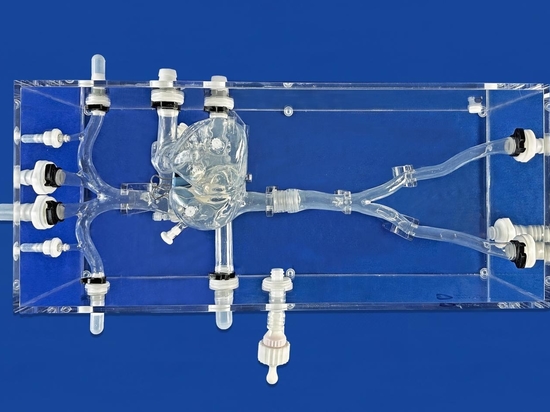
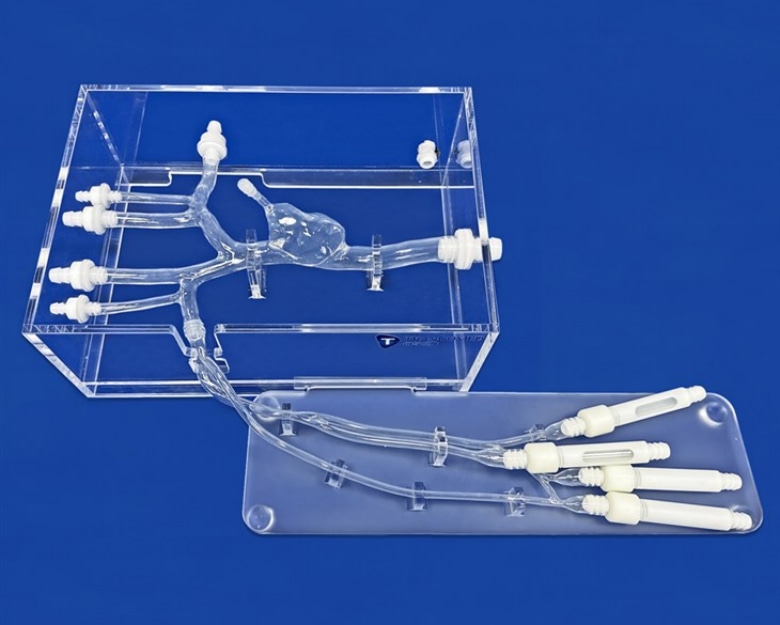
In the early R&D and testing phase of interventional catheters, this model accurately restores human vascular anatomy, vascular compliance and hemodynamic conditions. R&D teams can conduct comprehensive tests on catheter structure, insertion performance and flexibility. Potential defects such as kinked tubes and vessel wall injuries caused by sharp catheter tips can be identified at an early stage. This avoids huge extra costs and schedule delays brought by late design modifications during clinical trials. Relevant studies prove that early design optimization via model testing can cut R&D costs by up to 30% and shorten product development cycles by 40%.
Design flaws detected and fixed in simulation tests greatly lower the incidence of adverse clinical events. For instance, anti-blocking performance is a key design indicator. The anti-clogging multi-lumen central venous catheter developed by Shenzhen Second People’s Hospital features a spiral inner wall to separate blood inflow and outflow areas. Its multi-hole structure ensures stable blood flow and prevents blockage, an innovative design fully validated and optimized on our simulation platform.
2. Generate Solid Data for Regulatory Compliance
Quantifiable performance data is a mandatory requirement for medical device registration. Combined with Trandomed Simuheart hemodynamic system, the PICC model collects and exports objective, measurable data including insertion force, operational stability and flow rate. These standardized results strongly support enterprises to complete registration and approval procedures.
As global medical regulations grow stricter, standardized model testing has become an industry benchmark. Compliant with ISO 10555-1:2013, the general standard for sterile single-use intravascular catheters, our testing system helps products fully meet international regulatory criteria.
3. Facilitate Standardized Clinical Training
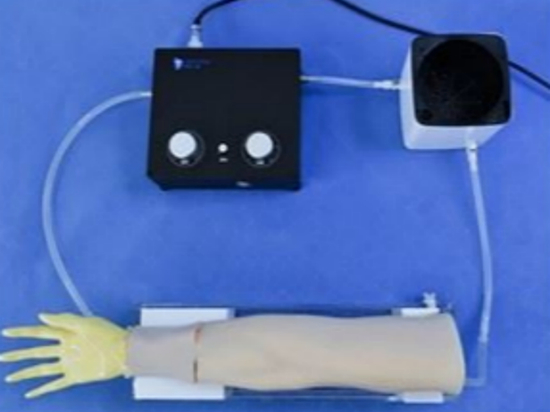
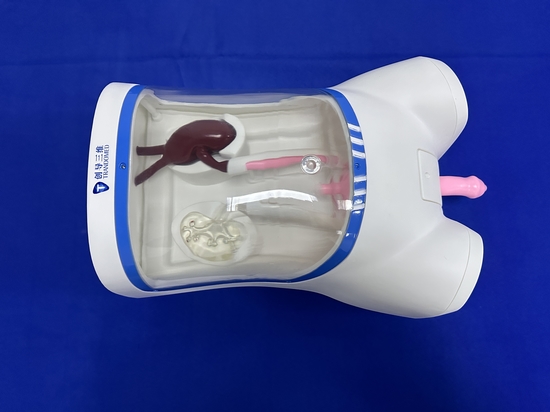
Traditional PICC training faces drawbacks including inconsistent standards, high operational risks and long learning curves. The high-fidelity Trandomed PICC model creates a realistic training environment for medical staff to master core skills of venous access establishment. It simulates the full procedure of subclavian vein catheterization, applicable to emergency infusion, central venous pressure monitoring and parenteral nutrition delivery. It effectively improves practitioners’ puncture skills and emergency response capabilities, while lowering training costs and enhancing overall procedural safety.
Key Features
1.Reconstructed and optimized based on real human CT and MRI data.
2.Restores complete anatomical structures: right clavicle, right subclavian vein, right atrium, brachiocephalic trunk, carotid artery and subclavian artery.
3.Dedicated to central venous catheterization training.
4.Supports ultrasound-guided puncture; clear images of clavicle, subclavian vein and superior vena cava can be displayed on ultrasound devices.
The Trandomed PICC model boasts dual irreplaceable values in catheter R&D and clinical training. It acts as a core technical support for product innovation, risk management and regulatory approval, as well as an efficient training platform for skill improvement and safety guarantee. With advancing simulation technology and growing clinical demands, the PICC model will continuously drive the progress of medical techniques and benefit more patients worldwide.
References
1.Smith et al. Simulation Models in Vascular Access Device Development. Journal of Medical Engineering, 2022.
2.Xiao W, Wang TL, Zhao L, et al. Application of Simulation Training in Central Venous Catheterization Training. Beijing Medical Journal, 2013, 35(8): 681–683.
3.Training Model for Ultrasound-Guided Peripherally Inserted Central Catheter (PICC). April 8, 2022.
4.Tunnelized PICC Technology: The Innovation Journey of Banda. February 21, 2024.
5.High-Fidelity Ultrasound-Guided Training Device for Central Venous and Deep Peripheral Arteriovenous Puncture and Catheterization. China Science and Technology Innovation Achievement Library. February 28, 2024.
6.An Anti-Clogging Multi-Hole Central Venous Catheter. CN201821742387.8. 2019.
7.Simulab Corporation. CentraLineMan® – Vascular Access Simulation Patient. MedicalExpo.
8.Manufacturing Method of Training Model for Ultrasound-Guided Peripherally Inserted Central Catheter (PICC). April 9, 2022.