#Industry News
How Researchers Can Use a Biomimetic Vascular Interventional Simulation System to Accurately Calibrate and Validate Hemodynamic Sensors
How Researchers Can Use a Biomimetic Vascular Interventional Simulation System to Accurately Calibrate and Validate Hemodynamic Sensors
In the development of intelligent vascular interventional medical devices, a high-quality hemodynamic sensor—whether designed to measure pressure parameters such as FFR/TSPG, blood flow velocity, wall shear stress (WSS), or temperature—ultimately depends on one critical factor: measurement accuracy and validation.
Direct animal testing often involves high costs, difficult-to-control biological variability, and limited reproducibility of extreme pathological waveforms. These challenges can make the sensor calibration stage considerably more complex and time-consuming for research and development teams.
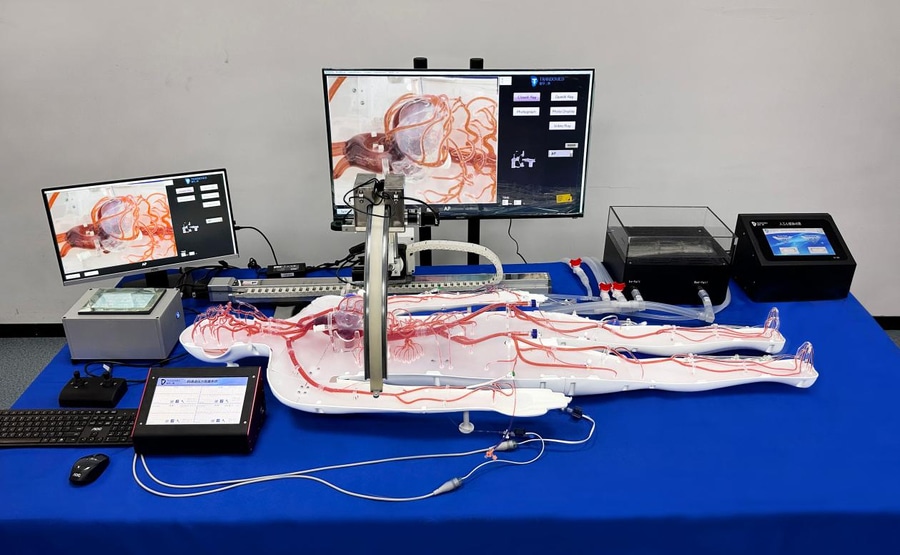
In this context, a highly realistic in vitro vascular interventional simulation system, also known as an in vitro vascular model, can provide a key solution to overcoming these limitations.
Core Value: How Can an In Vitro Vascular Interventional Model Empower Sensor Testing?
Testing a sensor within a biomimetic vascular interventional model and a mock circulatory loop (MCL) offers unique advantages that are difficult to achieve through animal experiments.
1. High Anatomical Fidelity
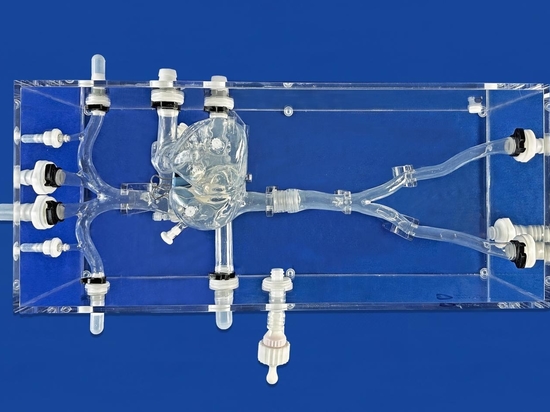
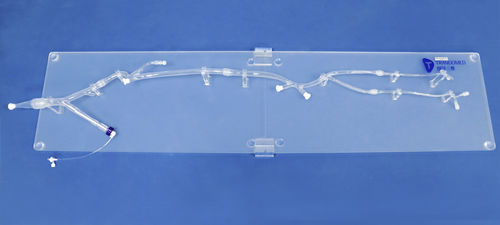
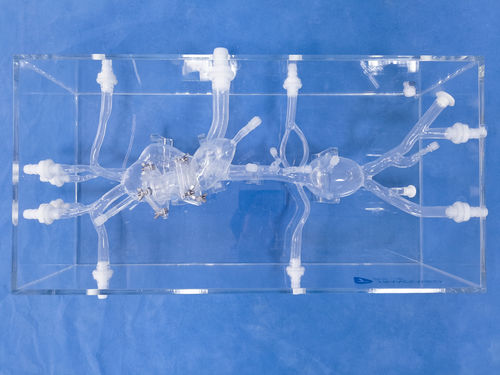
Trandomed’s vascular interventional simulation systems use vascular models that are optimized at a 1:1 scale based on real patient CT or MRI imaging data and manufactured using materials such as SLA resin or silicone.
These models can accurately reproduce the complex tortuosity, stenosis, aneurysms, and other anatomical features of coronary arteries, the aorta, and peripheral vessels, allowing sensors to be evaluated within realistic geometric flow environments.
2. Customizable Physiological Pulsatile Flow
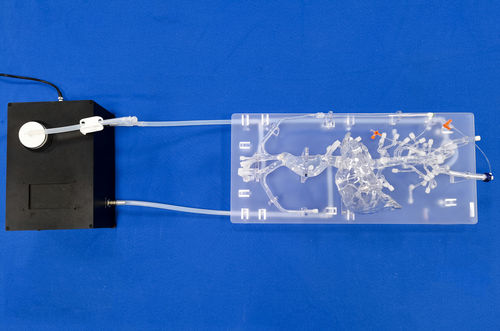
When used with a high-precision hemodynamic circulation system, the model can flexibly simulate pulsatile flow generated by cardiac contraction, blood pressure waveforms, peripheral resistance, and vascular compliance under both normal physiological and pathological conditions, including conditions based on the Windkessel model.
Parameters such as heart rate—for example, 72 bpm—and flow rate can be adjusted as required. This enables researchers to evaluate the sensor’s dynamic response under forward flow, reverse flow, recirculation, and turbulent flow conditions.
3. Ground-Truth Validation
In an in vitro model, commercially available high-precision pressure gauges or ultrasonic flow sensors can be positioned close to the sensor under evaluation.
The system can also be combined with technologies such as 4D Flow MRI or particle image velocimetry (PIV) to obtain reliable ground-truth data. These reference measurements can then be used to optimize sensor algorithms and calibration curves.
4. High-Frequency, Low-Cost Limit Testing
Without the biological safety and ethical constraints associated with animal testing, the system supports hundreds of repeatable experiments.
Extreme pathological conditions, including abnormally high pressure and severe stenosis, can be reproduced within the model to comprehensively evaluate sensor fatigue life, long-term stability, and drift rate.
Typical Application Scenarios
Sensors can be tested on our in vitro vascular model platform for the following applications:
1. Validation of Functional Parameters
Fractional flow reserve (FFR) measurement
Micro-pressure differential measurement using interventional or puncture microcatheters
2. Performance Evaluation
Dynamic frequency response
Sensitivity
Linearity
Validation of temperature-compensation algorithms
3. Simulation of Interventional Procedures
The system can be used to evaluate how mechanical friction, bending, and deformation affect signal transmission when the sensor passes through tortuous vessels during catheter-based delivery.