#Product Trends
TAVR Training: How Transcatheter Aortic Valve Replacement Simulation Models Shorten the Learning Curve
TAVR Training: How Transcatheter Aortic Valve Replacement Simulation Models Shorten the Learning Curve
Severe Clinical Shortage and Industry Training Bottlenecks
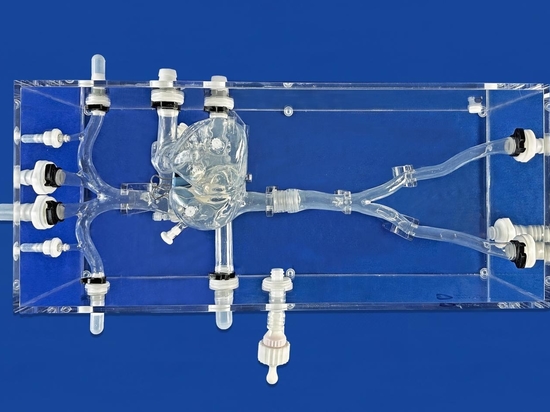
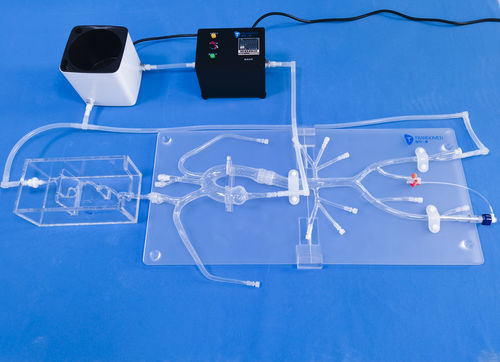
China is burdened with a massive aortic stenosis patient base. By 2025, the number of aortic stenosis patients will reach nearly 4.9 million, while the annual TAVR surgical volume is merely 18,600. The lack of standardized professional training systems greatly restricts the widespread application of this critical minimally invasive procedure. To solve this industry dilemma, Trandomed has developed a specialized TAVR training model. With 1:1 standardized anatomical restoration, high-transparency soft silicone texture, simulated surgical complications and integrated AI navigation functions, it builds a safe, repeatable and quantifiable simulated training environment for interventional physicians.
Over the past three decades, the incidence of aortic valve diseases in China has surged 20 times, ranking third among common cardiovascular diseases after coronary heart disease and hypertension. Epidemiological surveys show that the prevalence of moderate and severe aortic stenosis among people over 75 years old is 3.4%. Nearly 25 million people suffer from heart valve diseases nationwide, including 2 million elderly patients with symptomatic severe aortic stenosis. Although TAVR surgeries saw an 8.1% year-on-year increase in 2025, the volume is far from meeting huge clinical needs. Among 466 registered valve centers nationwide, surgical resources are highly concentrated in developed regions, leaving grassroots hospitals reluctant to carry out TAVR due to technical inexperience.
Core Pain Points of Traditional TAVR Training
The fundamental constraint restricting TAVR popularization is the shortage of professional talents. Clinical studies on multiple surgical centers confirm that inconsistent operational standards and inadequate systematic training are core industry bottlenecks. Senior cardiovascular experts point out that grassroots physicians lack a safe, error-tolerant training platform for repeated hands-on practice, rather than advanced medical equipment. Essentially, shortening the TAVR learning curve is to help trainees acquire intensive, authentic and corrective operational experience efficiently, which is the core design concept of Trandomed’s TAVR simulation model.
High-Fidelity Anatomical and Tactile Simulation Design
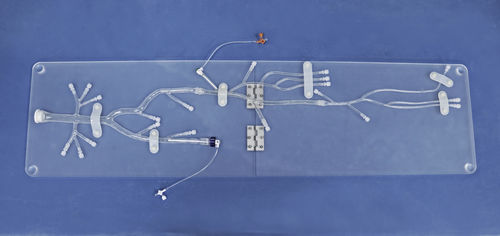
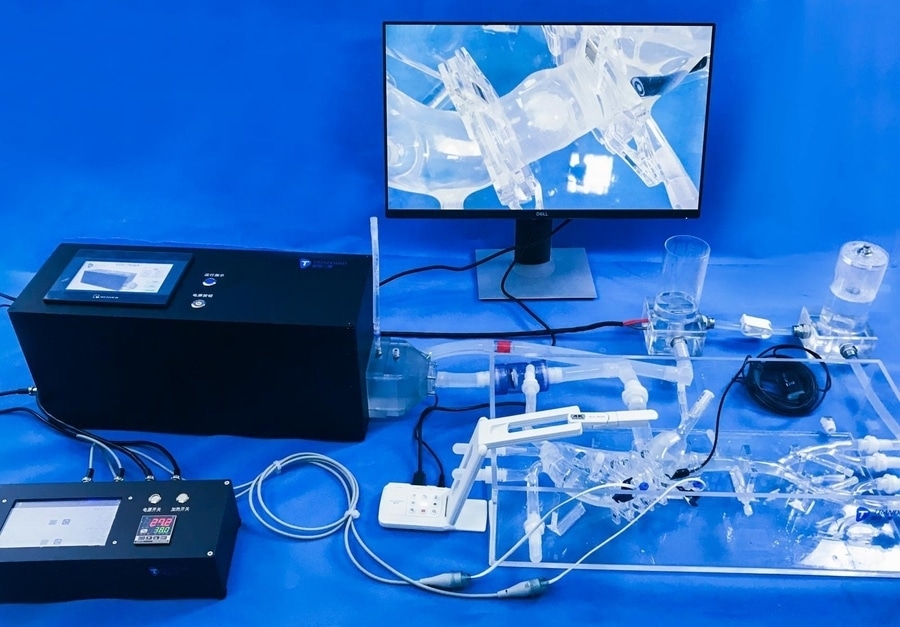
Based on clinical CT and MRI data of Chinese patients, the model accurately replicates key anatomical structures including the left ventricle, complete aorta, aortic valve and femoral access pathway at a 1:1 scale. Its vascular diameter, trend and branch angles fully conform to human physiological characteristics, ensuring the surgical tactile sense acquired in simulation can be seamlessly applied to real clinical operations. Made of 40A high-transparency soft silicone, the model features ultra-realistic soft tissue feel and excellent light transmittance. Trainers can clearly observe the whole process of guidewire advancement, balloon dilation and valve deployment, transforming traditional blind endoscopic operation into visible, traceable and adjustable standardized training.
Adopting a modular replaceable design, the aortic valve component supports customized sizes and simulates diverse pathological states such as valve calcification and bicuspid valve malformation. Physicians can practice positioning and deployment skills under various complex lesion conditions on one single model to accumulate abundant simulated case experience rapidly.
Scientific Progressive Standard Training System
The model is equipped with a complete progressive training system, covering core modules including multi-approach catheter manipulation, image-guided precise valve positioning, standardized valve deployment, and emergency management of common complications such as coronary obstruction and paravalvular leakage. It provides objective quantitative data such as operation duration, path deviation and instrument pressure, helping trainees accurately identify operational deficiencies, standardize surgical habits, and achieve accurate and proficient skills from repetitive training.
AI Empowerment and Multi-Scenario Industrial Value
Integrated with AI navigation technology, the model upgrades from a single anatomical teaching tool to an intelligent training platform. Trainees can practice AI-optimized valve deployment paths. Verified by multi-center clinical studies, AI-assisted navigation effectively shortens operation time and reduces intraoperative radiation exposure. Beyond physician skill training, it also serves as a reliable verification platform for interventional device R&D and performance testing, providing full-chain professional solutions for cardiovascular clinical training and medical device innovation.