#Industry News
National Key R&D Program: “3D-Printed Functional Medical Models” Project
National Key R&D Program: “3D-Printed Functional Medical Models” Project
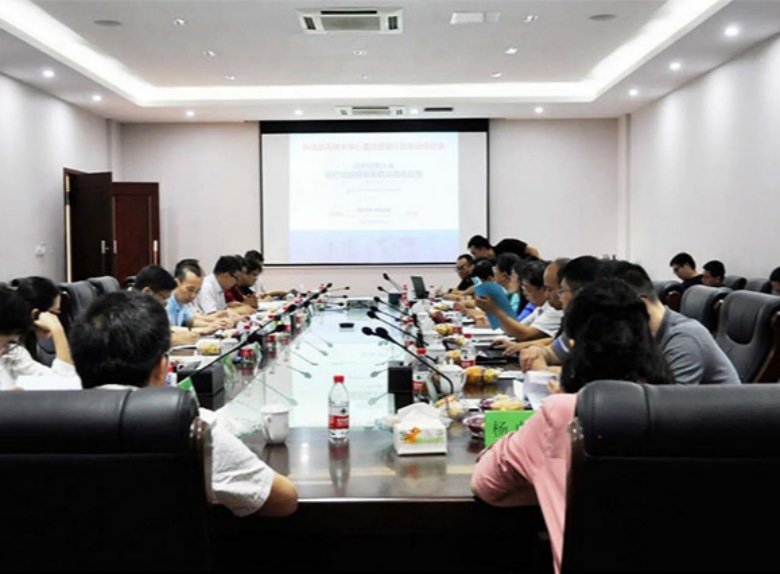
On the morning of September 9, a kickoff meeting for the National Key R&D Program funded by the Ministry of Science and Technology of China — “3D-Printed Biomimetic Functional Medical Model System and Clinical Applications” — was held at the Linfeng Science and Technology Park in Hangzhou Bay New Area. The project is led by Ningbo Trando 3D Medical Technology Co., Ltd., with Professor Qiao Shubin from Fuwai Hospital, Chinese Academy of Medical Sciences, serving as the project leader. The project was officially approved in 2018.
The meeting was attended by more than 30 representatives, including Deputy Director Chen Zhili and Dr. Ding Ying from the High-Tech Research and Development Center of the Ministry of Science and Technology (Department of Additive Manufacturing and Laser Manufacturing), Professor Guo Quanyi from the General Hospital of the People’s Liberation Army (301 Hospital), Professor Fu Jianzhong from Zhejiang University, Deputy Director Xia Kehong from the Social Development Bureau of Ningbo Science and Technology Bureau, and relevant leaders from the Hangzhou Bay New Area Economic Development Bureau.
Also present were representatives from Linfeng Bio-Tech, Dr. Gong Haibo (CEO of Ningbo Trando 3D Medical Technology), and principal investigators including Professor Qiao Shubin from Fuwai Hospital, Director Zhang Peng from Xuanwu Hospital, Director Wang Zhifei from Zhejiang Provincial People’s Hospital, and Dr. Zhong Yumin from Shanghai Children’s Medical Center.
In addition, Professor Zheng Hong from Fuwai Hospital, Director Bai Weixing from Henan Provincial People’s Hospital, Professor Liao Shenghui from Central South University, and representatives from the Fourth Military Medical University and Xi’an Jiaotong University also attended the meeting.
The meeting was chaired by Dr. Gong Haibo, CEO of Ningbo Trando 3D Medical Technology.
Prior to the meeting, all experts and leaders visited the exhibition hall and R&D department of Ningbo Trando 3D Medical Technology Co., Ltd. Dr. Gong Haibo introduced and demonstrated the company’s current research achievements. The rich product portfolio attracted strong interest from the attending experts and professors, many of whom personally operated and examined the models.
At the kickoff meeting, Deputy Director Chen first announced the official approval of the project. He stated that the National Key R&D Program is a major scientific initiative established to support China’s strategy of becoming a science and technology powerhouse. The program requires strict implementation of the project plan and rigorous final acceptance review upon completion. Therefore, it is essential to carefully develop the implementation plan and strengthen project management throughout the process.
Deputy Director Xia noted that competition for National Key R&D Program funding is highly intense, and it is a significant achievement for Ningbo to secure the fourth national key project in this category.
Project leader Professor Qiao stated that the project team will strictly follow the task assignment and ensure the successful completion of all objectives. He expressed hope that the project will achieve scientific innovation and benefit patients, and confirmed that Fuwai Hospital will provide strong support for the project implementation.
On behalf of the leading institution, Dr. Gong Haibo stated that the project team will actively ensure all necessary support measures to promote the successful completion of the project. He also presented the project implementation plan, including project objectives, key research tasks, major milestones, implementation schedule, budget allocation, management mechanisms, and acceptance plan.
After the presentation, project review experts Professor Guo Quanyi and Professor Fu Jianzhong engaged in in-depth discussions with the project team. They provided detailed and constructive suggestions on potential challenges during implementation, forming formal review opinions on the project execution plan.
Subsequently, the project team will organize specialized training and briefings for participating institutions and academic core members to address specific project-related issues.
Director Zhang Peng, Director Zheng Hong, Director Wang Zhifei, and Director Zhong Yumin stated that the development of 3D-printed biomimetic functional medical models will significantly enhance surgical training for young physicians. The project is expected to improve clinical surgical success rates and reduce operation time, providing strong support for patient care. They expressed strong confidence in the project’s future prospects.
Through this kickoff meeting, the project team clarified the detailed implementation plan. In the subsequent execution phase, all members will strictly follow the approved plan, fully incorporate the guidance of responsible experts, and strive to achieve breakthroughs in the application of 3D printing in clinical education in China.
As the leading institution of a Ministry of Science and Technology Key R&D Program, Ningbo Trando 3D Medical Technology Co., Ltd. has drawn public attention. Traditionally, most 3D-printed medical models are made of single rigid plastic materials, lacking elasticity and physiological functionality, which limits their large-scale application in surgical planning and training.
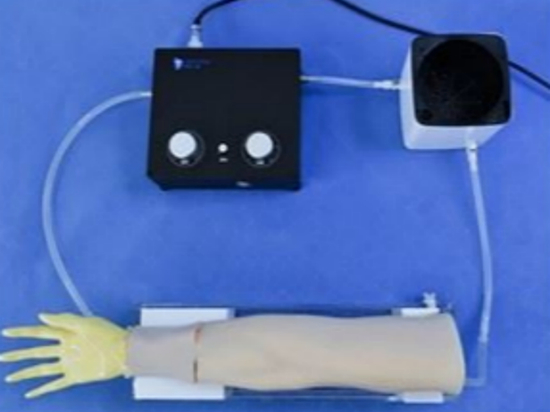
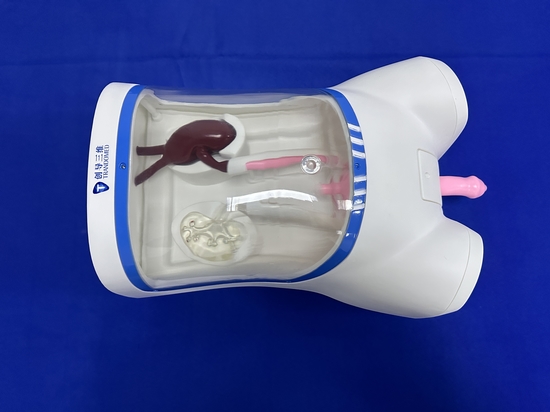
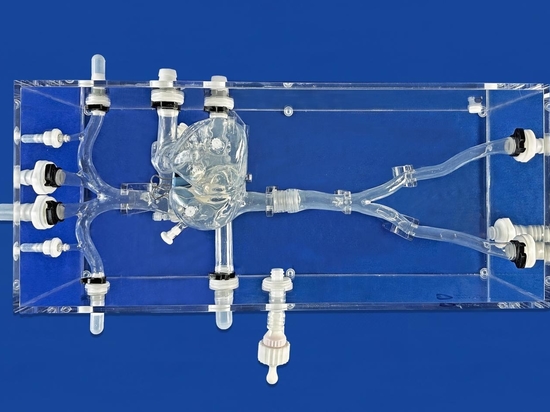
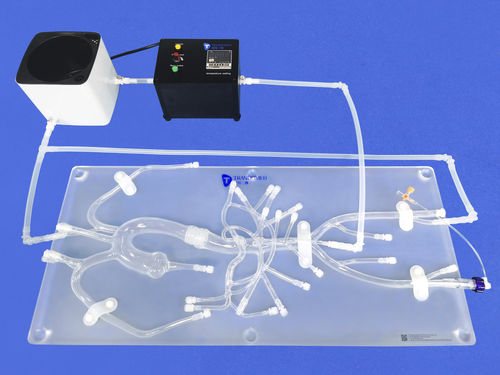
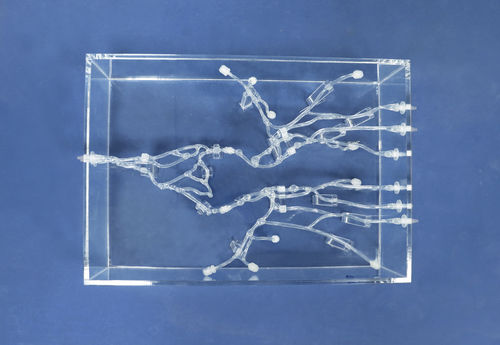
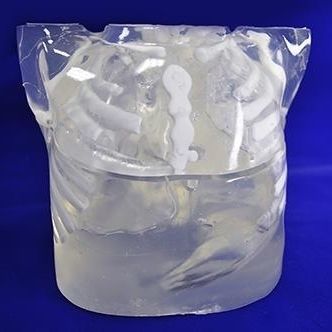
In contrast, the company’s products adopt multiple materials, including high-density resin, polyurethane, silicone, and hydrogel. Through independently developed multi-material 3D printing equipment and customized manufacturing processes, the models significantly improve realism in texture, color, and imaging contrast. In addition, with a precision motion control system, they are capable of simulating key physiological functions such as respiration, heartbeat, and blood flow in vitro.
Dr. Gong Haibo, Founder and CEO of Ningbo Trando 3D Medical Technology, stated that over the years the company has been working closely with the State Key Laboratory of Manufacturing Systems Engineering at Xi’an Jiaotong University, focusing on medical 3D printing equipment, forming processes, and application development. The company is among the earliest institutions in China engaged in functional and complex medical 3D model development.
To date, the team has applied for more than ten patents in 3D printing equipment processes and medical model technologies, and its members have also received national awards in the field of medical 3D printing.
“From scientific research to industrialization, years of accumulation and our focus in this niche field are our greatest strengths,” he said. “Being recognized by the Ministry of Science and Technology is a rare development opportunity for a startup company with just over 40 employees. Going forward, we will further deepen cooperation with hospitals and universities, continue technological innovation, expand our product line in medical 3D printing, and create greater social and economic value.”