#Product Trends
What is a Medical-Grade Tablet? Their Advantages and Applications
Medical-grade tablets are a lightweight and flexible solution perfect for healthcare providers who need a mobile computer during their shifts.
Healthcare providers are constantly on the move and need to take their equipment with them. Modern medical computers are powerful and reliable, but oftentimes too heavy for this role. A lightweight and flexible solution is needed.
The answer to this problem is a medical-grade computer tablet. Smaller and lighter than conventional PCs, these devices are still capable of supporting the full suite of modern medical software.
Medical-Grade vs. Consumer Grade: What’s the Difference?
What sets a medical-grade tablet apart from consumer-grade devices? The answer lies in the name; medical-grade tablets are specifically made for the healthcare industry.
Key features for medical-grade tablets include:
IEC 60601 Certification: This safety standard ensures that medical-grade tablets are safe to use in healthcare settings and won’t interfere with other devices.
IP65 Rating: Medical devices, including electronics, are constantly cleaned and disinfected. However, these cleaning agents can also damage a computer’s circuitry if they seep in through the casing. Therefore, medical-grade tablets are designed with casings sealed to IP65 standards, blocking out both liquids and dust.
Integrated Scanners: Medical-grade tablets will implement built-in barcode scanners and RFID readers that let them scan medication labels and patient ID bracelets. This helps providers ensure they issue the correct medication to the correct patient.
Cybersecurity Features: Given the threat of cyberattacks that healthcare faces, medical-grade tablets must have enhanced cybersecurity features compared to consumer-grade products. This includes access control methods such as biometrics, as well as data encryption features like Imprivata.
Legacy Compatibility: Hospitals use a wide range of both old and modern medical equipment. To ensure compatibility with both, medical-grade tablets implement both modern I/O ports such as USB as well as older form factors such as serial ports.
Applications for Medical-Grade Tablets
Medical-grade tablets are widely used across multiple roles, with the most important being:
EHR Access
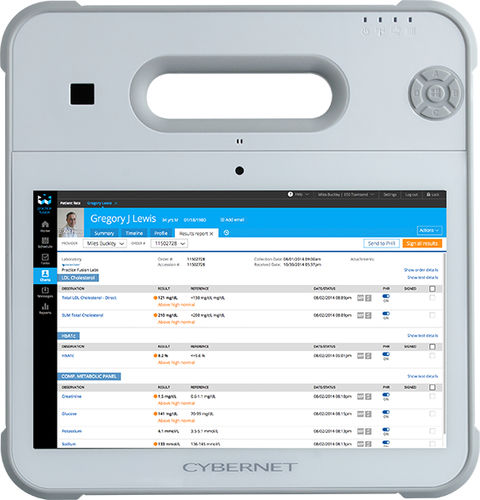
Healthcare providers can use their medical tablets to review a patient's medical history, diagnoses, treatment plans, and more. This is far more efficient than having to carry around physical copies of those records or pushing a fully loaded computer cart.
Medication Administration
By using a tablet’s built-in scanner, providers can double-check a bottle’s label and cross-reference it against the patient’s records. This lets hospitals track how much medication is being administered, when, and by whom.
Telemedicine and Remote Monitoring
Because tablets are portable, patients can take them home with them when they leave the hospital but still require a degree of monitoring by medical staff. This gives providers a reliable means of staying in touch with the patient and saves the patient a trip to the hospital if they need to reach their provider.
Patient Kiosks
By mounting a tablet on a permanent fixture on a wall or booth, it can serve as a patient kiosk. This lets patients check in at a hospital, review their insurance information, and make co-payments without having to speak to the hospital’s staff. This lets those staff members focus on other tasks
Integration Into Other Medical Devices
Other medical device manufacturers will sometimes integrate a prebuilt medical tablet into their own product to serve as the computer and user interface. Using a medical-grade tablet ensures their device maintains its own certification as well.
Benefits of Medical-Grade Tablets
By choosing to use medical-grade tablets over other devices, healthcare providers can enjoy numerous benefits, such as:
Ergonomics
What is a medical-grade tablet’s greatest advantage over a conventional panel PC? The fact that it weighs a fraction of what the PC does. Tablets can also integrate convenient carrying handles and straps that reduce the strain of using the device during a shift. Given that healthcare has some of the highest rates of musculoskeletal disorders in its workforce, anything that makes the job easier or more comfortable is a welcome innovation.
Mobility
Another key advantage of tablets is that they don’t need constant access to an electrical outlet or cart-mounted battery the way PCs do. With their long-lasting batteries and wireless Internet adapters, tablets can serve in unconventional environments like ambulances, mobile health clinics, and patient homes. This helps ensure that providers can access their digital tools no matter where they work.
Security
Cyberattacks continue to be one of the most pressing threats that healthcare faces, with 2024 “boasting” a record 734 data breaches that affected 500 or more people. Medical-grade tablets are more secure than consumer-grade devices thanks to their built-in data encryption and access control methods. With options for biometric identification and RFID card-based access, providers can prevent unauthorized individuals from breaking into their network.
Long Life Cycles
Consumer-grade electronics are defined by annual releases and planned obsolescence. However, healthcare groups want as much return on investment as possible for their equipment and don’t want to constantly re-train their staff to use new devices. Medical tablet manufacturers support their devices for long periods, with options for five-year extended warranties as an example. All of the design features that make medical tablets rugged and reliable also ensure they can serve for many years.
Considerations for Buying Medical-Grade Tablets
If you're shopping for medical-grade tablets, there are some key questions you need to consider before makign a purchase:
Cost
While the upfront cost is always a key consideration, don’t forget about the long-term operating expenses as well. A tablet with a higher asking price might save money down the line compared to a cheaper model that has to be constantly repaired or replaced.
Training and Adoption
Given the pace of hospital operations, healthcare groups can’t afford to spend much time on training and orientation. New medical tablets should be user-friendly and intuitive.
Compatibility
Hospitals rely on a wide range of both modern and legacy equipment for patient care. Can your choice of tablet work with both? Does it have the performance to support modern EHRs and the legacy I/O ports to interact with older devices? These questions need to be answered before you commit to a purchase.
Vendor
Another key concern is whom you purchase your tablets from. If you buy from a reseller and run into technical issues, they won’t have the technical skills to repair a broken device. Purchasing directly from an original equipment manufacturer (OEM) ensures that you have tech support when you need it the most.
Scalability
A larger healthcare group might require dozens, even hundreds of medical tablets. This means any source you purchase from needs to be able to keep pace with such high demand. Can your chosen vendor provide enough to satisfy your needs, or will they suffer from supply chain issues?
Medical-Grade Tablets from Cybernet Manufacturing
Despite their small size and light profile, medical tablets can be the perfect computer solution for providers constantly on the move. Whether you want an ergonomic tool for providers or a user-friendly tool for remote monitoring, Cybernet’s medical-grade tablets are ready to serve.